
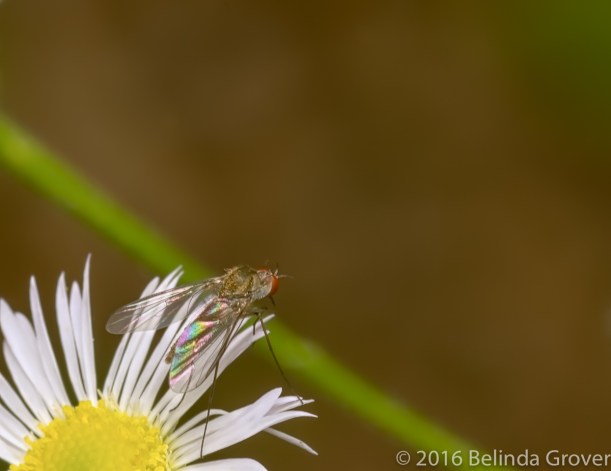
A long title for a tiny subject. I’d stepped out today hoping to photograph some wildflowers. I spotted a slew of these daisies and as I lifted my camera to my eye I noticed this tiny fly on the edge of the petal. The subject of the photo quickly changed from flower to insect. I snapped away hoping the fly would turn towards me. That didn’t happen but I did manage to catch the reflection on its wing. A pretty good outcome I’d say.
Tag Archives: Macro
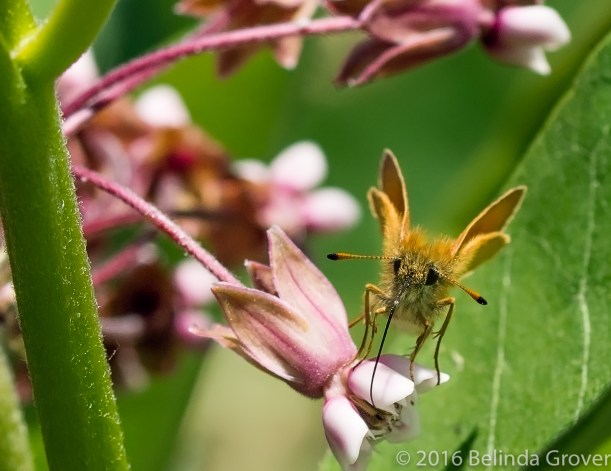
LEAST SKIPPER BUTTERFLY (TWO PHOTOGRAPHS)

There are many varieties of skippers. The least skipper is the smallest of Ontario’s butterflies (17-26mm or approx. 1 inch). I spotted this butterfly among some wild flowers that bordered a suburban bike path. It’s a pleasant area to walk as the city has let the natural setting flourish beside a pedestrian and cycling route. I took my 105mm macro lens with me that day hoping to get an opportunity for some insect shots. I was happy I did.
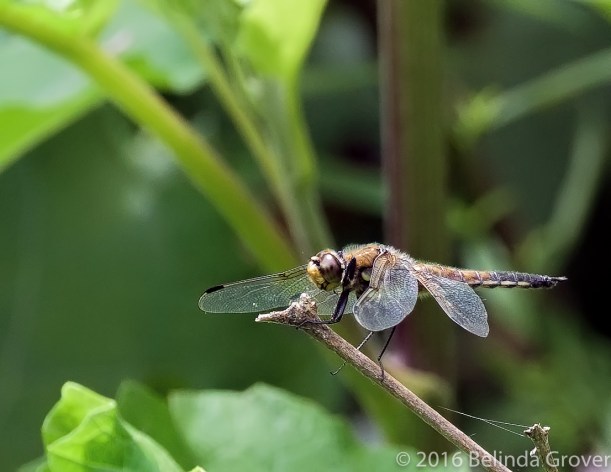
DRAGONFLIES (TWO PHOTOGRAPHS)

It’s always nice to capture these insects on an interesting plant or giving you the eye, something I think I did in both of these shots. I was carrying my long lens that day, hoping to photograph some birds but saw these willing posers instead. Just like new plant life that seems to crop up daily, every few days I see different kinds of dragonflies and damselflies. I think they’re beautiful subjects so I’ll be featuring more of them over the course of the summer.
NOT A BUG IN SIGHT (THREE PHOTOGRAPHS)
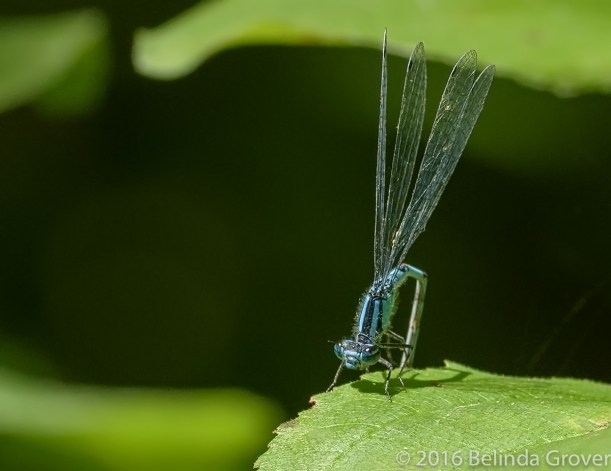
None of these photos feature true bugs. The spider is an arachnid and the other two are insects. The damselfly was taken with my 70-200mm lens, the fly and jumping spider with my 105mm. I use my longer lens most of the time with an eye to taking bird and other wildlife shots. I find that I can get pretty decent close-up shots of insects with it as well although I have to crop the image more. With a bit of encouragement from “my partner in crime” I have been getting more familiar with my macro lens, extension tubes and flash. The spider and fly are recent shots taken with this set up. I’ll be using it more often.

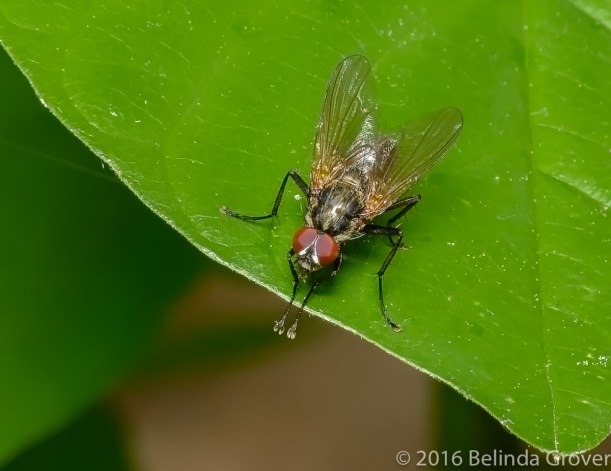
MEADOWHAWK DRAGONFLY
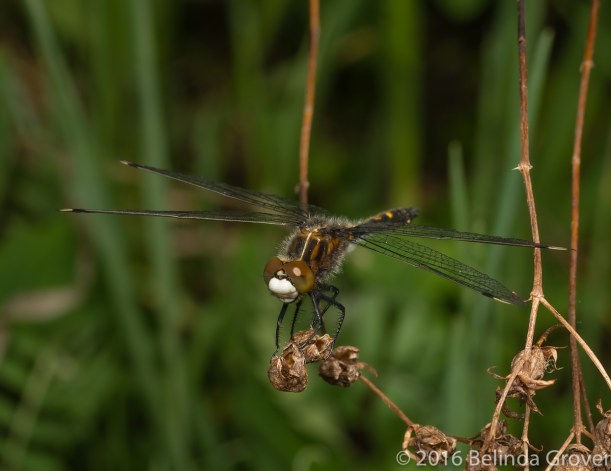
I was keen to get out with my 105mm lens and and do some close-up/macro photography after a very long, cold winter. We spotted the first dragonflies in our area a few weeks ago, their colouring is getting more spectacular as the days pass and there are increasing varieties of them to photograph. I came across this meadowhawk along the trail and did my best not to cast a shadow which I knew would chase him off. Happily he didn’t spook and I managed to get this shot.
BUMBLEBEE AND THISTLE

I took this shot last summer when the flowers were at their peak and the bees were everywhere. Thistles are considered an invasive species but are a favourite food source for certain butterflies, goldfinch and bees. Spot a thistle and there’s likely a good photo opportunity close by. I watched as this bee flew from flower to flower and took it mid flight. If you look closely you can see a fine dusting of pollen on its ‘fur’.
LADYBUGS (TWO PHOTOGRAPHS)
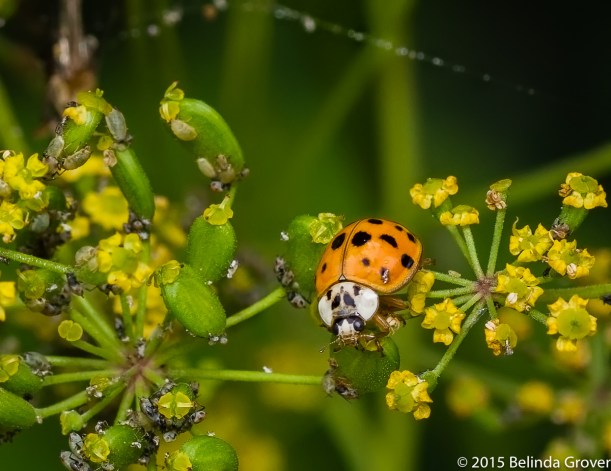
These photographs are some of the first I have taken of such small insects. Unlike many insects that fly off as soon as they see you, ladybugs don’t seem bothered by your presence so they make excellent subjects. This shot was taken with a 105 mm lens which let me get closer to them than I could before. I also used a flash which allows you to control the light and gives you greater shutter speed, reducing the “shake” factor. As I take my shots hand-held this is very useful.
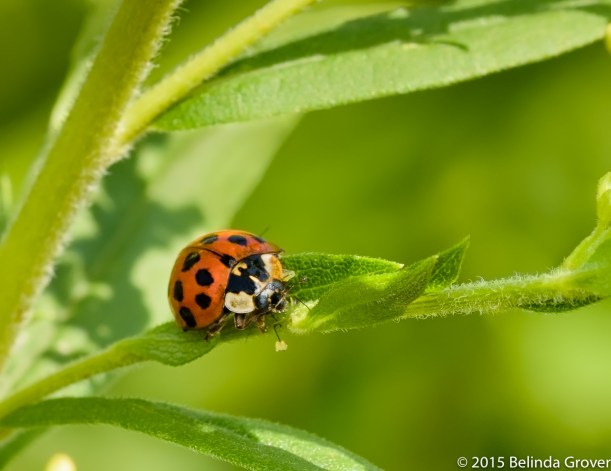
DAMSELFLY
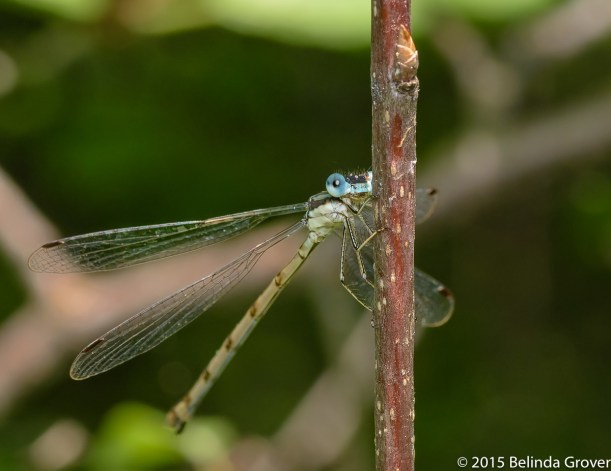
This was the first time I’d seen this type of damselfly. I believe it’s a Spreadwing. It’s rare that this species stays put when people approach. It was just my luck that it held firm for me to take the shot.
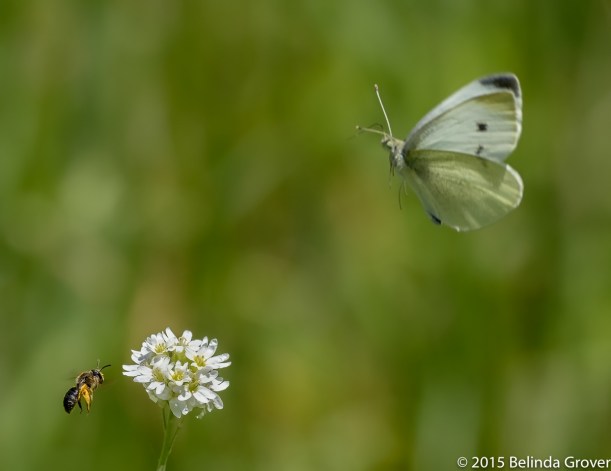
CABBAGE WHITE BUTTERFLY (TWO PHOTOGRAPHS)

This variety of butterfly is one of the first we see in the spring and remains well into the fall which is one of the reasons I like it so much. I’ve found that cabbage whites often stay in place longer than other butterflies so I’m able to take several shots before they move on to another flower. This butterfly ignored me completely but the bee’s presence certainly got it’s attention. It was a brilliantly sunny day when I took these photos and the flower in the shot was blown out. In order to add some detail and tone down the harshness, I applied a radial mask in Lightroom, inverted it and adjusted the exposure. As both pictures were taken within minutes of each other under identical conditions, I used the copy and paste feature in Lightroom to adjust the white balance, contrast, shadows and exposure. A new tool in my kit.
DANCING BEE
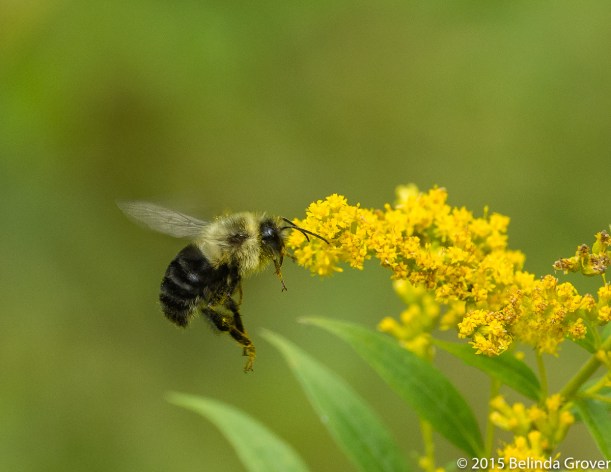
I was happy to see that the bumblebees were plentiful in our area this year. I never cared much for insects or bugs and bees used to send me running in the opposite direction! However, since I became interested in photography and started observing their behaviour, I learned that when left undisturbed bees tend to ignore everything around them and just go about their business. I love the challenge of trying to photograph insects in flight, anticipating their movements. Taken at 200mm, at 1/640th of a second I managed to capture the bee in motion. I made contrast, shadow and exposure adjustments in Lightroom and sharpened and enhanced detail in Photoshop.
 BELINDA GROVER PHOTOGRAPHY