
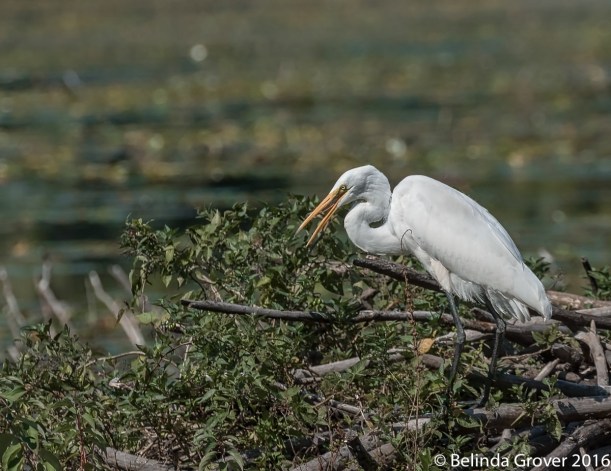
 This is the second in a series of photos I took of an egret taking some turns on a beaver lodge. Perhaps he was digesting his lunch. There are some big catfish in this lake although the high water level might have made fishing difficult. I was at a sufficient distance not to disturb him and happily he was in no hurry to leave.
Category Archives: Birds
LATE IN THE SEASON (TWO PHOTOGRAPHS)
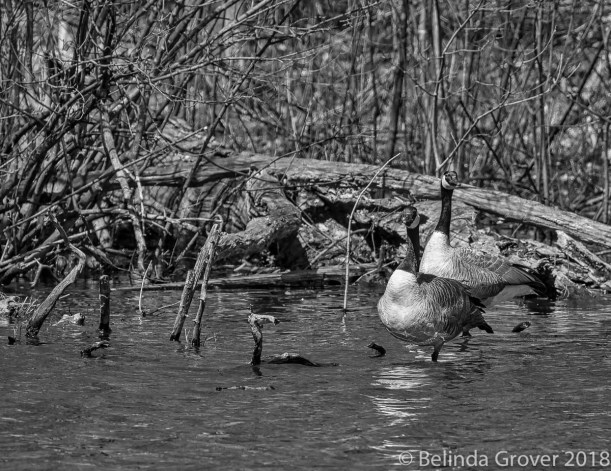
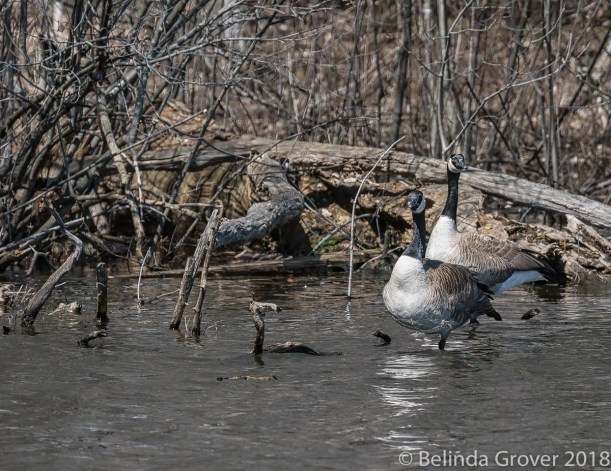
It was late fall and the geese would be flying south soon. When the trees are bare I get a different feel for the landscape. I can appreciate its starkness and see the detail that is normally overlooked in summer. The geese add additional interest to the scene.
NUTHATCH
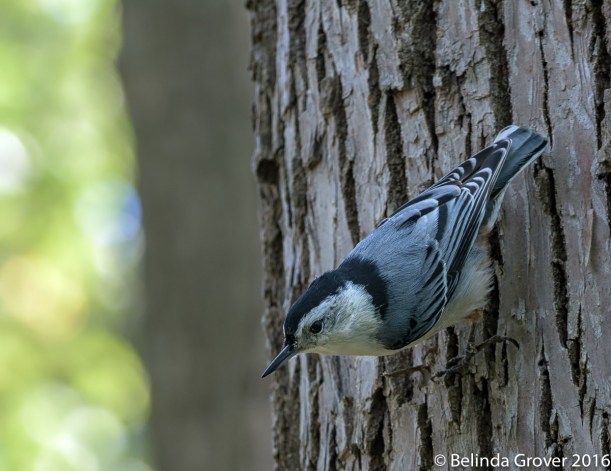 I like to hear the nuthatch’s nasal call, often alerting me to its presence in the woods. As they move along the tree trunks and branches so quickly, it’s often hit or miss to capture one in focus. Oh, but when you do😊.
WHITE-THROATED SPARROW
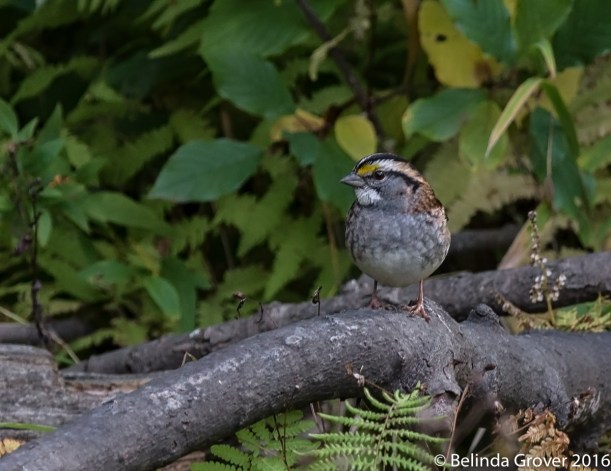 The white-throated sparrow is a common visitor to backyard feeders but having neither a backyard or a feeder I spotted this bird in the woods. I usually see a few in season but no more than that. This little bird perched himself on a fallen tree and remained there long enough for me to take his photo.
MALLARD IN BLACK AND WHITE
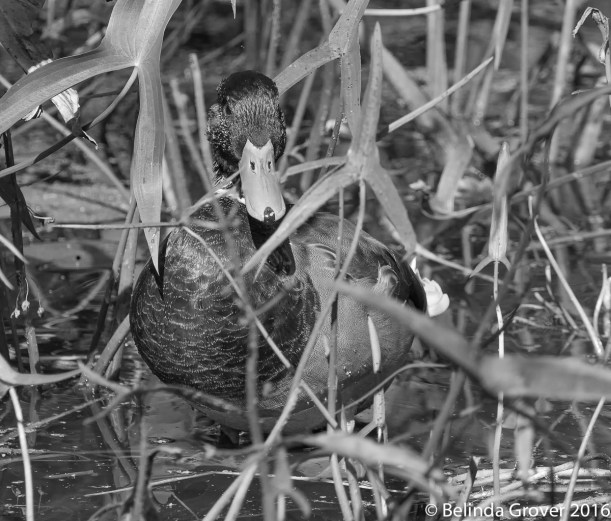 I featured a version of this photo several years ago. When I look back at some of my older photographs, I see what I might try differently. I converted the photo to black and white, reduced the clarity and saturation and removed a bit of vegetation that overlapped the mallard’s bill. I think it makes for a better photograph. My style and skill have developed over the years and it’s nice to see the progression. Of course when you have a subject like this you can’t go too far wrong 😊.
SPRUCED UP GOOSE (TWO PHOTOGRAPHS)
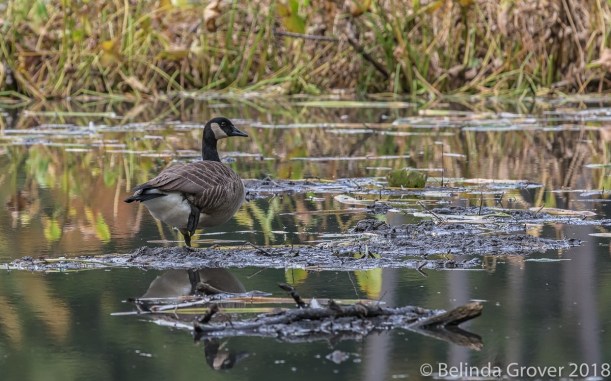 No one is indifferent to Canada Geese. Noisy, messy and gregarious; I like them best in photos like these, looking kind of smart. Fall reflections are a definite asset too.
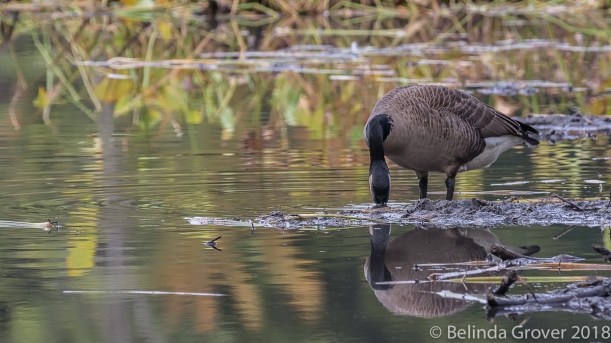
GREAT EGRET
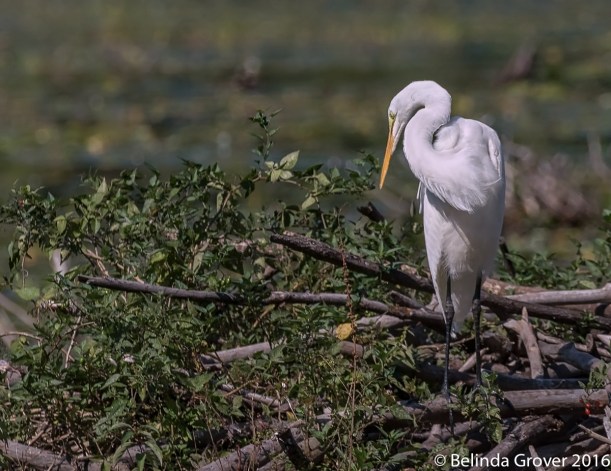 It’s unusual to see an egret perched on a beaver lodge, normally we see them wading in the water or fishing. The bird stood there for quite a while and I managed to get him in several poses, the first of which is shown here. Most summers we see several egrets and herons in this one location, not last year. The lake was very high which must have made for challenging conditions. They likely found some easier spots to fish.
CEDAR WAXWING
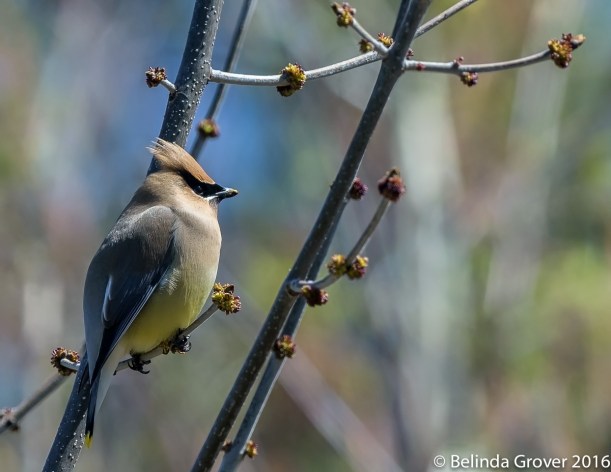
Another sign of spring is the return of cedar waxwings. We usually see them in a group or ear-full (as they’re known collectively) but I only saw this one bird. It was nice to get him out in the open before the leaves were out.
CHICKADEE (TWO PHOTOGRAPHS)
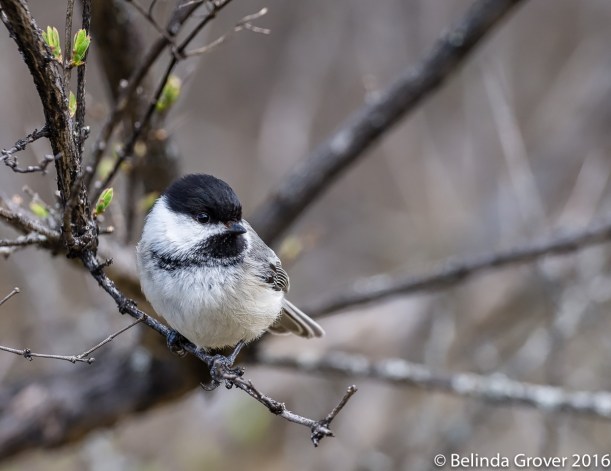
This photo was taken a few years ago in Spring. The trees are not in bud yet. They’re still covered in snow but we’ve turned the corner on winter; the sun’s a little warmer and the temperatures not quite as cold. As I’ve mentioned before, chickadees remain here year round and they too must be anticipating the warmer days to come.

HARDY DUCK (TWO PHOTOGRAPHS)
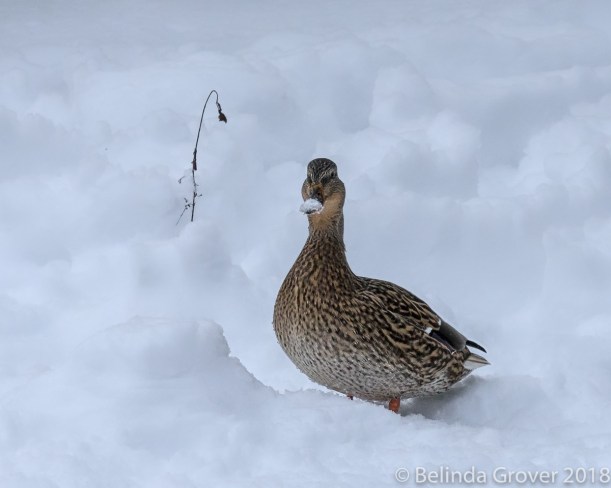
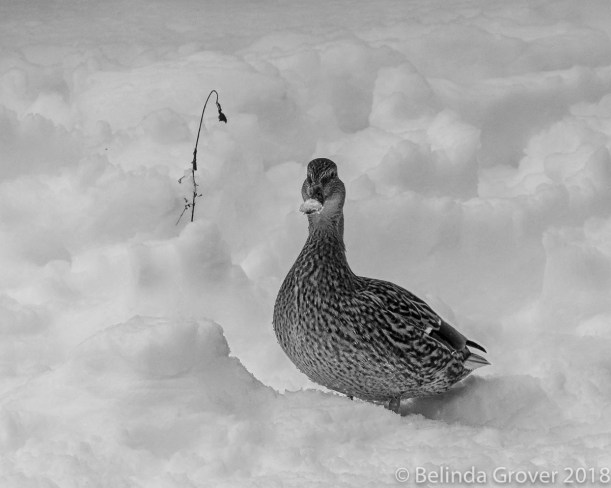
It’s been a long cold winter. The snow drifts are high beside the river. Mallards congregate here because this portion of the river is fast moving and doesn’t freeze. As we approached the river’s edge we fell in behind a man carrying a huge sack of cracked corn for the ducks. We stood back as the ducks mobbed the man. As we were leaving I saw this mallard a ways from the crowd and took this shot.
MALLARD IN FALL
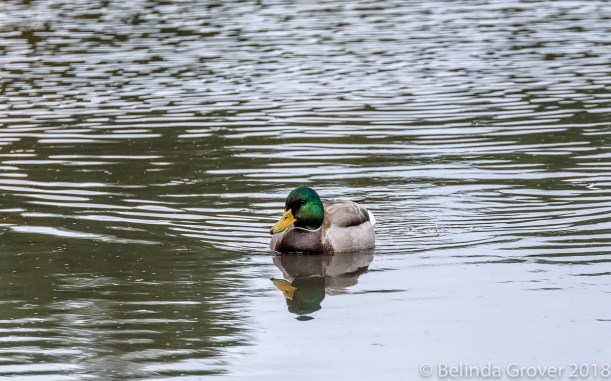
I liked the pattern in the water, so I centred the mallard. I broke the rule of thirds but I feel the photograph wouldn’t have been as good if I hadn’t.
At this point in the year (late fall), the trees are bare and on a cloudy day, the water takes on this sombre cast, relieved somewhat by the mallard and the ripples created as he moves through the water.
RING-BILLED GULL
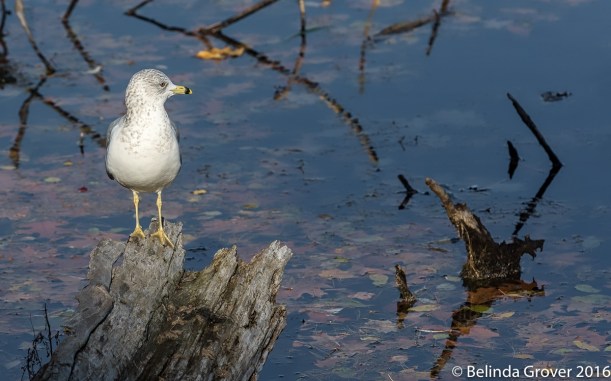 The Ring-billed gull is the most common gull in North America and like many birds migrates south in the winter. I took this photograph in November. It was nice to see the bird in a natural setting as they often congregate in city parking lots. It perched on the log for quite a while where I could appreciate its good looks, something I had never really noticed before.
A SURE SIGN
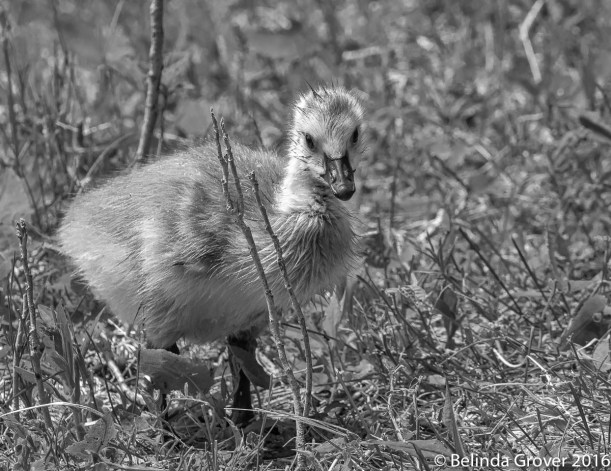
It’ll be a while before we see goslings or any other signs of spring. Looking through my catalogues I came across this photo, I took it on a June day a few summers ago. This gosling strayed a little from its parent and gave me this measured look.
SHOULD I STAY OR SHOULD I GO (TWO PHOTOGRAPHS)
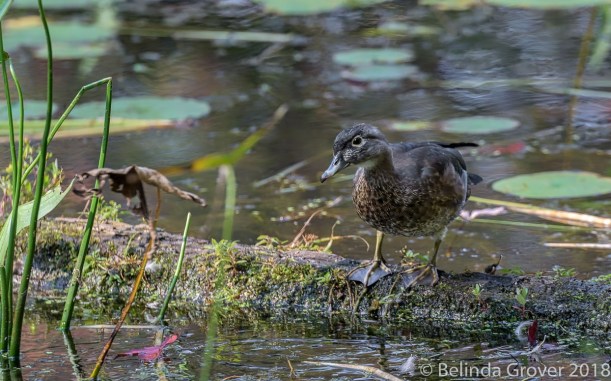
This young wood duck took her time before she glided back into the water. Most of the ducks remain together in groups, so it’s always nice to find one on it’s own enjoying a quiet moment. This lake has many fallen trees that provide comfortable perches for passing ducks and turtles along with great photo opportunities.

NORTHERN CARDINAL

Although I took this photo in October the background suggests summer. The bird appears to be molting, another hint that the season was moving along. No matter the time of year, or less than perfect plumage, cardinals are always a delight.
SOLO GOOSE (TWO PHOTOGRAPHS)

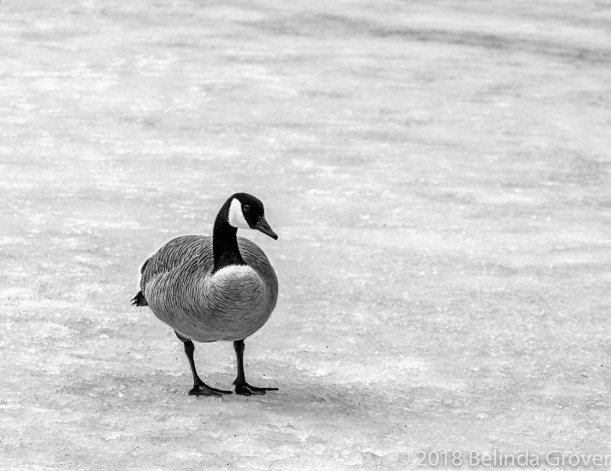
Shortly after this photo was taken late last March, the snow melted and spring returned. Canada Geese migrate south in winter and this goose had returned a little too early to find much to eat. Kind folk always bridge the gap and soon he was joined by returning mates.
DOWNY WOODPECKER
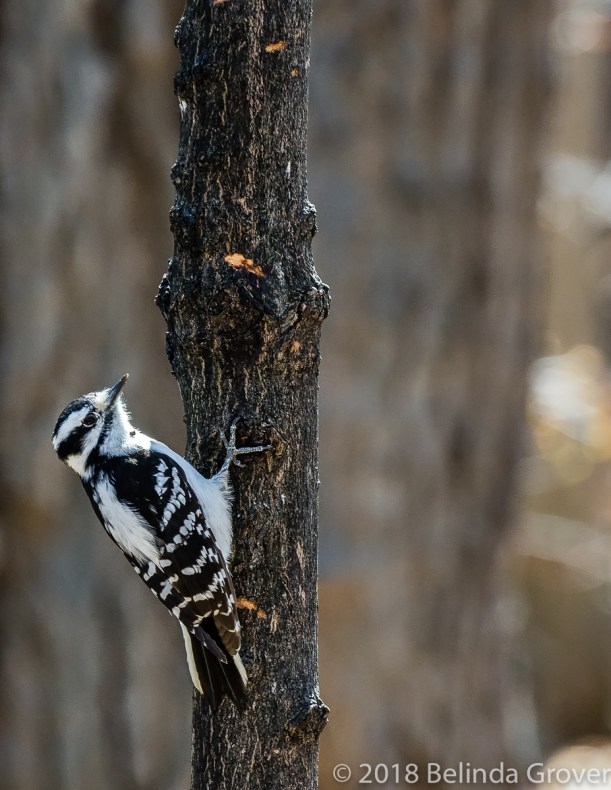
I heard her before I saw this downy woodpecker. She was drilling away for insects as I was walking by. As is often the case, you will hear a bird before you see it. Unlike her male counterpart which has a small red cap, the female downy does not but other than that they look pretty much alike.
CHICKADEE (TWO PHOTOGRAPHS)
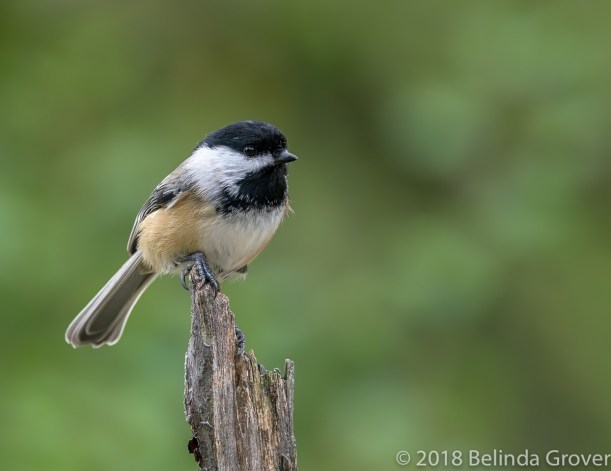
This chickadee was completely in the open and happy to remain so for a few minutes. There was a good distance between the bird and the trees which made for an attractive background. However, judging by the bird’s expression in the second photo, perhaps there was not enough distance between him and me!
GOSLINGS
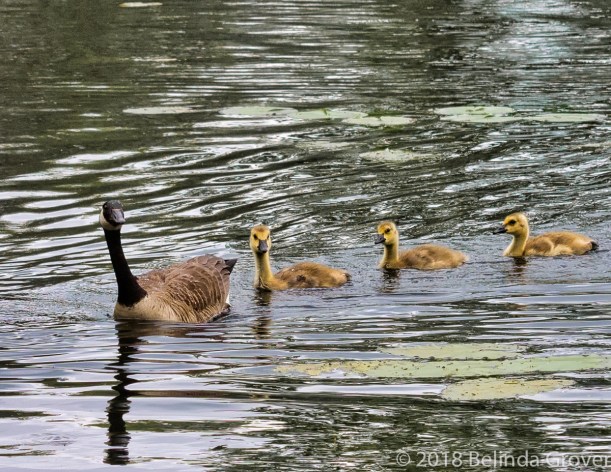
These goslings got their start this past June, the month when new bird life begins to appear in my corner of the world. We enjoy new beginnings then and now, the official start of the year. Happy New Year everyone!
NORTHERN CARDINAL
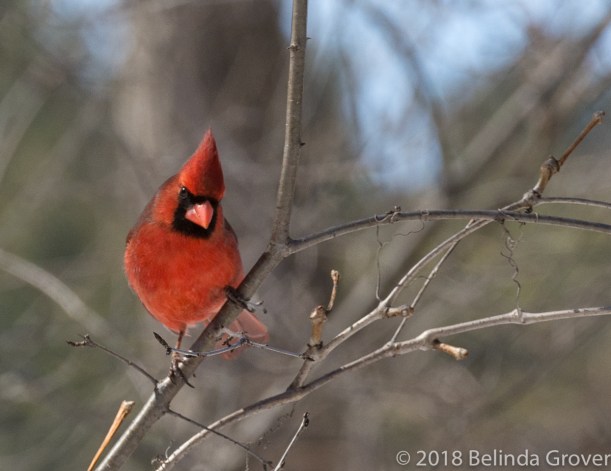
Cardinals rarely look placid particularly when their heads are on a tilt fixing you with a stare. This and their colouring make them great subjects. We see them in our woods all year round. On a cold snowy day seeing this red flash in the trees is always a bright spot.
AMERICAN BLACK DUCK (TWO PHOTOGRAPHS)

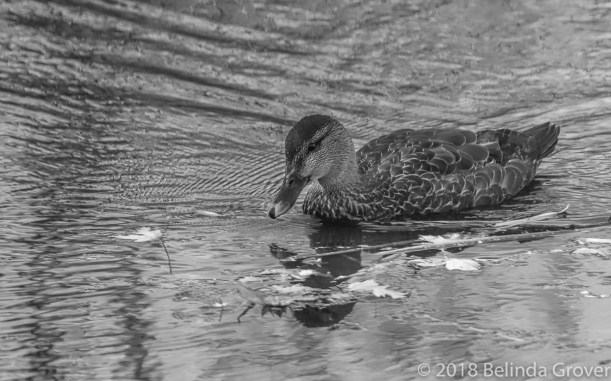
I took this photo in October. This duck like most others has long since flown south. The American Black Duck is vastly outnumbered by mallards in our waterways and I don’t see more than a few pairs all season. They appear less gregarious than mallards and are often in pairs or enjoying a solitary swim. There’s a lot to be said for their quiet, elegant ways.
CHICKADEE CHEER (TWO PHOTOGRAPHS)
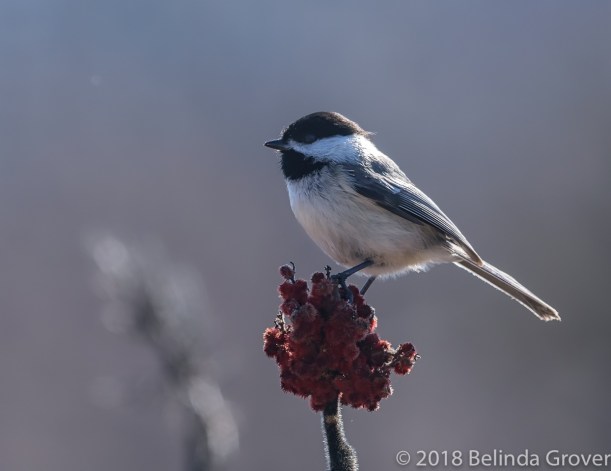
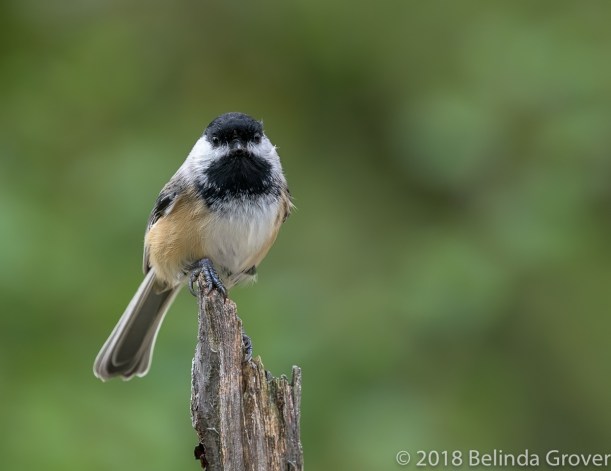
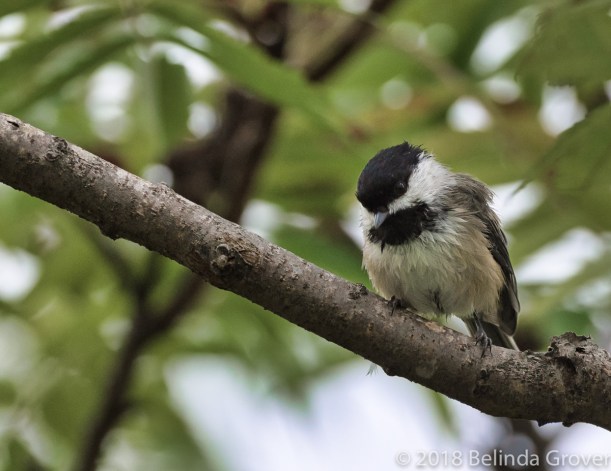
I always look out for these birds on my walks through the woods. They’re usually found along the path often flying away just as you put the camera up to your eye. These photos were taken in the spring and summer but chickadees are around all year and a little easier to photograph in the winter when they’re looking to be fed.
TOP OF THE WORLD (TWO PHOTOGRAPHS)
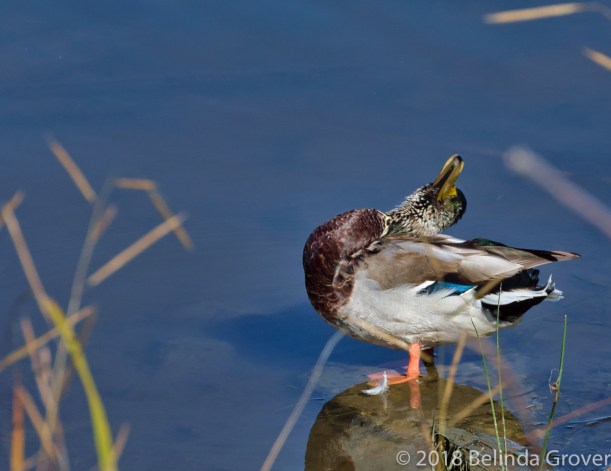
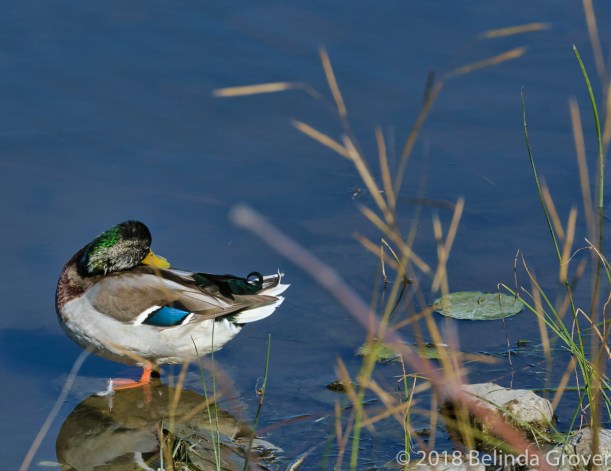
Nothing compares with ducks for their natural enthusiasm! Ducks appear frequently on my blog and mallards most often, as they are the most common duck (and bird) in this area. We have more exotic avian visitors during the warmer months but for dependability, good looks and charm mallards are my pick.
END OF SEASON (TWO PHOTOGRAPHS)
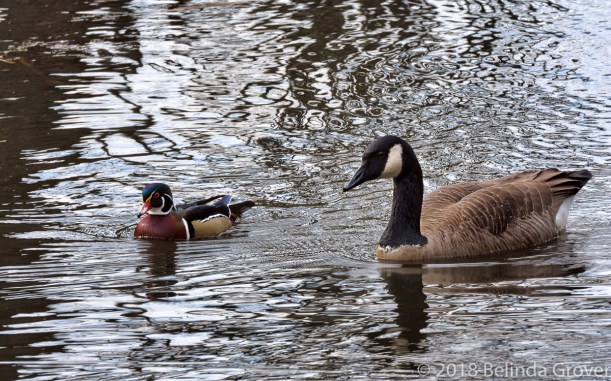
These two were taking a last swim before heading south for the winter. You often see geese and wood ducks swimming in the same general area but these birds seemed to be buddies. The water takes on a lovely cut glass quality in November; the reflections of the sky and bare tree branches provide the colour.

DUCKSCAPE (TWO PHOTOGRAPHS)
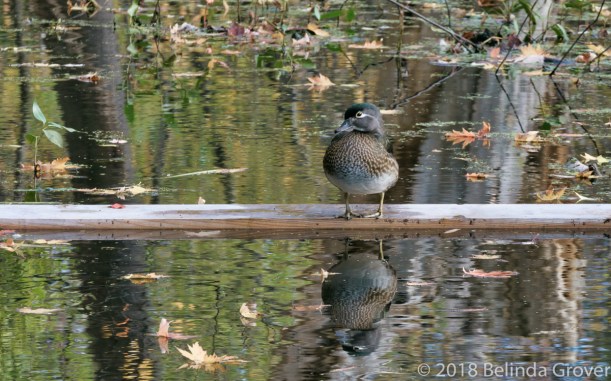
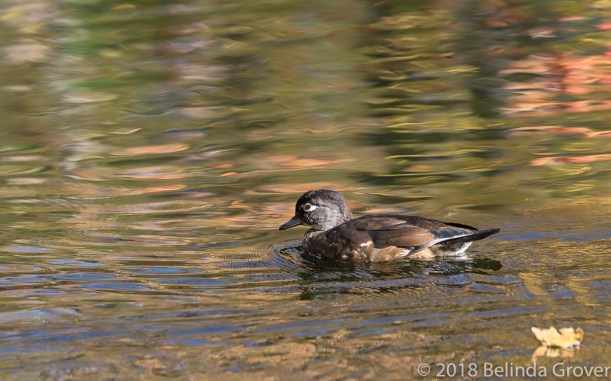
I haven’t done much landscape photography and it’s a type of photography I’d like to work on. Of the two photographs of wood ducks in this post, I think the first might be considered landscape-like. I like to provide context in my nature shots and with such an irresistible canvas my crop was minimal. I think the second photo speaks for itself.
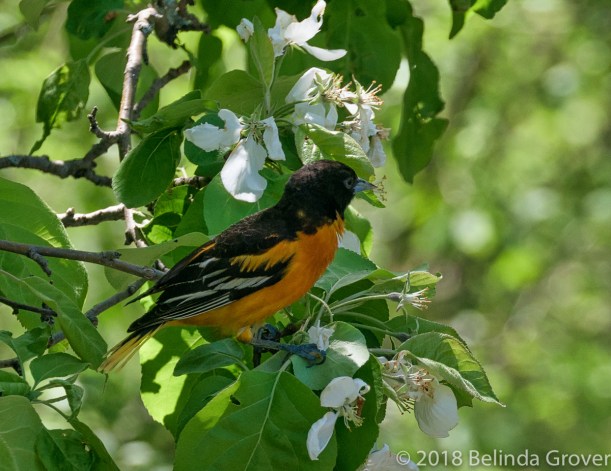
BALTIMORE ORIOLE (TWO PHOTOGRAPHS)
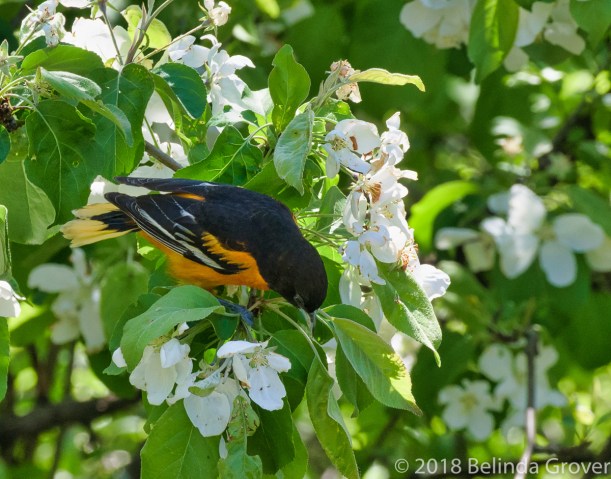
Baltimore Orioles migrate to our area in mid to late May and this bird was right on schedule. He must have found something tasty to eat as he remained in the tree as I continued to take photographs. I thought we might also see his mate as we were there for a while. We didn’t, maybe he was unattached or she was busy elsewhere.
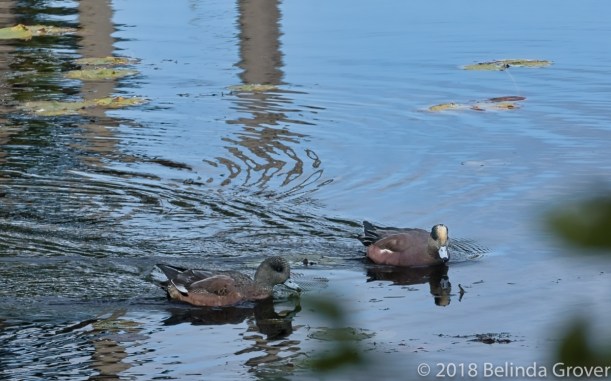
MORE WIGEONS (TWO PHOTOGRAPHS)
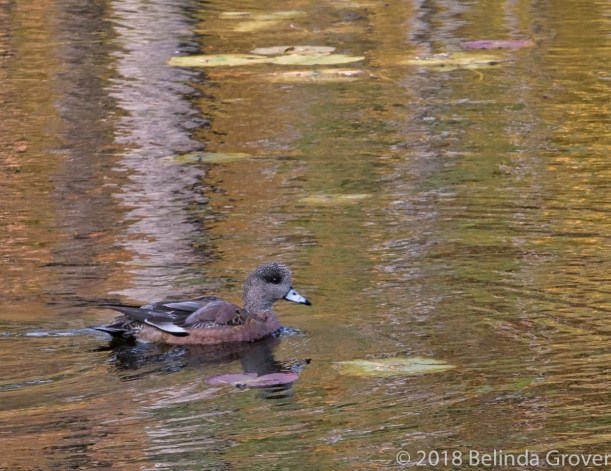
There’s never too much of a good thing at least when it comes to wigeons. A few more photos of the wigeon pair that I featured last week. I think the reflections in the lake compete for the viewer’s attention. The changing colours turn the normally murky water into a remarkable canvas.
WHAT’S IN A NAME
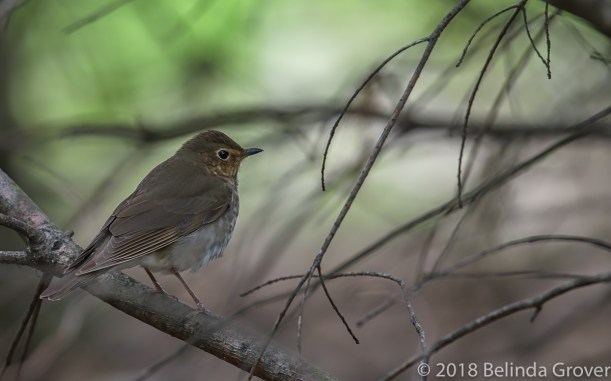
An attractive little bird, it landed close by and remained long enough for me to photograph it. This was taken in early spring, and it’s a migrant species. I believe it’s a phoebe, but please correct me if I’ve got it wrong.
IN BETWEEN
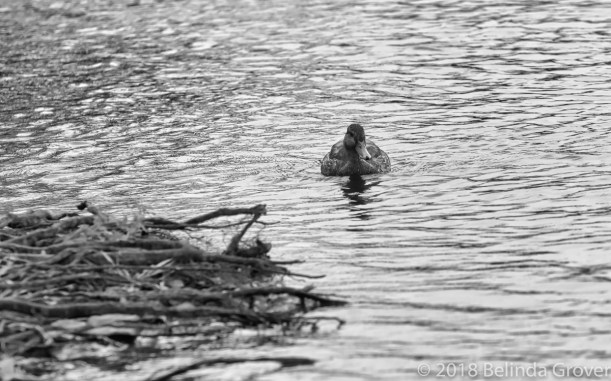
November’s here, a dark and brooding month. The waterways are still open but who knows for how much longer. This duck was enjoying a quiet paddle but kept a wary eye on me as I took this photo.
MALLARDS (TWO PHOTOGRAPHS)
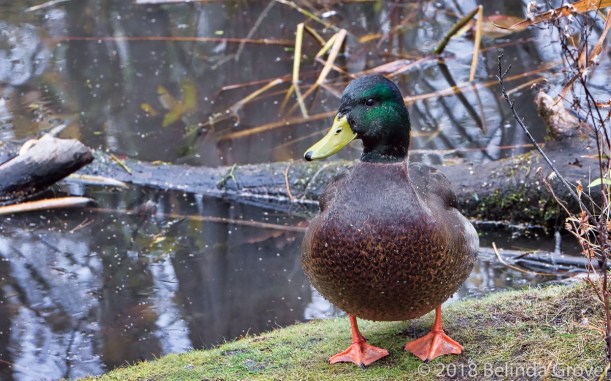
Two mallards enjoying the calm before the snow begins. When I took these photos last week we were enjoying a mild stretch, the ducks seemed to like it too. As I write this, wet snow is falling. Although most ducks will fly off soon, a hardy few persevere throughout the winter. No snowbirds (Canadians who head south for the winter) are they.
RED-BREASTED NUTHATCH
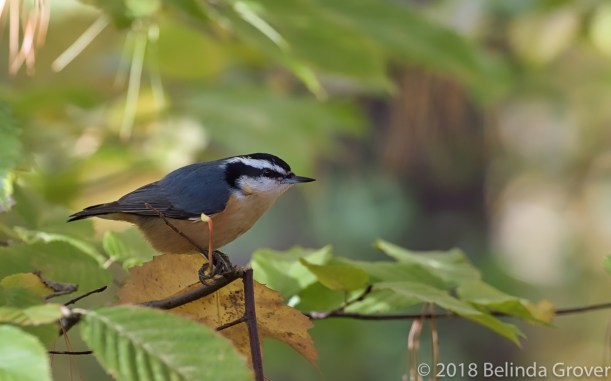
I hadn’t been to our local reserve in a while so I was particularly happy to see this Red-breasted nuthatch close to the entrance. A bit smaller than the white-breasted variety and not as numerous in our woods, this little guy was very active, flying and landing briefly in the surrounding trees. A nice start to our walk.
DUCKTAIL (TWO PHOTOGRAPHS)
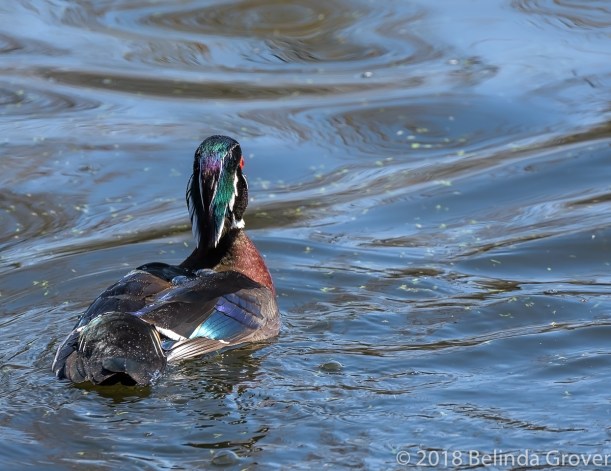
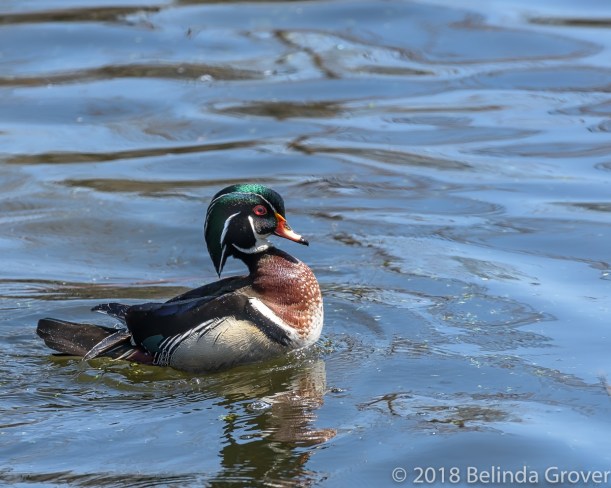
This back view of the wood duck made me think of the ducktail, a haircut that was popular in the 50s. You don’t necessarily have to get your subject face on to get a decent shot. I liked the duck’s puffed up chest in the second photo too, as if his “do” wasn’t enough to impress the ladies😊.
CHICKADEE
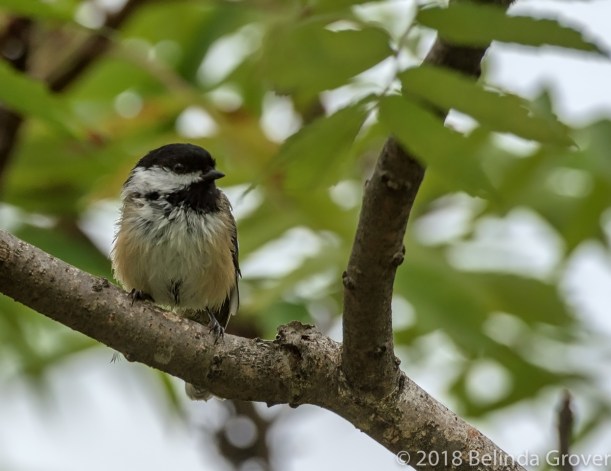
Chickadees forage well on their own all summer long, so we don’t see as much of them until the weather gets cooler. They’ll soon become our constant companions. When I took this photograph earIy last month I was lucky that the bird sat still long enough for me to take its picture. Often they don’t!
WOOD DUCKS
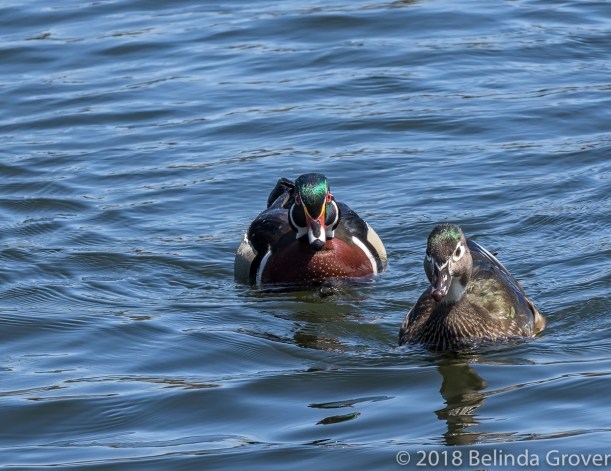 This wood duck pair was enjoying a quiet swim around the lake. The photo was taken in May when both were in full breeding colours, no young yet for these two. Parenthood was still a few weeks away.
NUTHATCHES (TWO PHOTOGRAPHS)
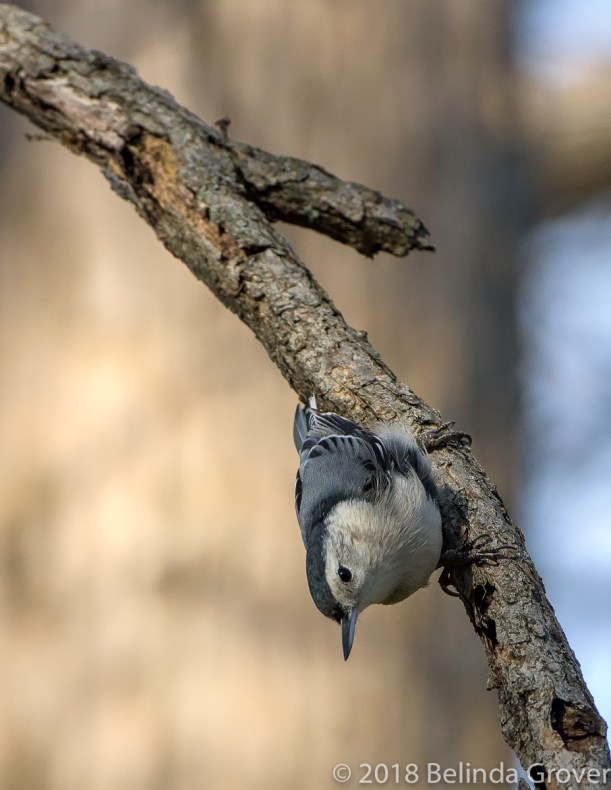
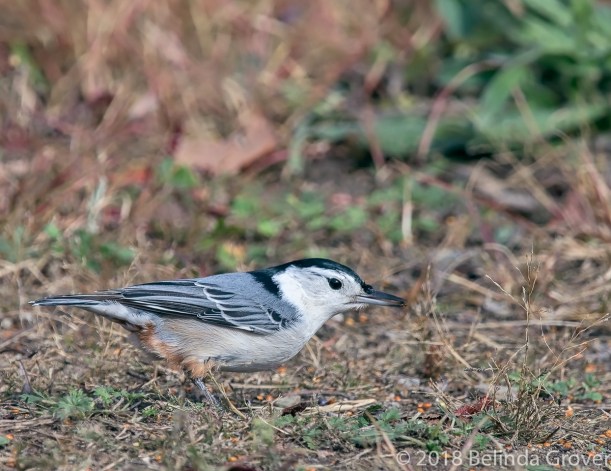
I usually see these little acrobats in the trees and only occasionally foraging on the ground. These two were approaching their meal differently. You only truly appreciate their diminutive size when spotted on the ground. Beautiful little birds that we enjoy year round in this part of the country.
GREAT BLUE HERON (TWO PHOTOGRAPHS)
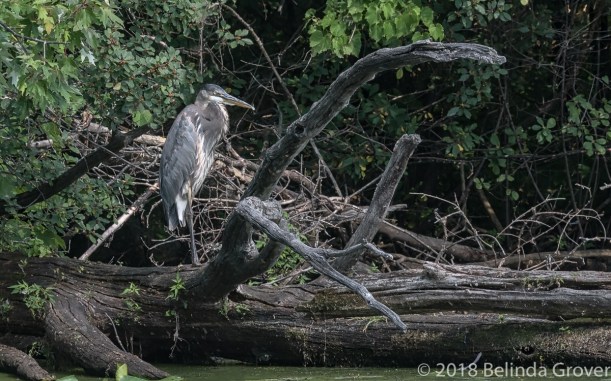
This was one of only a few Great Blue Heron sightings all this summer. A cold rainy start, followed by drought conditions might explain this. When I did come upon this regal bird I was delighted. He was just within my len’s reach and just far enough away to not care about my presence. I do hope to see one again before their fall migration south.

FEMALE WOOD DUCK
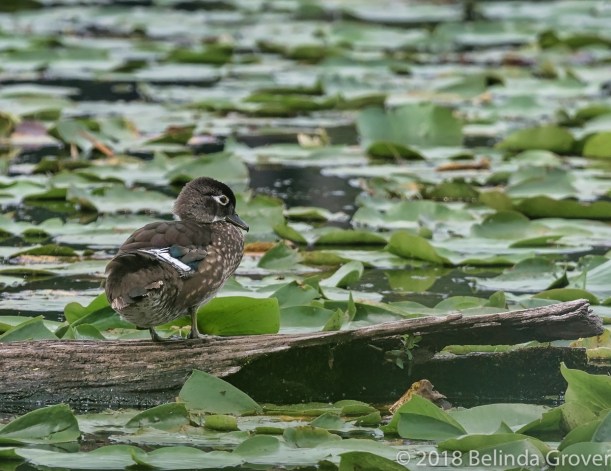
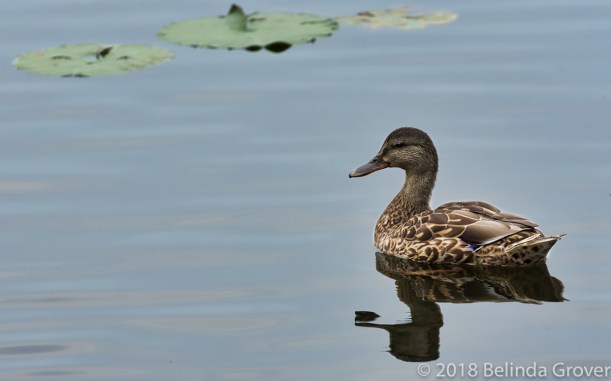
I enjoy photographing a lone duck, taking a break from the noisy group. This lake has many fallen trees that the ducks and geese take advantage of for just such a purpose. It was a good year for water lilies and their leaves provide a pleasing backdrop for the shot.
WOOD DUCKS
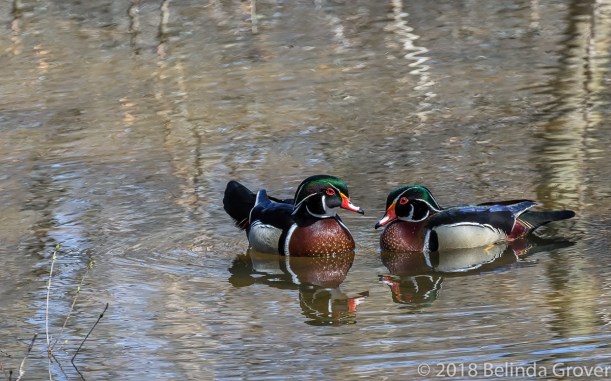
I took these handsome fellows back in May when they were in full breeding plumage. They are the most colourful of ducks and migrate to our region each spring. If we’re lucky wood ducks remain until the first frost. As the season progresses they become less wary of people and will swim close to shore or walk along the pathways for some nice close-ups.
DUCK SQUAD (TWO PHOTOGRAPHS)
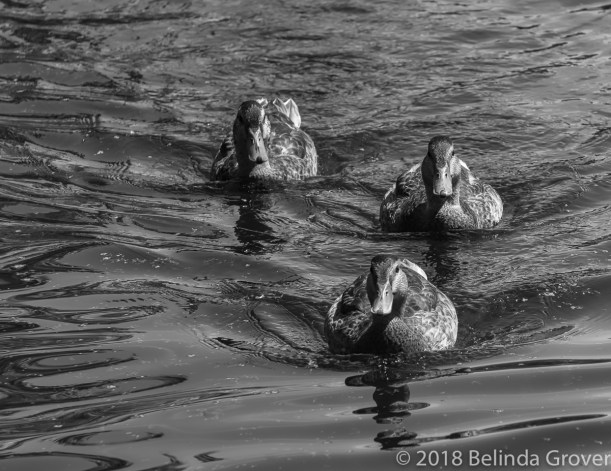
I love to see ducks swimming in formation, they swim with such purpose. American Black Ducks are not as common in our area as mallards but when you see mallards you usually see a few American Black Ducks as well. They might be common but I still find them extremely appealing.

COMMON GRACKLE (TWO PHOTOGRAPHS)
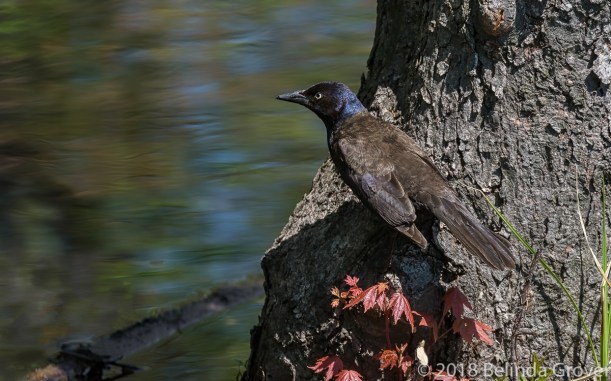
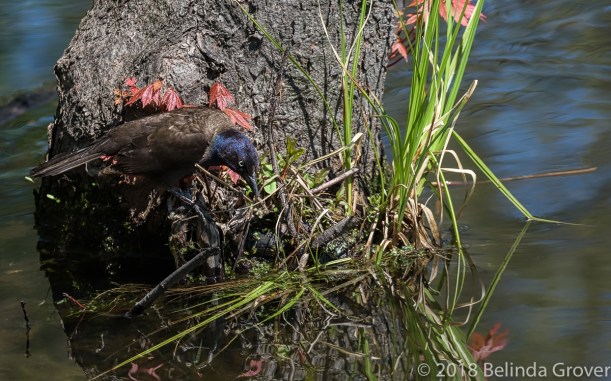
I took these photos in May as the Grackles were migrating through. I’ve yet to see them in the fall although I’m sure they fly through as they head south. I usually spot them along the shoreline, half hidden by branches looking for food. I was lucky in this case as the bird was out in the open. Grackles are gregarious birds, if you see one they’re usually in the company of more. A striking bird with its iridescent plumage and yellow eyes.
 BELINDA GROVER PHOTOGRAPHY