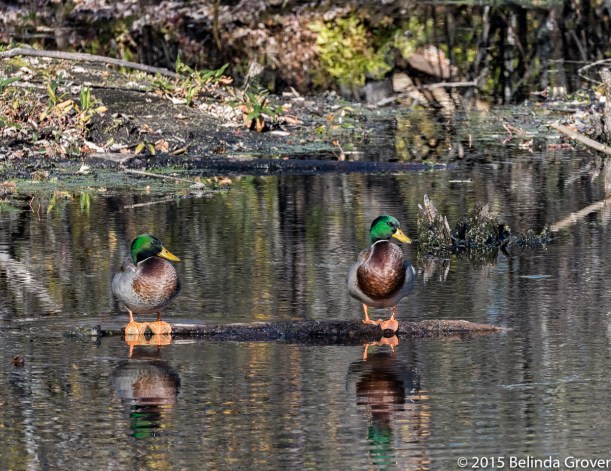
I do like mallards and I’ve featured them a few times now. They remain in our area year round and when nothing else shows up, you can always count on them for a photo or two. A common duck with uncommon good looks, these two are naturals.

I do like mallards and I’ve featured them a few times now. They remain in our area year round and when nothing else shows up, you can always count on them for a photo or two. A common duck with uncommon good looks, these two are naturals.
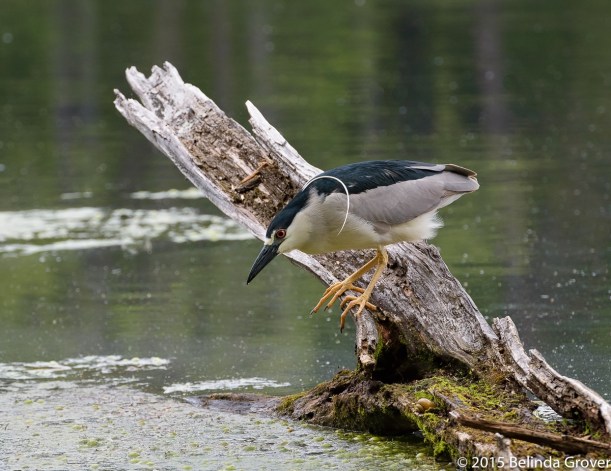
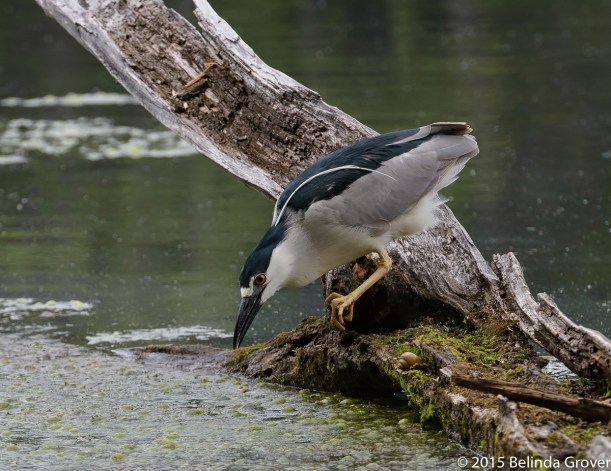
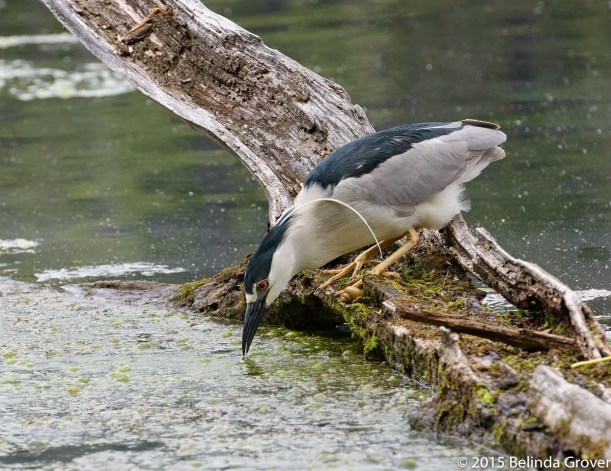
The Black-crowned night herons did not pass through in great numbers last summer. I was happy to spot this bird as he fished. We were standing close by but the heron was focussed on what he was doing and paid no attention to us. We waited for him to catch something but he wasn’t having much luck. We got the better of the deal coming away with a slew of shots.
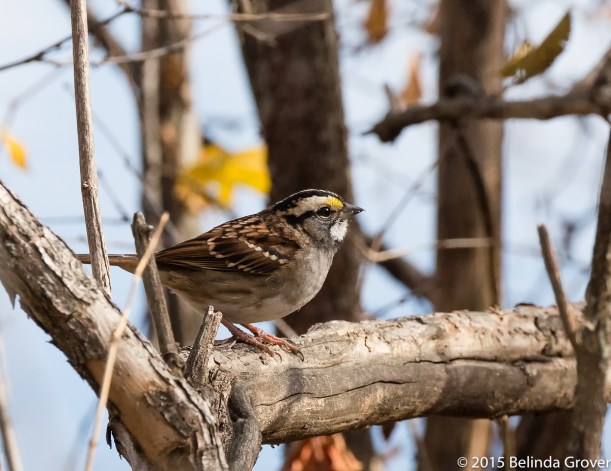
Flocks of these sparrows passed through our area last fall before migrating south. I find them a challenge to photograph as they forage in the underbrush often in large groups. They don’t remain in one spot for long either and all seem to take off at once. So I was happy to spot this individual in the open and he stuck around just long enough for me to take this shot.
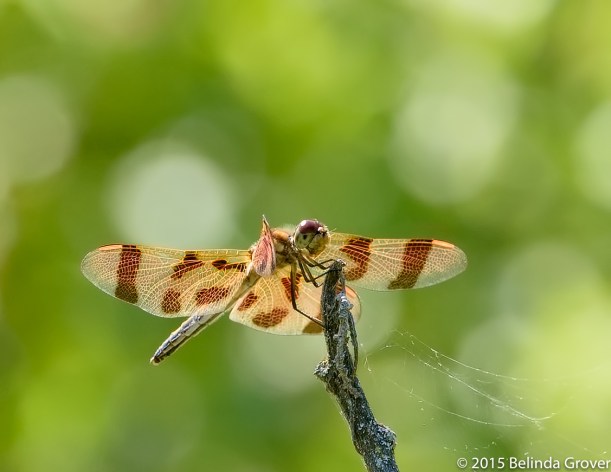
I spotted this dragonfly in late July. Its distinctive colouring makes it a standout. I have only seen the halloween pennant a few times, so I was pleased that I caught it as it perched close by. I think the spider’s web on the right adds another feature to the photograph.
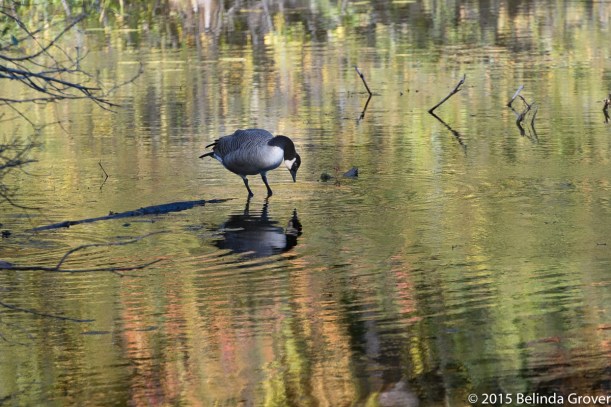
We’re lucky to have very distinct seasons but I think fall is my favourite. The changing of the leaves can make for wonderful photo opportunities. When I sat down to process this photo I cropped it quite closely to highlight the goose. I continued with my usual edits but wasn’t happy with the results. Looking at the photo again I knew that the goose wasn’t the subject of the photo, but an important element of it. The colour, the light, and the mood the scene evoked were key.
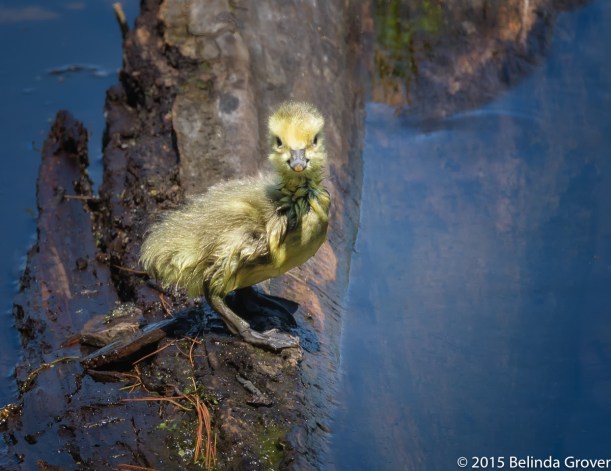
It seemed like a long wait last spring before we finally saw the young appear. We came upon this gosling in late May. He had swum over to the log and it seems we spotted each other at the very same instant. He was a distance from the adults so I was glad that he had climbed up onto the log. The lake can be a dangerous place for the new born with its fair share of snapping turtles and mink. Shortly after I took this shot he swam off to join his parents!
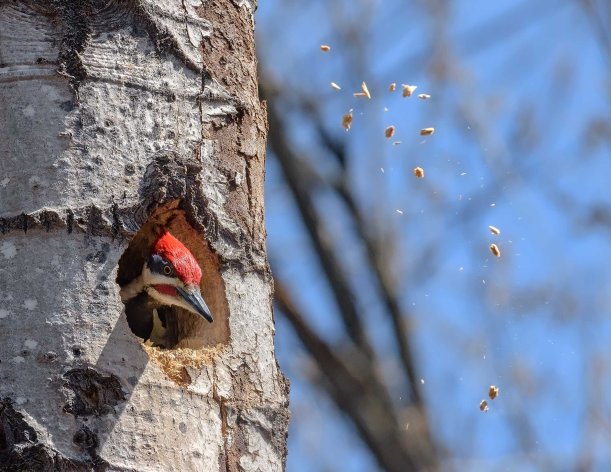
We had been watching the pileated woodpeckers excavate the nesting hole for several weeks. Seeing the male chip away from the inside was a sign that the work was almost complete. Later in the summer we saw three chicks pop their heads through the opening (subject for a future post). These woodpeckers are striking birds and hard to miss given their loud calls and the drumming sounds they make as they drill away at trees. The woodpecker in these photos was in a dense stand of trees so it was impossible to move in close. As he was intent on his task I had time to find an opening in the branches to get some clear shots. It’s always a good day when you come across these birds in the woods!

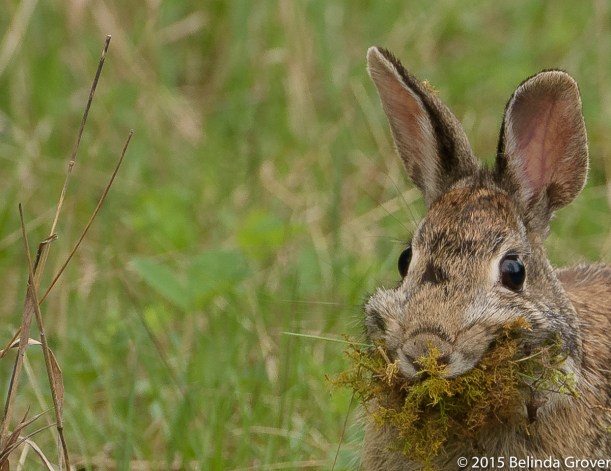
I came across this cottontail one morning last spring. As they are usually nocturnal I thought this was a bit of luck and given what he was up to, doubly so. I guess his snack was of more concern than I was because he held his ground which allowed me to capture him mid chew. Out of camera the shot was in the centre of the frame, I thought this crop gave the picture more impact.
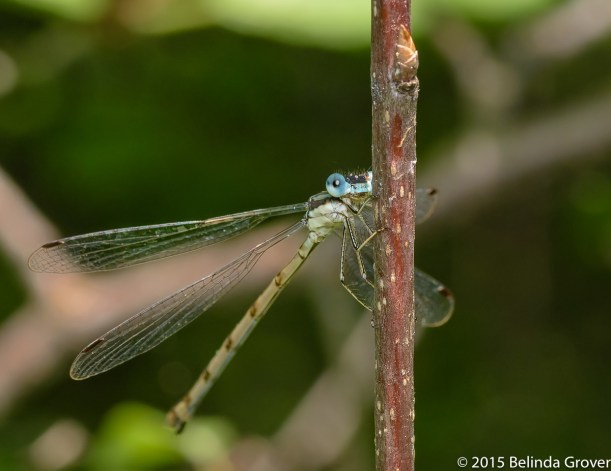
This was the first time I’d seen this type of damselfly. I believe it’s a Spreadwing. It’s rare that this species stays put when people approach. It was just my luck that it held firm for me to take the shot.
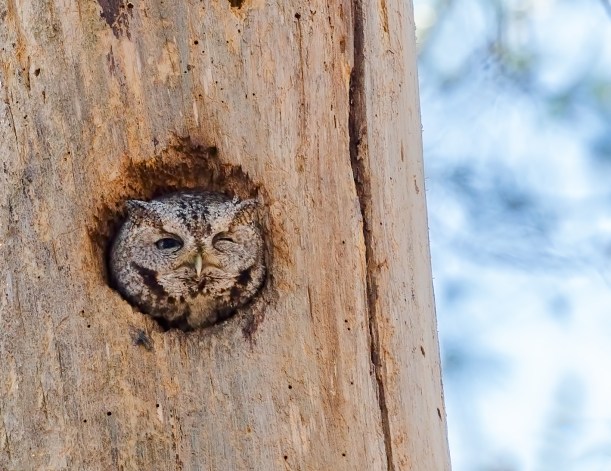
Walking along one of our favourite trails we came across some photographers with their cameras pointed upwards. If there had been no one else on the trail we would have walked right by as the owl was silent and its colouring provided perfect camouflage. The eastern screech is a small owl with a big head and almost no neck and it seemed to fit snuggly in the cavity of the tree. Out of camera the owl and tree were quite dark. I made contrast and shadow adjustments and added luminance to give more definition to the sky (all done in Lightroom) to show off this fine little bird.
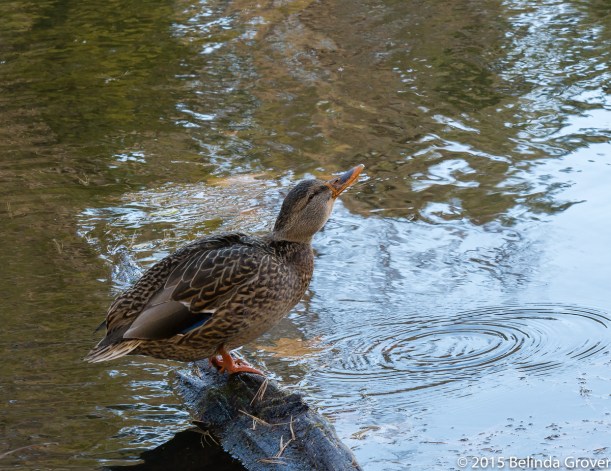
The mallard’s mates were out of site and she captured my attention alone on the log. I took this shot just as the duck had taken a drink from the lake, I think she looks kind of wistful! I made some contrast and exposure adjustments in Lightroom to brighten the photograph and enhanced the detail in Nik.
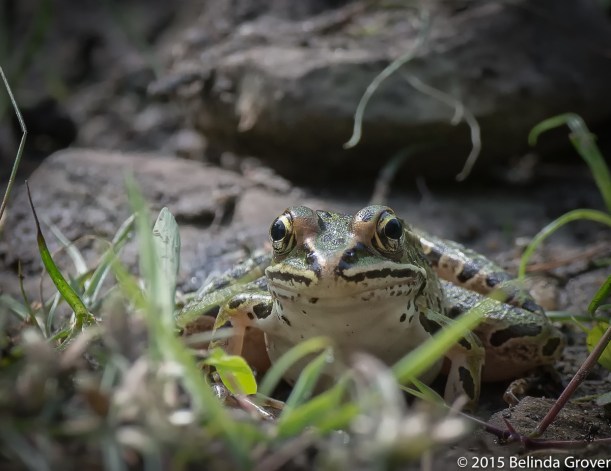
I was surprised to come across this frog peaking out from behind some grass a fair distance from the water. I later learned that this is pretty common as this species occupies a wide range of environments. The frog remained perfectly still and I only caught sight of him because my attention was drawn to an insect close by. I sharpened and enhanced the detail in Photoshop and made contrast, shadow and exposure adjustments in Lightroom. I also added a post-crop vignette to darken the edges and draw attention to the centre of the photograph.

I took this photo at a country fair a few summers ago. The boy was struggling to get the heifer to walk around the ring. They were both pretty determined but the kid managed to prevail. Opportunities to take pictures at public venues are getting more restrictive but there are still a few places where no one seems to mind.
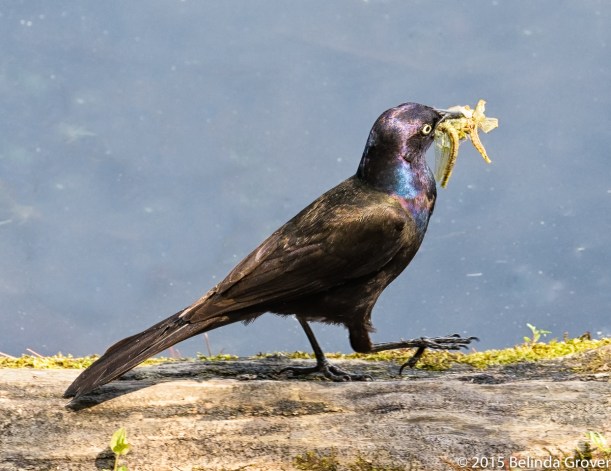
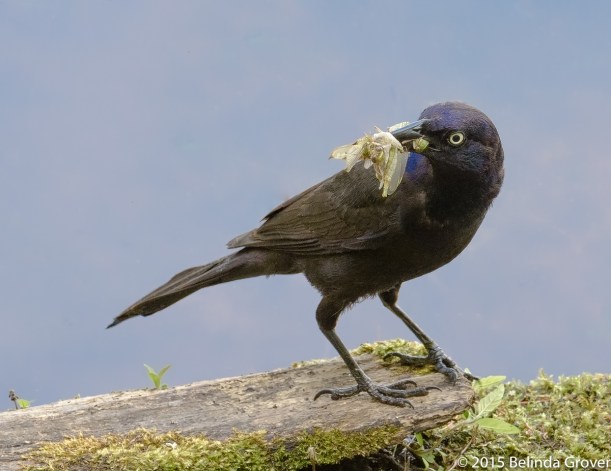
The common grackle is a member of the blackbird family although larger with iridescent feathering and striking yellow eyes. Grackles are resourceful and opportunistic foragers. The two shots of this grackle were taken moments apart and show the difference a well lit subject can make to a photograph. In the first photo the position of the bird caught the light to advantage, showing off its spectacular colouring; less so in the second example as the bird changed position. However, capturing the bird with a snack in its bill added some interest and made up for the less than perfect lighting.
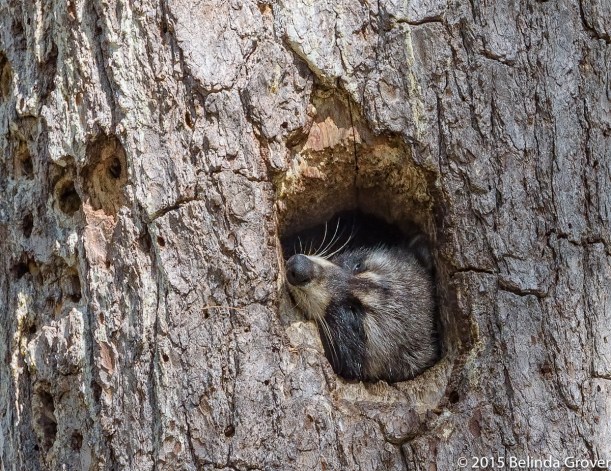
There are several spots we always check on as we make our way through the woods. The raccoon was having a nap in a tree where we have spotted raccoons before. The tree is located a fair distance off the path in a dark wooded area. Out of camera the shot was a bit grainy (it was taken at a high ISO) and given how far I was from the subject I had to crop the image significantly. I processed the shot with Macphun’s Noiseless Pro and Nik detail extractor. Another issue was the white balance which I corrected in Lightroom.
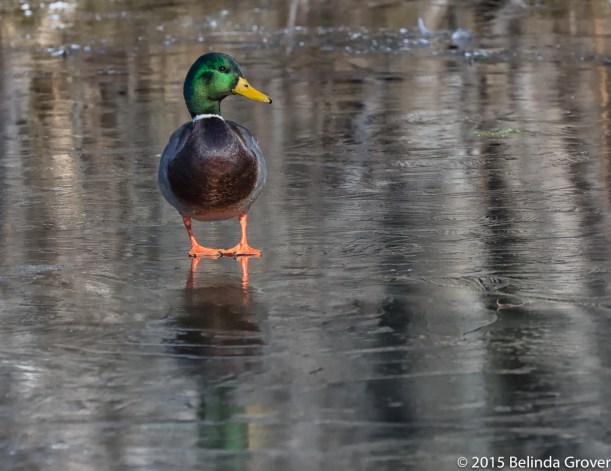
On the days when the wildlife in the nature reserve makes itself scarce, you can always count on some mallards to show up. They are a lively bunch and I enjoy their antics. While the majority migrate south during the winter months some remain. I took this photograph in mid-November as the ice was just beginning to form on the lake. The duck obliged for a few shots then walked over to an opening in the ice and swam away.

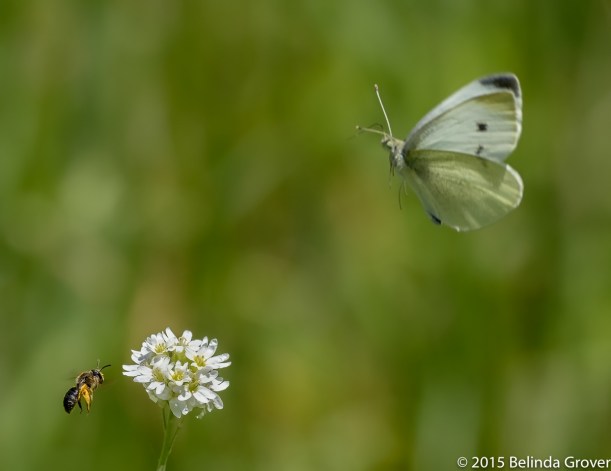
This variety of butterfly is one of the first we see in the spring and remains well into the fall which is one of the reasons I like it so much. I’ve found that cabbage whites often stay in place longer than other butterflies so I’m able to take several shots before they move on to another flower. This butterfly ignored me completely but the bee’s presence certainly got it’s attention. It was a brilliantly sunny day when I took these photos and the flower in the shot was blown out. In order to add some detail and tone down the harshness, I applied a radial mask in Lightroom, inverted it and adjusted the exposure. As both pictures were taken within minutes of each other under identical conditions, I used the copy and paste feature in Lightroom to adjust the white balance, contrast, shadows and exposure. A new tool in my kit.
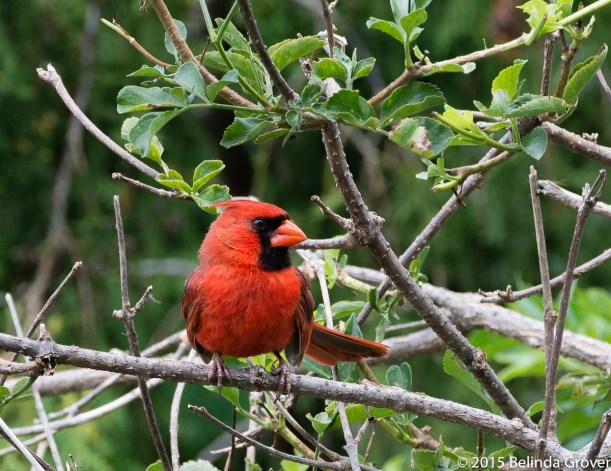
I spotted this cardinal in a dense grove of trees and waited for him to emerge. Away from feeders they are shy birds. Often all you see of them is a flash of crimson in the woods. I took many photographs before I got a clear shot not obscured by branches. The background was closer than I would have liked and a narrower depth of field wouldn’t have made much difference. Despite this I think the brilliant fellow stands out.
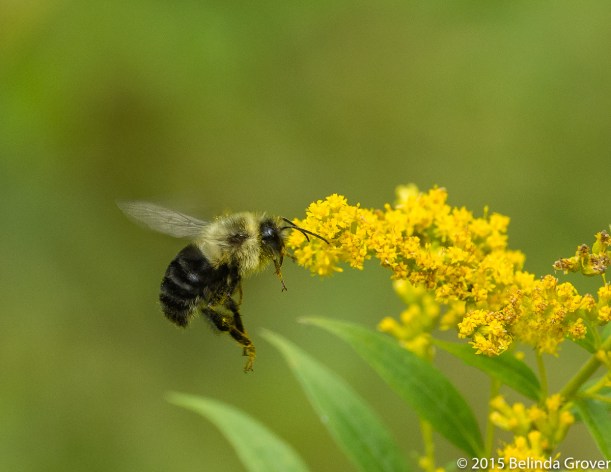
I was happy to see that the bumblebees were plentiful in our area this year. I never cared much for insects or bugs and bees used to send me running in the opposite direction! However, since I became interested in photography and started observing their behaviour, I learned that when left undisturbed bees tend to ignore everything around them and just go about their business. I love the challenge of trying to photograph insects in flight, anticipating their movements. Taken at 200mm, at 1/640th of a second I managed to capture the bee in motion. I made contrast, shadow and exposure adjustments in Lightroom and sharpened and enhanced detail in Photoshop.
This is my first blog post. I picked up a camera several years back as I thought it would add to my enjoyment of exploring the trails and green spaces that exist outside my front door. It has done that and so much more. Looking at the natural world through the lens of a camera gives me a new appreciation of light, context, detail and the story of the creatures I photograph. I do my editing in Lightroom and Photoshop. Photography has meant learning new skills, all part of the journey. I hope to see you along the way.
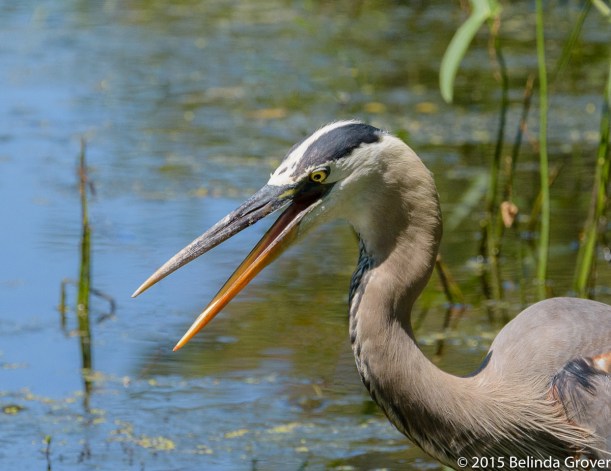
About the photo: the Great Blue Heron arrives in Ottawa as soon as the ice melts and usually remains until the ice returns. These birds were not seen in large numbers this year so when I caught sight of this heron I was pretty pleased. I was able to take a lot of shots as the bird was focussed on finding a meal. The conditions were ideal. I stood on a small bridge close by which put me at eye level with the heron wading in the rushes. The bird, the warm sunshine … I couldn’t ask for much more.
 BELINDA GROVER PHOTOGRAPHY