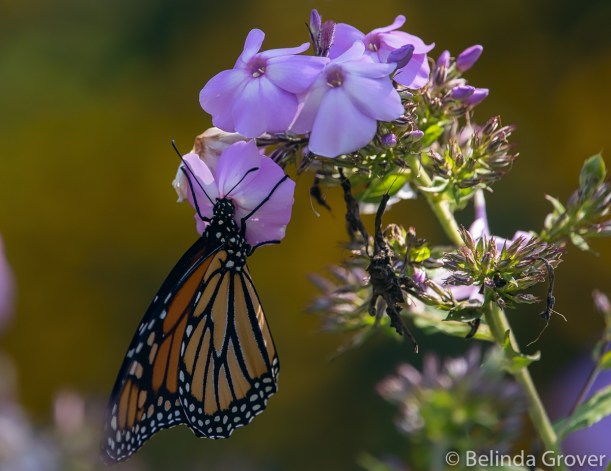
I’ve never seen a monarch feeding so intently before. It would have been nice if it had turned slightly but I caught its beautiful colours and its position added interest.

I’ve never seen a monarch feeding so intently before. It would have been nice if it had turned slightly but I caught its beautiful colours and its position added interest.
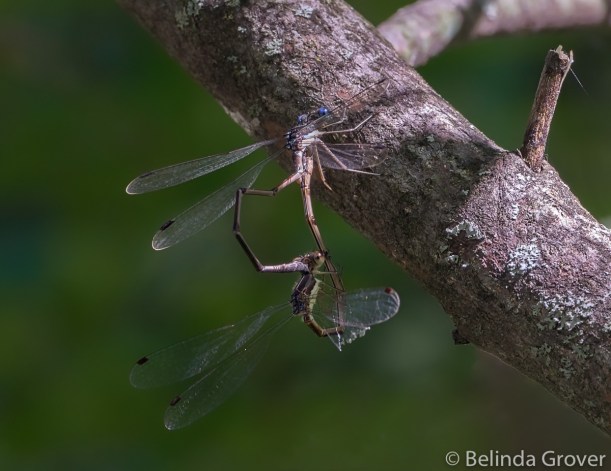
Summer is short here, a whole lot of living has to be done in a brief period of time. True for many creatures, particularly damselflies. Normally skittish but not on this day.
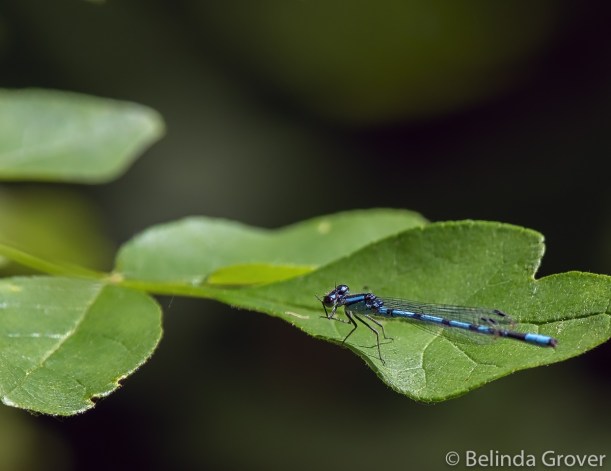

I’m more accustomed to seeing orange skippers (the Least or European) in my area so I was pleased to see this new variety. As the summer progresses, many butterflies linger as they feed and don’t seem to be bothered by the passing photographer.
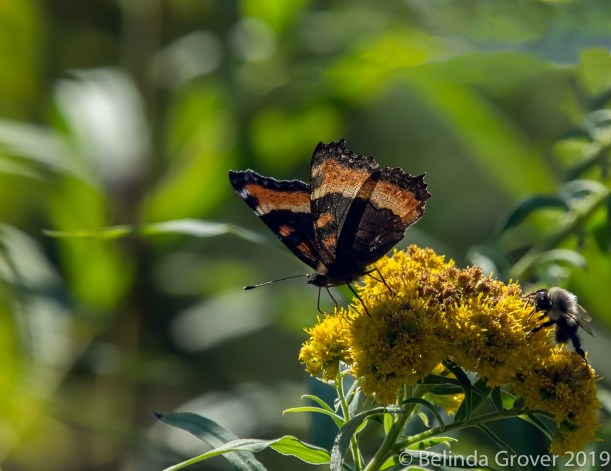
My eye was on the tortoiseshell butterfly, I didn’t see the bee at first. This was the first and only time I’ve seen this kind of butterfly. It’s interesting to see more than one insect on a plant at once, a bit of drama at play. In the end the butterfly blinked first and moved on.
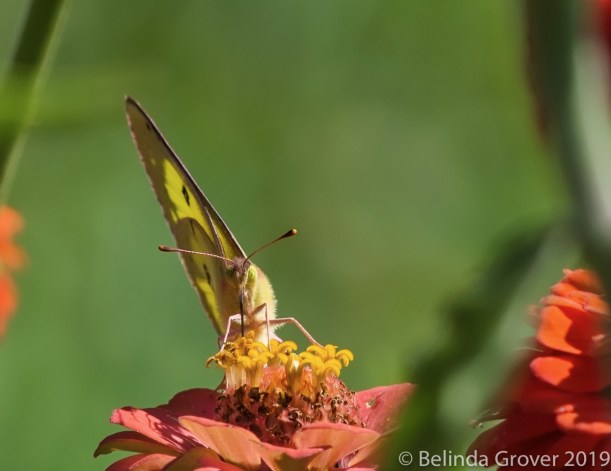
I saw quite a few sulphurs last year, all within the span of a few days. We were walking along some flower beds in a botanical garden hoping to see some painted lady butterflies. The day was a bonanza of butterflies, we saw three different kinds, including the sulphur.

This dragonfly posed so nicely I just had to take its picture. It appeared to be having as good a time as I was. 😊
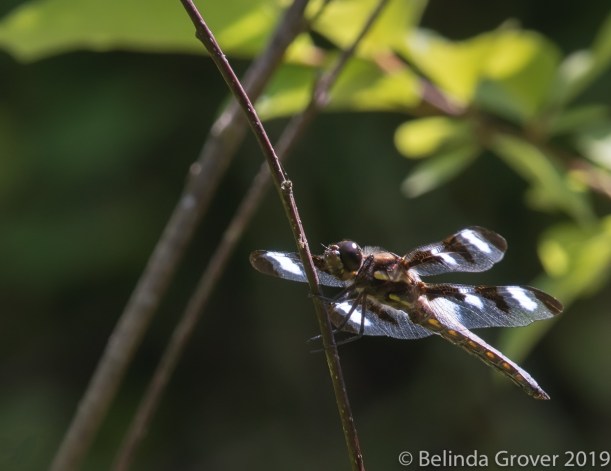
Another surefire sign of summer is the arrival of dragonflies. I saw this skimmer in early August. Each variety puts in an appearance throughout the summer. I’ve even seen a few still flying around late in the season if the weather remains warm.
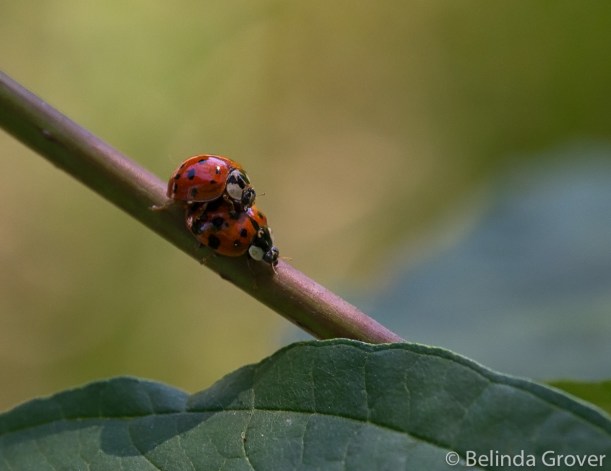
Ladybugs have tremendous balance and seem to do most things on the run 😏. Occasionally though they slow down enough to take a few photos.

At the best of times, watching bees visiting flowers and gathering pollen is a good sign for nature and our part in it. In these troubled times, it’s reassuring to see that life continues, there is still order and more will return in time.
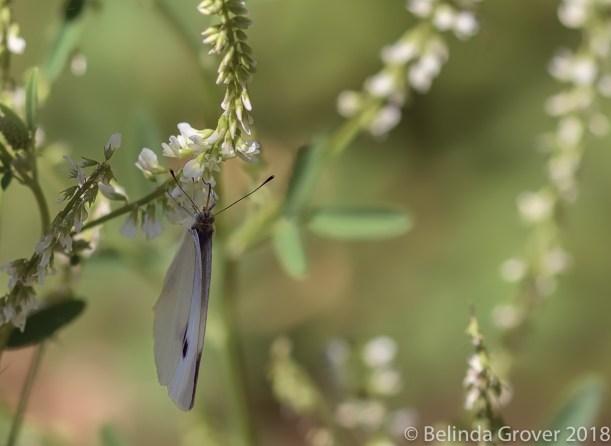
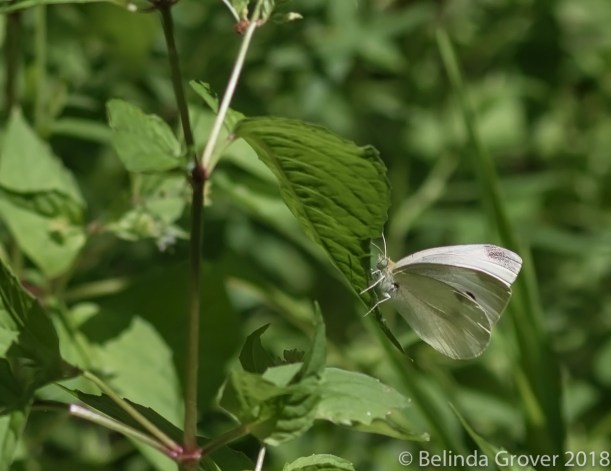
Another sure sign of summer are cabbage white butterflies. Their caterpillars are rough on gardeners but as adults they feed on nectar and are a pleasure to see. Unlike many butterflies, they fly slowly between the flowers and seem to linger longer than most.

Ants and peonies seem to go together. Ants feed on the flower’s nectar and also keep harmful insects away from the plant. The ant was racing along the bud but I waited until it finally slowed down and took the shot.

As I said in my post last week, I took a lot of painted ladies last year. Here are two more. Who thought butterflies could pull a face. 😏

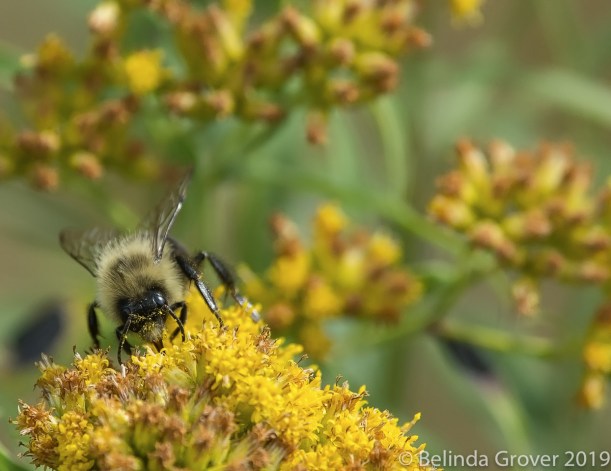
The light fell nicely on the bee, highlighting its face. I took the photo in September, the flowers were fading but there was still plenty of nectar and pollen to go around.
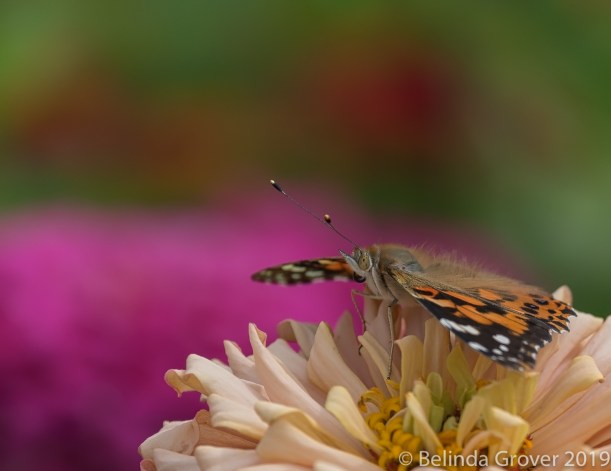 We saw many Painted Ladies last summer and I was fortunate to take a lot of photographs. The butterflies weren’t flighty but if one flew off there were many more to replace it. More photos to come.

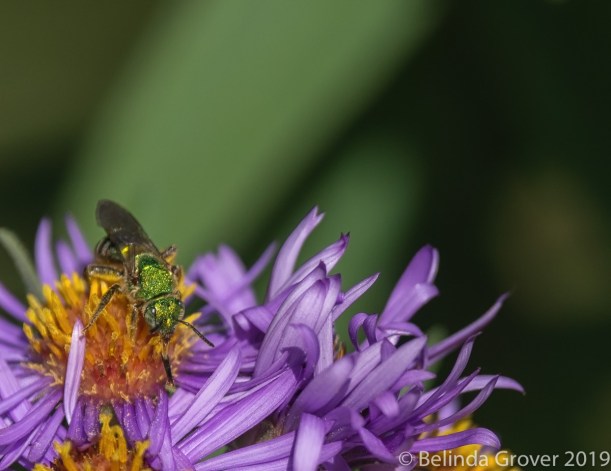 I took these photos early last fall. It was a good year for these brilliantly coloured bees. The first was taken in the woods and the second in a neighbourhood garden, both with my 300 mm lens, which I often use for close ups like these. It keeps me at a comfortable distance from stinging insects although these bees are usually too busy feeding to pay me any attention.

 I took this photo early last Spring. The bee was slowly warming up on the lily; the air is still quite cool in the early morning and all insects need a little heat to keep flying.
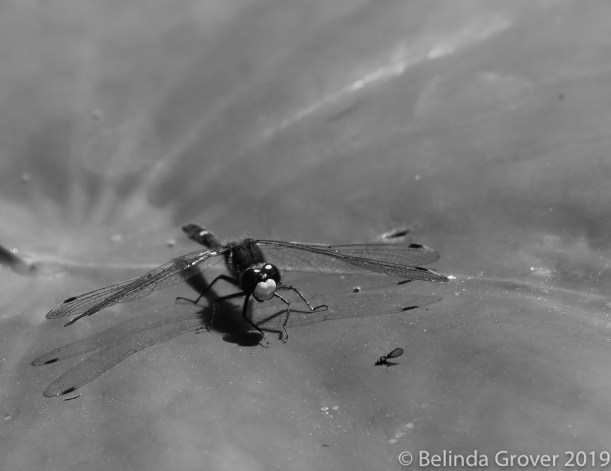
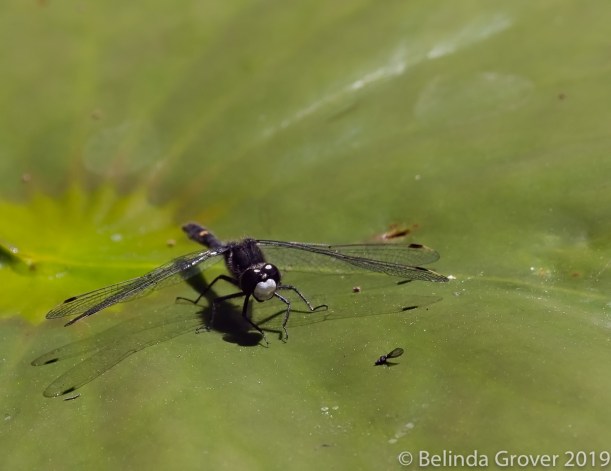 I took a lot of dragonfly photographs last June. They tend to emerge in bursts and you see them everywhere. I particularly like to watch them when they land on lily pads and turn slowly towards the sun. They look like mini helicopters.
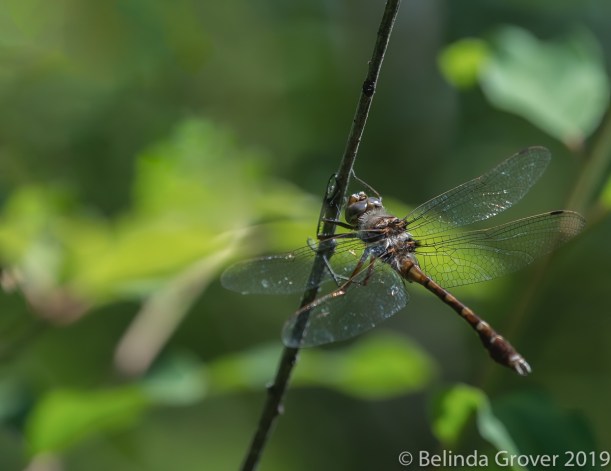
 When I took the photograph of this mating pair, I didn’t notice the other insects in the frame until I downloaded the image. I did a larger crop to show the damselfly on the far left, and a few other hangers-on on the tree stump. It was a busy time of year for these insects.

 I usually see more orange skippers than the silver-spotted variety shown here. I was pleased to spot this one though, he was as perfect an example as you could hope for. I like to keep my photos as natural as possible and the butterfly made that easy. I cropped in a bit and added some contrast and that about did it.
 Mimic flies are fun to photograph. If I had my macro lens with me, I would have concentrated on the insect but as I didn’t I took the shot I could. I rarely carry more than one lens when I go out so if I see something worth taking I’ll give it a go.
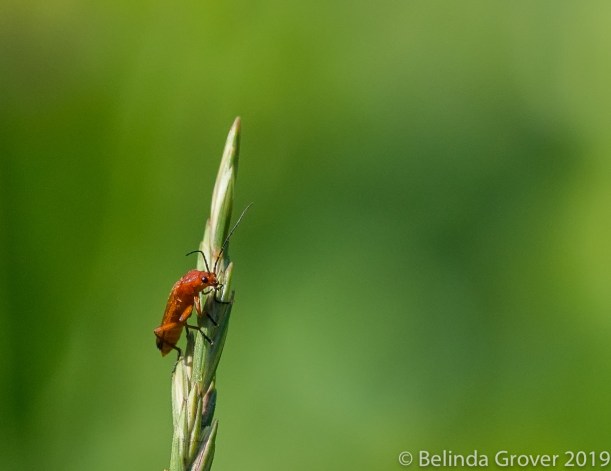 Another insect post. I miss these vibrant summer colours. We see a lot of white and grey in the winter but when the sun does shine, the sky never looked bluer.
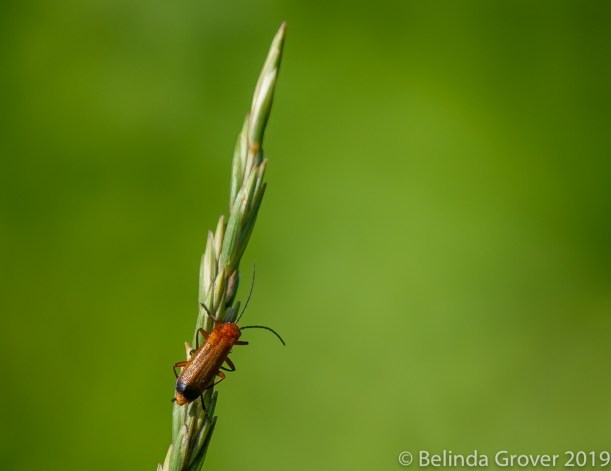
These beetles tend to climb on long grass stalks which make for an attractive background and gather in groups too so photo opportunities are abundant.
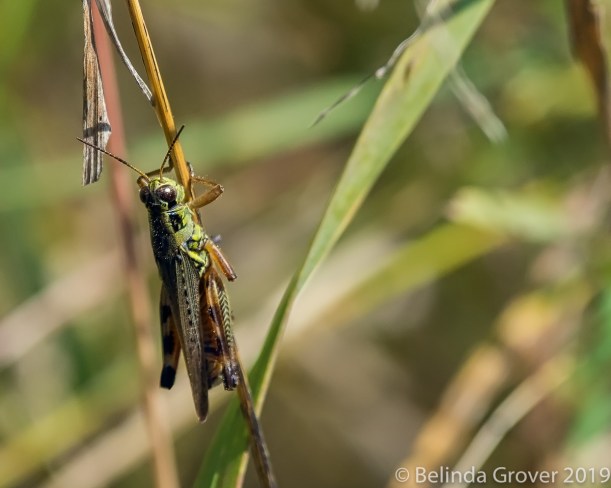 Grasshoppers are always fun to photograph, when you can find one. I only saw this grasshopper because it jumped onto a stalk of grass as I was walking by. It gripped the grass as still as could be and I took my shot.
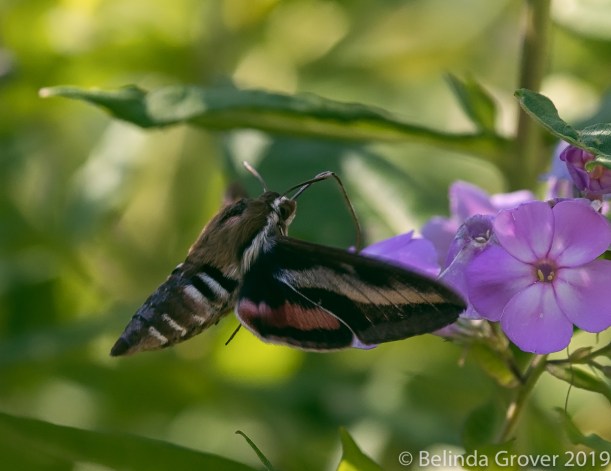 I saw a hummingbird moth just once this year, in mid-September. A friend introduced me to these insects a few years ago and every summer I keep an eye out for them. They are remarkable looking, and unlike many moths feed during the day, so if you’re really lucky you might just see one. In the second photo the moth looks like its had one too many. 😊

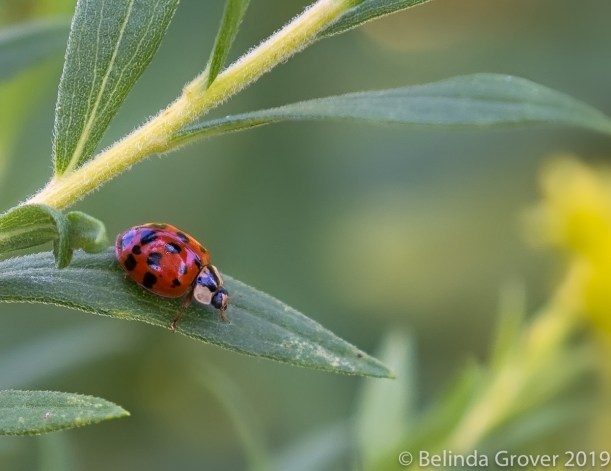
A bit too cold for photography lately. I pulled this photo from my summer files. It was taken in August when everything was at its brightest and most colourful. A bit of cheer on this cold December day.
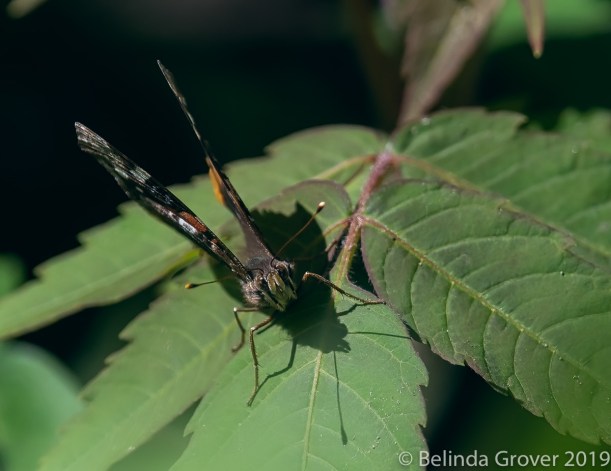 I didn’t manage to capture the butterfly with its wings wide open but this face on shot made up for it. Butterflies can fix you with a look so direct that you might wonder what you have interrupted😏
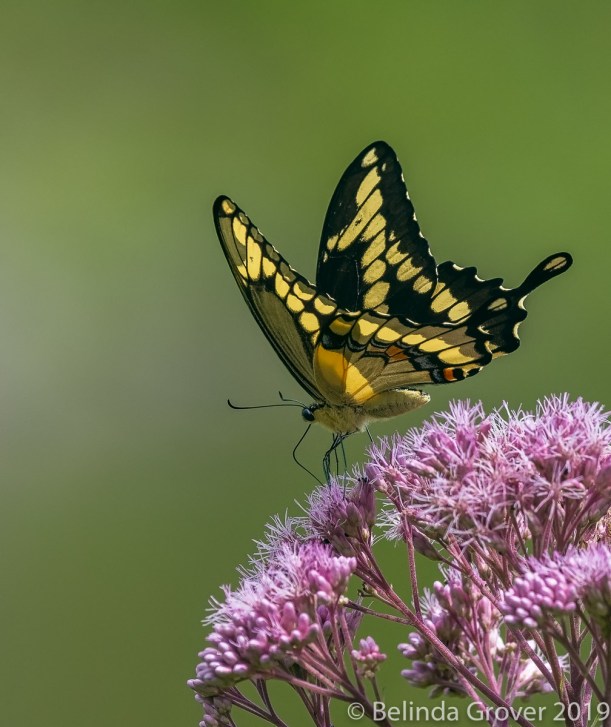 I saw the last swallowtails of the year in August although other butterflies were still around until early October. A very good year for them all. The swallowtail made picture taking very easy as it lingered on the Joe Pye weed, a plant they love.
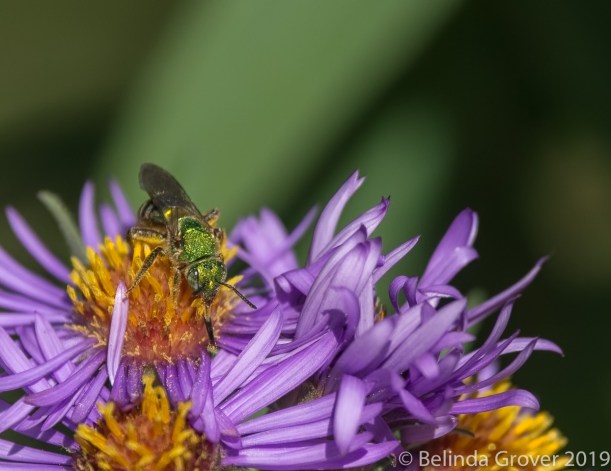
The bee was working on a deadline, busy collecting pollen in mid-September. Its colour is striking; among the most attractive of bees.
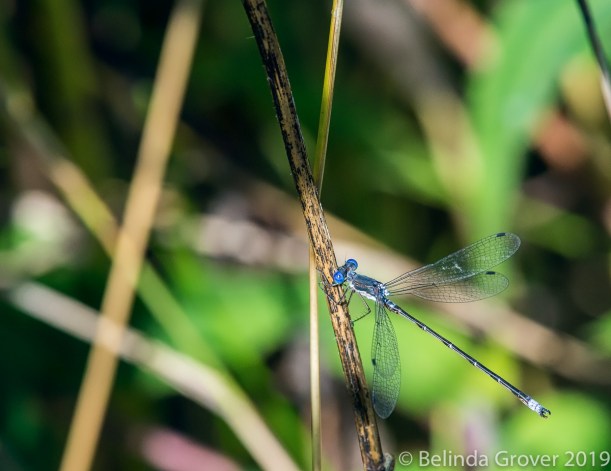 I thought the season for damselflies was over for the year when I saw one a week ago, perched on a stem. We’re still seeing the occasional Monarch but this is the only damselfly I’ve seen in over a month. A wonderful sight indeed.
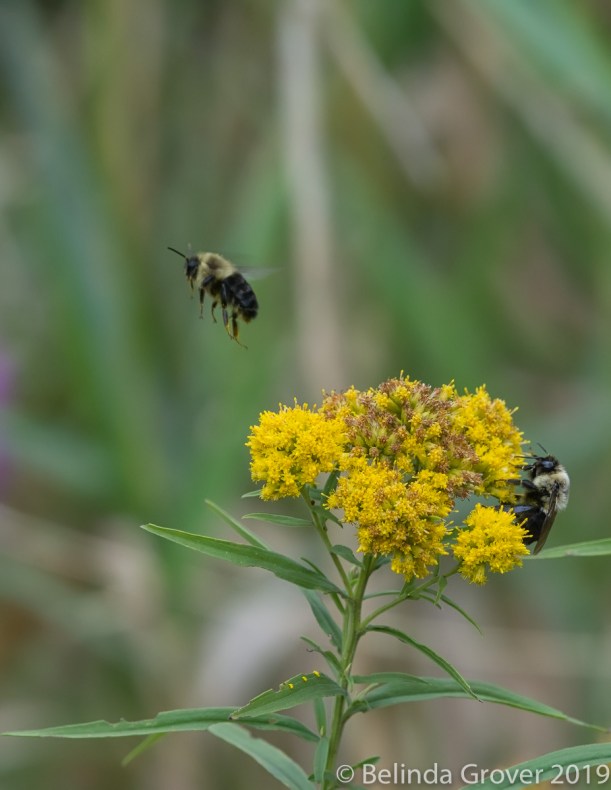
The bees are making the most of the late summer flowers. They were everywhere that morning. Some worked together, some worked alone and some like the bee in the first photo didn’t want any company.

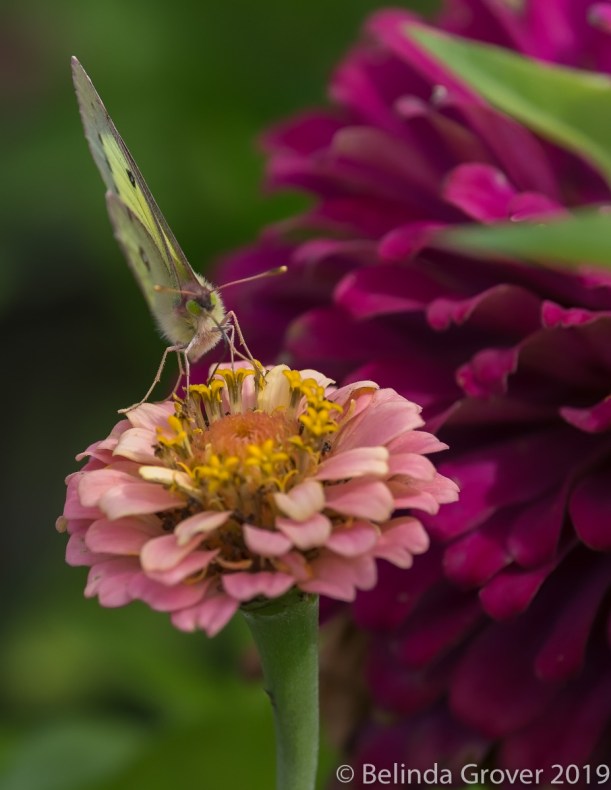 It’s been a terrific year for butterflies in my part of the country. When visiting a local botanical garden, in among the clouds of painted ladies was this solitary sulphur butterfly. I went back a day later and I saw it again. Unlike the painted ladies who were constantly on the move, the sulphur, Pink-edged or Clouded (I’m not sure which) savoured the nectar for a while.

 A friend had some success photographing a hummingbird moth at a wildlife garden we frequent. Luck was on our side too on a recent visit. This moth beats its wings at great speeds so I was pleased to get this photo and several others in decent focus (of the hundreds I took). Not an easy subject but oh, when it works😊.
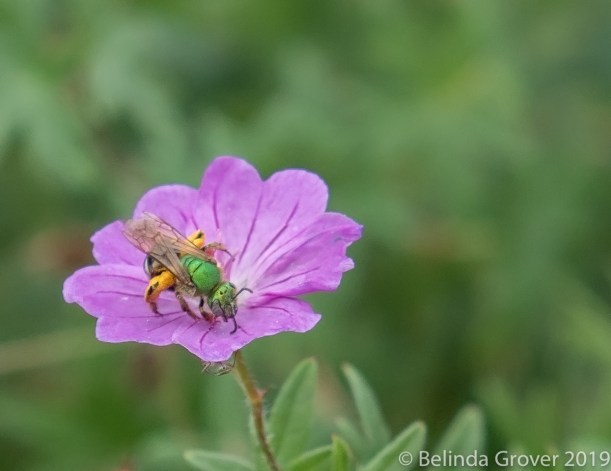 This is a metallic or sweat bee. Their attractive colouring make them one of my favourite bees. We don’t see many of them but when we do they often have a dusting of pollen that makes them stand out even more. You might notice another insect making its way up the underside of the flower. Had I seen it when I was taking the photo I would have remained to witness the encounter.
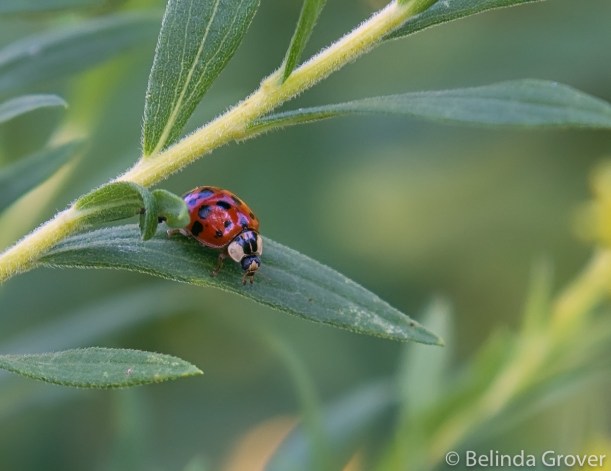
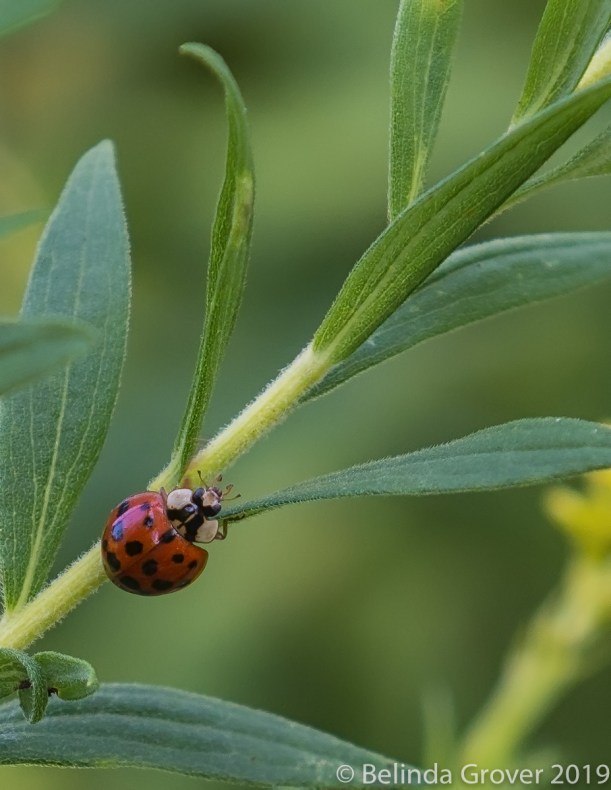
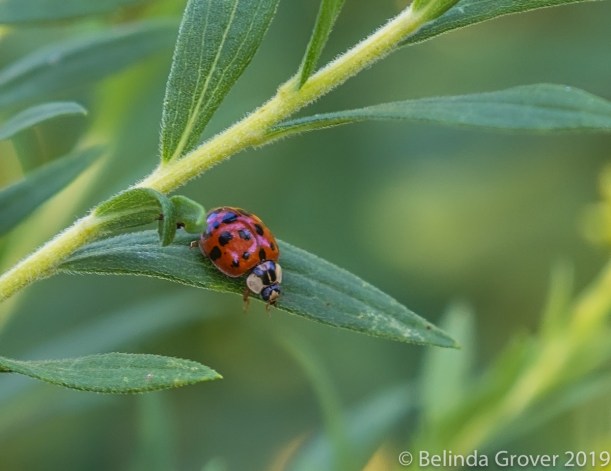 As the end of summer approaches it was nice to see this ladybug. Ladybugs hibernate over winter. Here in Canada, if they hibernate in your garage, it’s said to be a sign of good luck. Many would disagree 😏. The ladybug was racing along the stem and I kept my lens trained on it as it dodged in and out of sight. I hope to see a few more of these insects before the cold weather sets in.
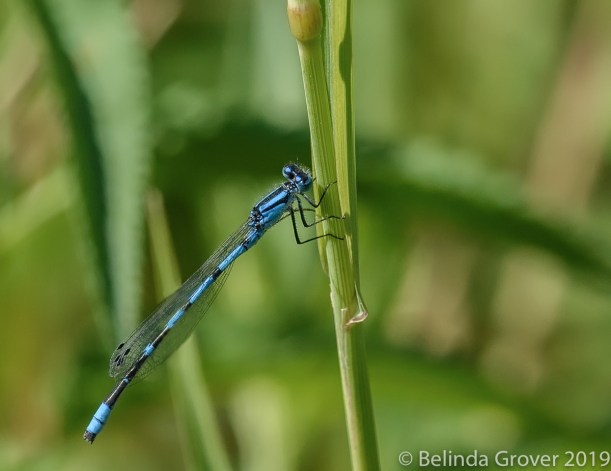
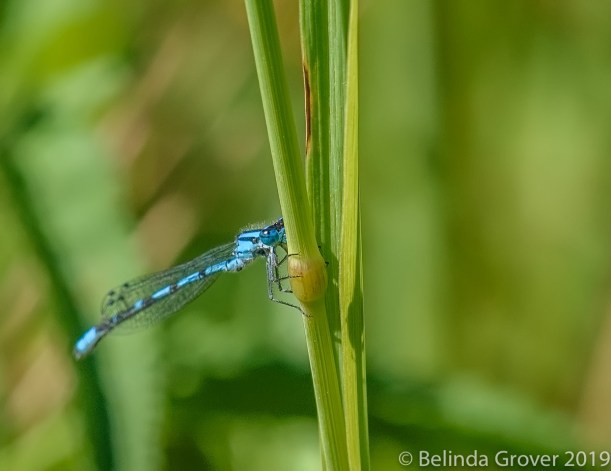 This damselfly perched on a plant that contained an insect gall (the growth you see on the stem).
We are getting to the end of the damselfly season although dragonflies will continue to emerge into September. It feels as though summer has barely begin but I sense the change of season. The days are warm but the evenings are cool and the wildflowers are beginning to fade.
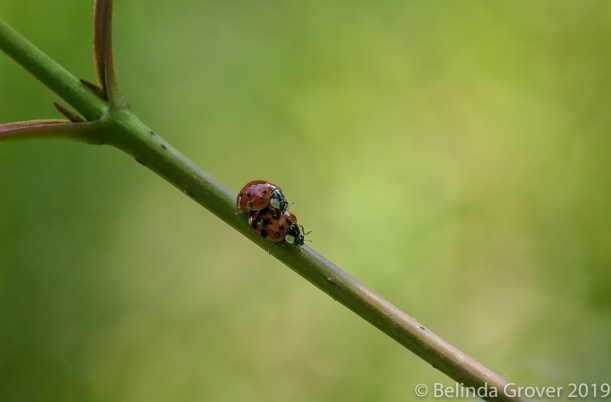 The ladybug is a a pretty common beetle, although I’ve only seen a couple this summer, including this pair. They come in many varieties and are useful insects as they eat a lot of garden pests.
 It’s a summer with more bugs and insects than birds. Happily, dragonflies are attractive subjects that I like to take. This one looks like he’s King of the Meadow.
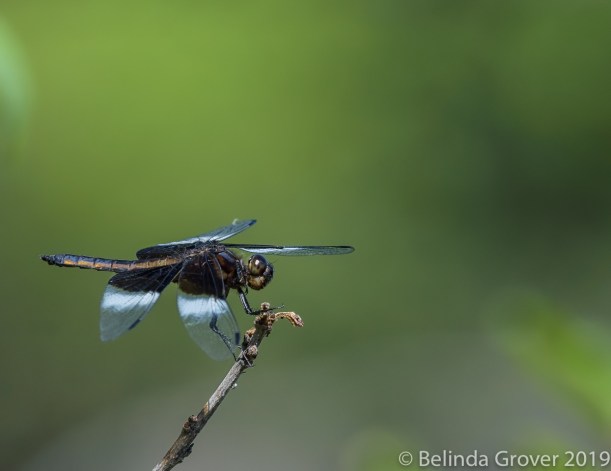 The Widow Skimmer is a big showy looking dragonfly that we’ve been seeing a lot lately. They are known to be territorial and aggressive but you’d never know it to look at this one.
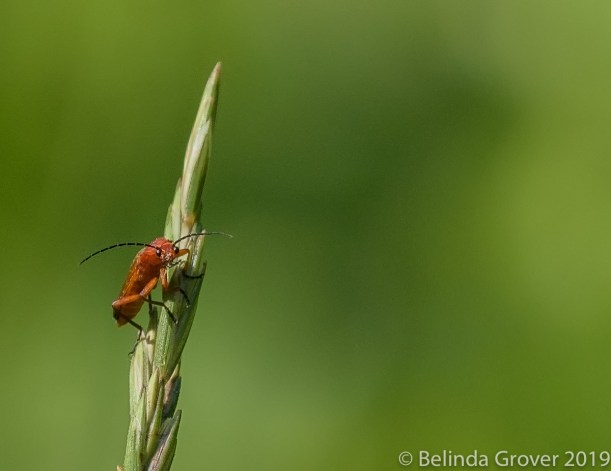 I believe this is a red soldier beetle. I saw one then a few more on surrounding plants. It’s been my experience that you never see just one. I took this with my 300mm so I was pleased that I got a decent shot with a bit of cropping.
 I’m not a great fan of flies but they can make engaging subjects, particularly the pollinating kind like this one. There’s a tiny garden maintained by a local business association that plants a variety of wildflowers every summer. I was walking by when I spotted the fly on some milkweed.
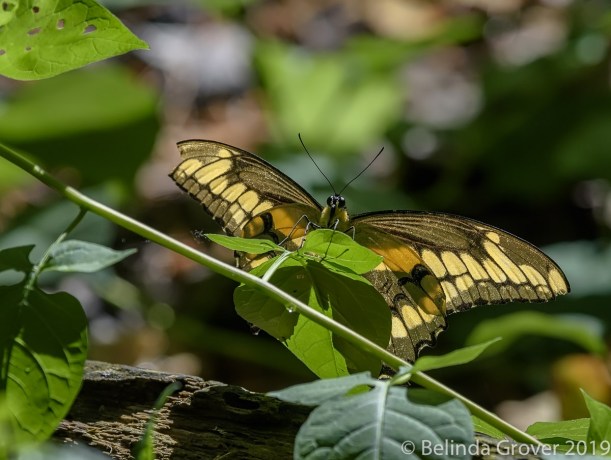 We got to the park in the early morning when it was still cool and watched as the swallowtail landed on the plant. If we had been an hour later it would have led us on a merry chase; as the temperature warms, butterflies speed up and don’t stay still for long. We see a few of these butterflies every year, always a pleasure.
 BELINDA GROVER PHOTOGRAPHY