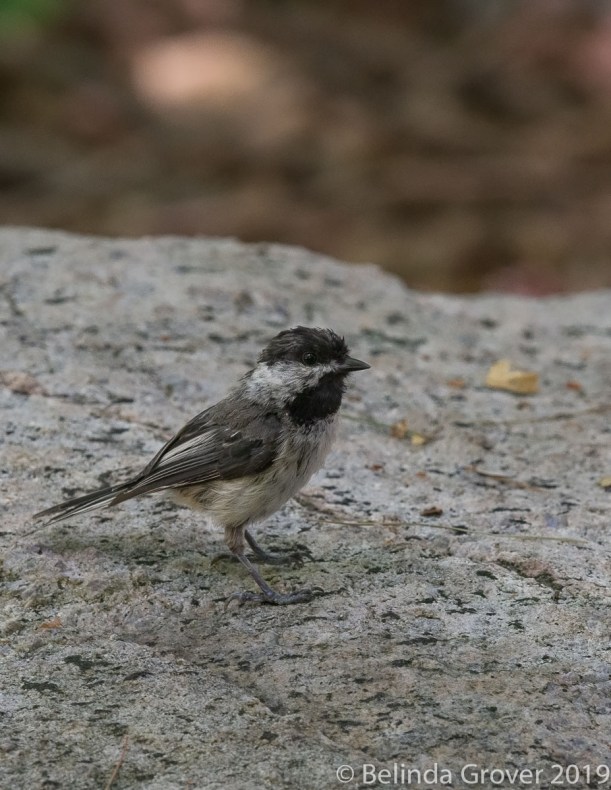
 I wasn’t sure if the bird was moulting or just wet. Another chickadee close by didn’t appear out of the ordinary. If the bird was moulting, it still looked pretty sharp unlike other birds that can look downright ugly!
Tag Archives: Nature Photography
A NOD TO SUMMER
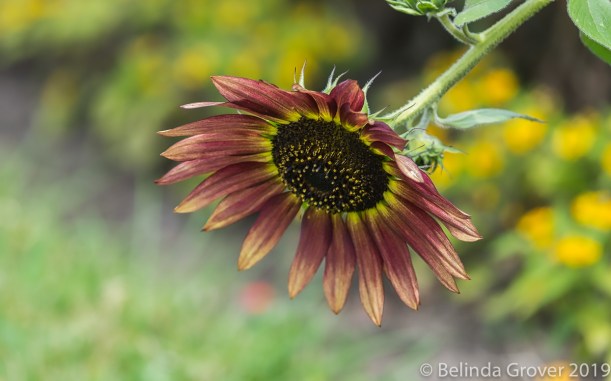 I’ve never seen a sunflower this colour before. It seemed rather fitting for this time of year. The sun isn’t as bright or warm as even a week ago and this flower seems to fit in perfectly with the changing season.
METALLIC BEE
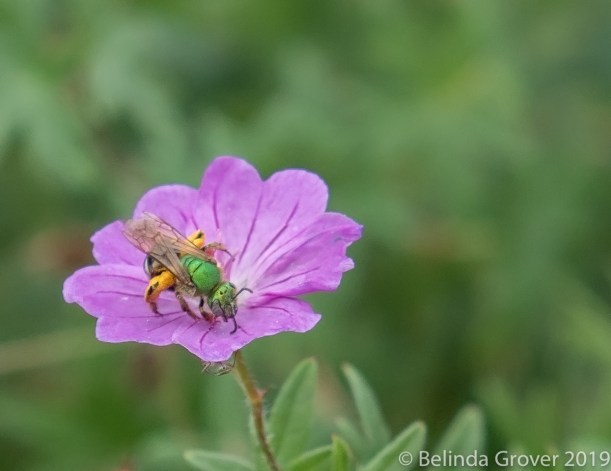 This is a metallic or sweat bee. Their attractive colouring make them one of my favourite bees. We don’t see many of them but when we do they often have a dusting of pollen that makes them stand out even more. You might notice another insect making its way up the underside of the flower. Had I seen it when I was taking the photo I would have remained to witness the encounter.
LEOPARD FROG
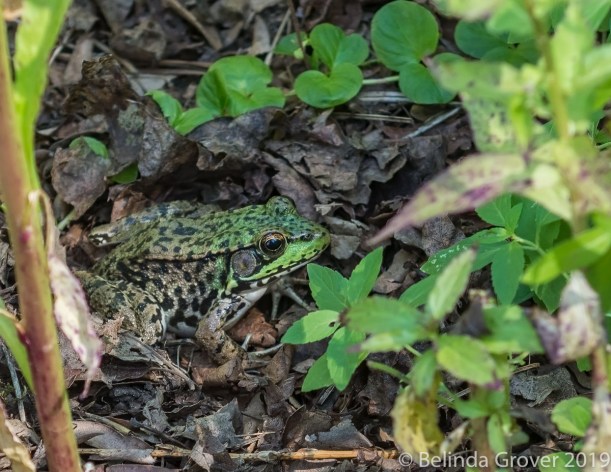 This is one of only a few frogs I’ve seen this summer, a handsome leopard frog. He stayed in the same position for the longest time, I hoped he would move forward a bit so I could get all of him in the shot. I waited for a while and finally gave up and continued my walk. As we were leaving the garden, I checked to see whether he had moved on. He hadn’t budged at all. I guess he was enjoying the day his way!
HOME ON THE RANGE
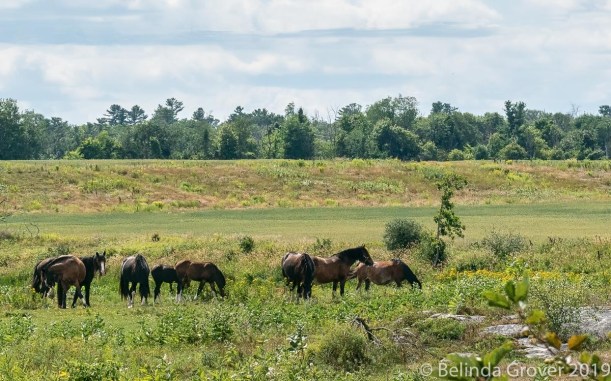 We stopped the car when we saw the horses in the field. They were at a considerable distance yet one curious horse stopped grazing to look our way. Not much detail in the horses given how far away they were, but they added a tranquil feeling to the scene.
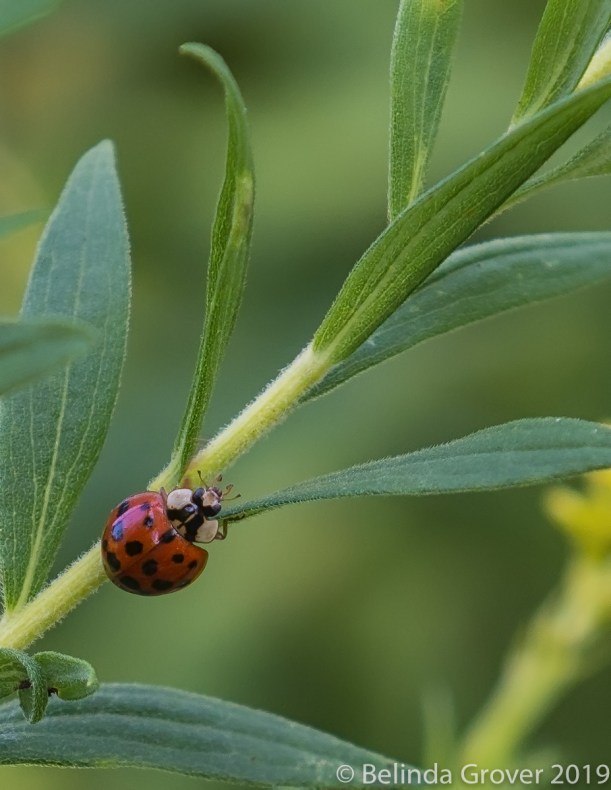
LADYBUG (TWO PHOTOGRAPHS)
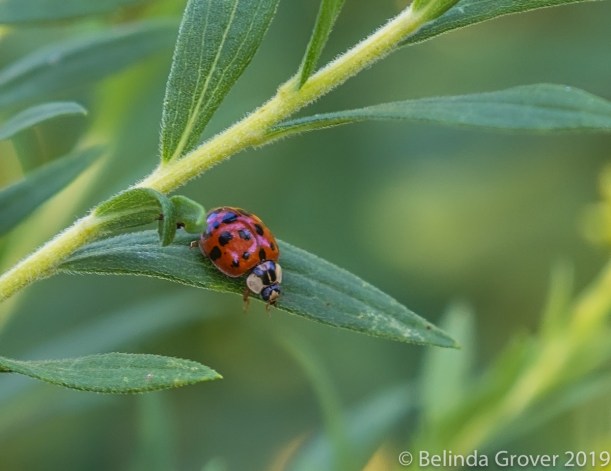 As the end of summer approaches it was nice to see this ladybug. Ladybugs hibernate over winter. Here in Canada, if they hibernate in your garage, it’s said to be a sign of good luck. Many would disagree 😏. The ladybug was racing along the stem and I kept my lens trained on it as it dodged in and out of sight. I hope to see a few more of these insects before the cold weather sets in.
OVER THE FENCE (TWO PHOTOGRAPHS)
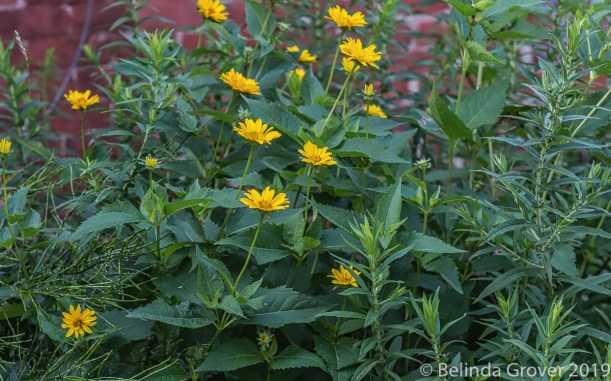
 I wish I could remember where I took the photo above, as I would return to see how the garden looks now. I liked the untamed look to the place and exotic flowers growing there. The second photo was taken in my neighbourhood. I return every year to photograph these yellow flowers against the brick wall of the house.
PAINTED TURTLE (TWO PHOTOGRAPHS)
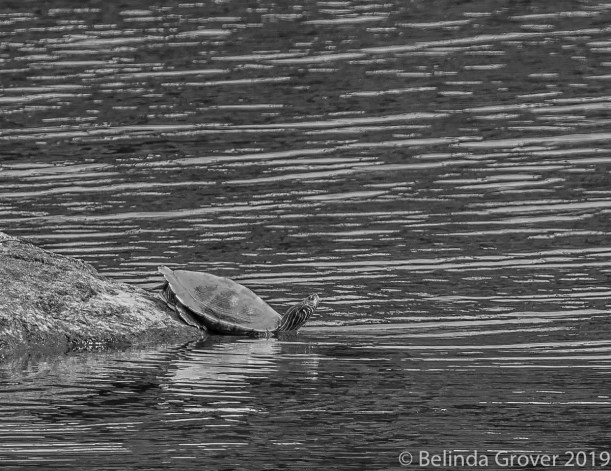
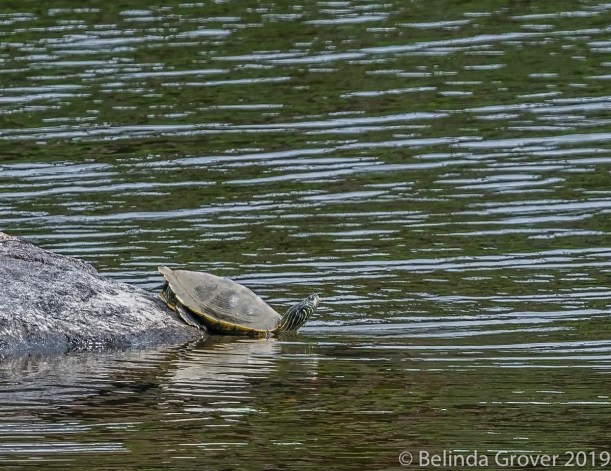 I was scanning the river for birds when I noticed this very large painted turtle on the edge of a boulder. I kept expecting it to slip into the water but it continued to balance like this for all the time I was there. Although not endangered or threatened, its status is of “Special Concern” as it may become so. That said we haven’t had as many sightings as usual this summer; I do look forward to seeing them every year.
SUMMERTIME
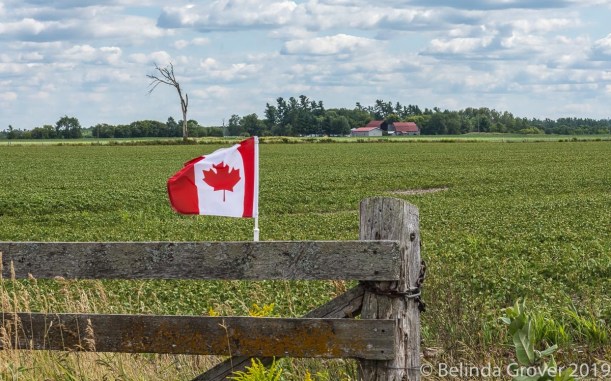 On a recent weekend afternoon, a drive through the countryside with friends provided many scenes like this one. The colours of late summer and the light are different now, not as brilliant but still beautiful.
IN THE REEDS
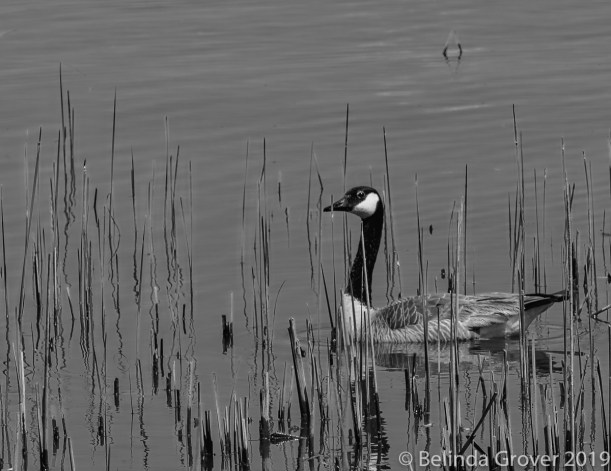 The Canada Goose was swimming close to shore winding its way through the reeds. I usually try to get a clean shot of a bird but in this case I thought the reeds made for a more interesting and realistic photograph.
BALANCING ACT
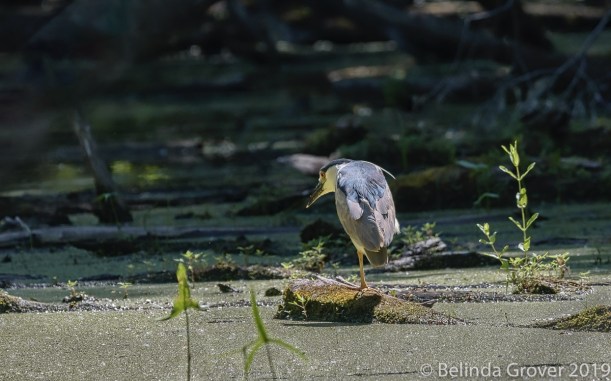 We often see Black-crowned night herons intent on the water, performing this balancing act. They can hold the pose much longer than I can keep my camera raised. I took the photo from further than I would have liked but it does allow a glimpse of the surroundings.
POPPY
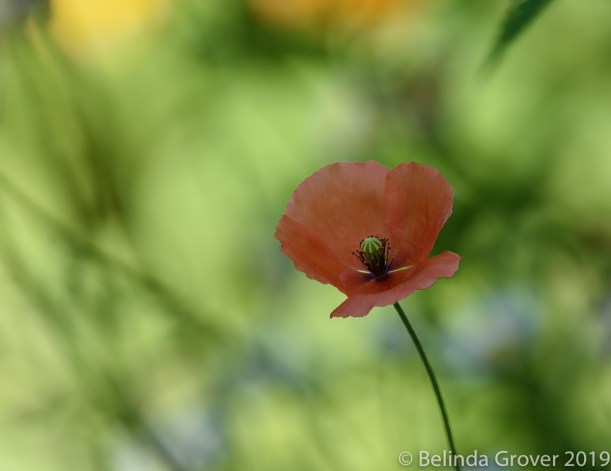 Poppies grow here for a very short period in summer. Their brilliant colour makes a mark on the landscape. Even against a brilliant backdrop they are standouts.
SISTERHOOD OF THE DUCKS
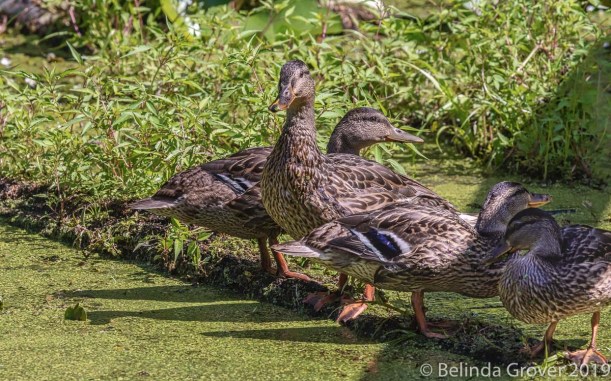 These four ducks are a tight knit group. I’ve seen them swimming in close formation on my last couple of visits to the reserve. On this particular day they were drying off after a swim. I was happy to get them all looking up, it took a while as they did some preening beforehand.
THE GALL OF IT ALL (TWO PHOTOGRAPHS)
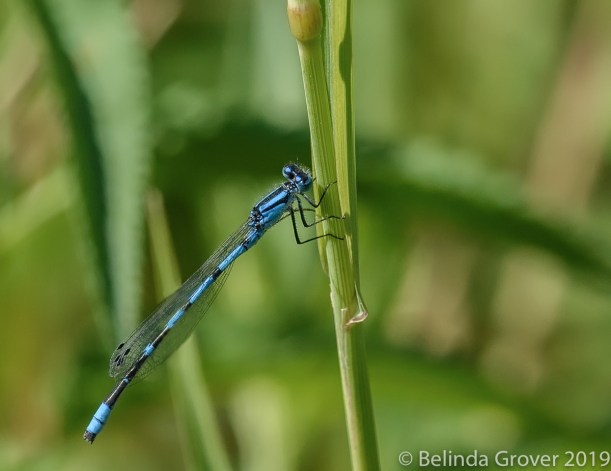
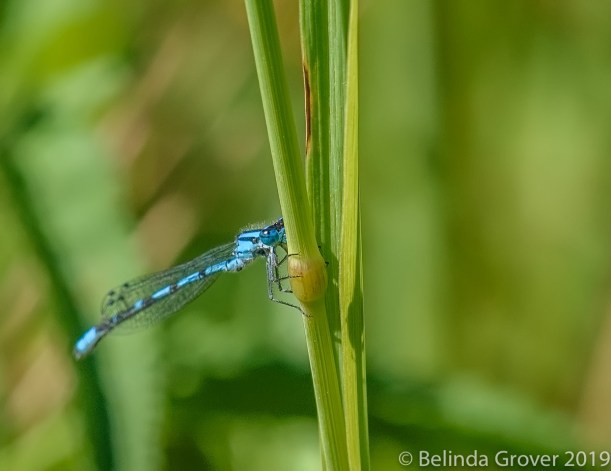 This damselfly perched on a plant that contained an insect gall (the growth you see on the stem).
We are getting to the end of the damselfly season although dragonflies will continue to emerge into September. It feels as though summer has barely begin but I sense the change of season. The days are warm but the evenings are cool and the wildflowers are beginning to fade.
SPARROW
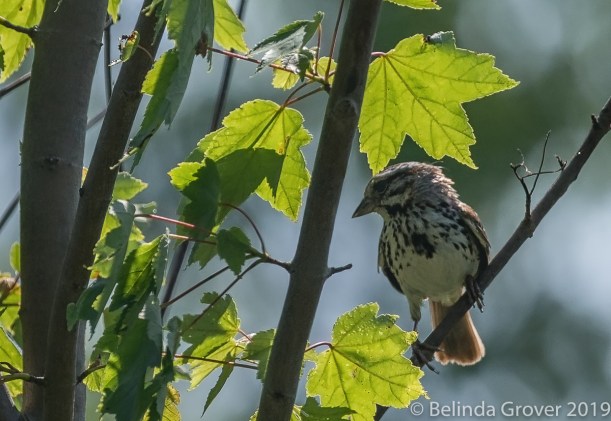 A morning when there were a lot of sparrows about and not much else. On days like these you appreciate the beauty in the ordinary. The sparrow was a nice poser and the surrounding vegetation framed it nicely.
A NICE MIX (TWO PHOTOGRAPHS)
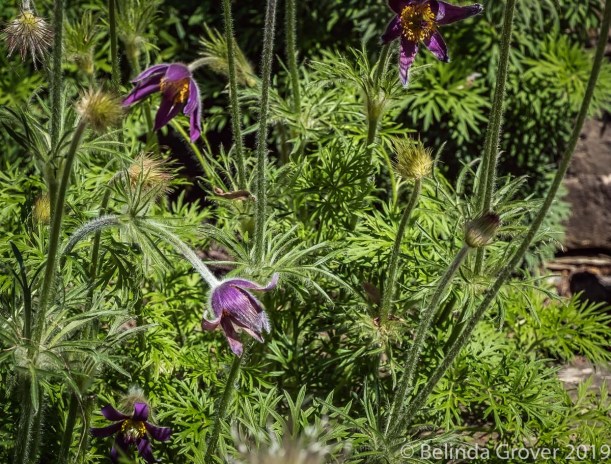
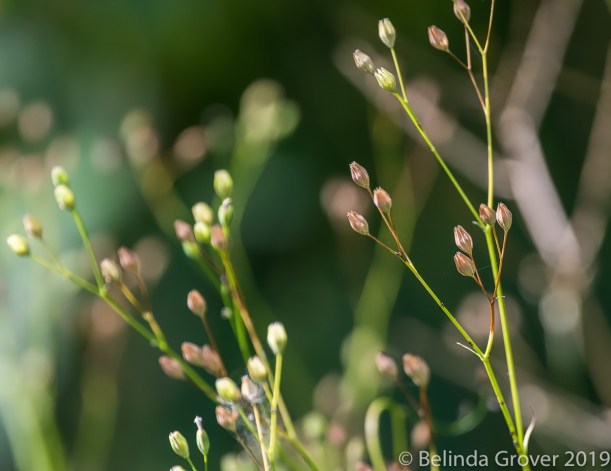
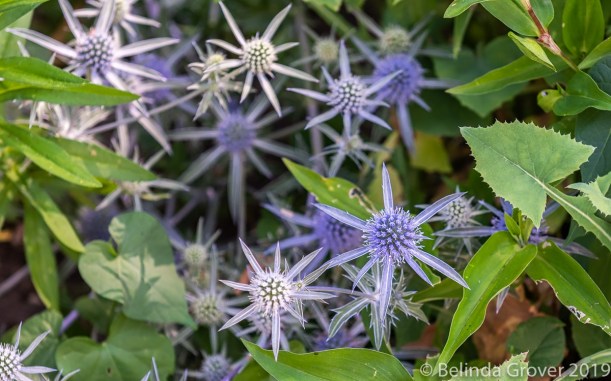 Different flowers, the first ones from a garden, the second growing in the wild. They both have an untamed quality to them. The violet flowers reminded me of underwater plants you’d see moving in a sea current. The others were found along a path and I took the shot just as the wind was lessening.
LOVE BUGS
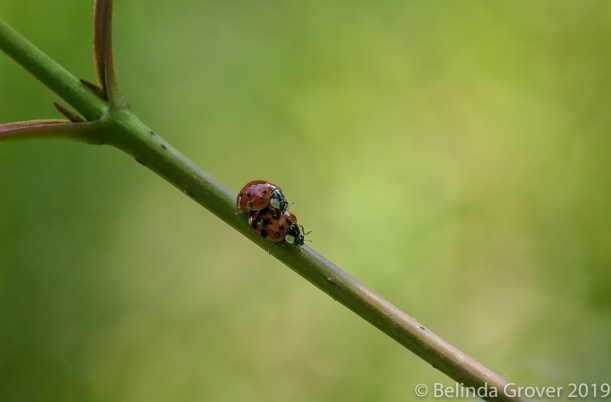 The ladybug is a a pretty common beetle, although I’ve only seen a couple this summer, including this pair. They come in many varieties and are useful insects as they eat a lot of garden pests.
SIT A WHILE (TWO PHOTOGRAPHS)
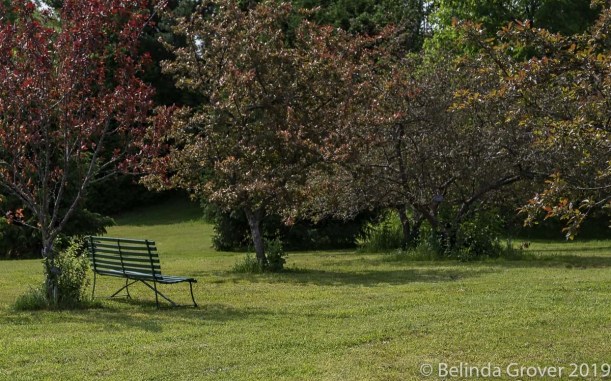
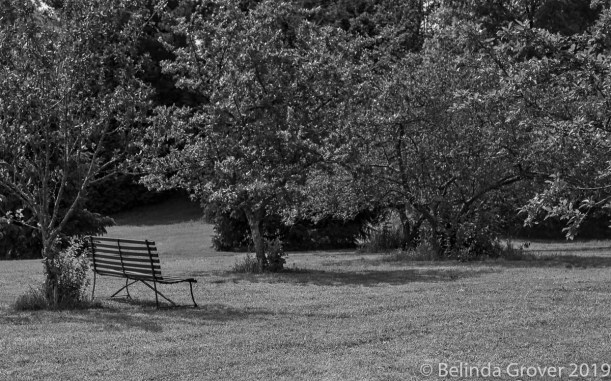 I took this photograph at the Dominion Arboretum in Ottawa, Canada. Established in 1889, it occupies 64 acres (25.89 hectares) of green space in the city core and contains over 4000 varieties of trees and woody plants. On a recent hot, sunny day the bench was inviting us to sit a while and enjoy the view.
DRAGON’S VIEW
 It’s a summer with more bugs and insects than birds. Happily, dragonflies are attractive subjects that I like to take. This one looks like he’s King of the Meadow.
DAYLILIES
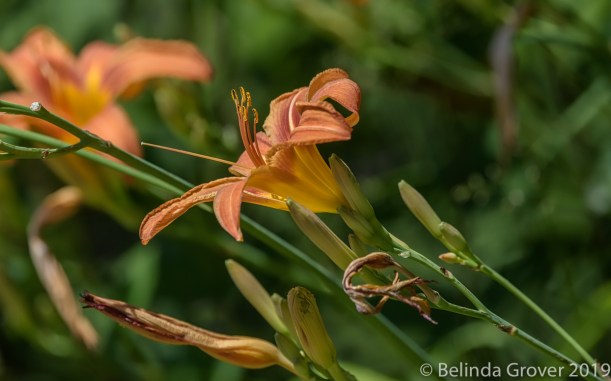 The daylily is showing up everywhere at this point in the summer; in gardens, fields and roadsides. Not native to North America, they do beautifully here and are another flower I look forward to. The wind picked up as I was taking the photograph. The focus is a bit soft but I think it adds realism to the shot.
YELLOW WARBLER
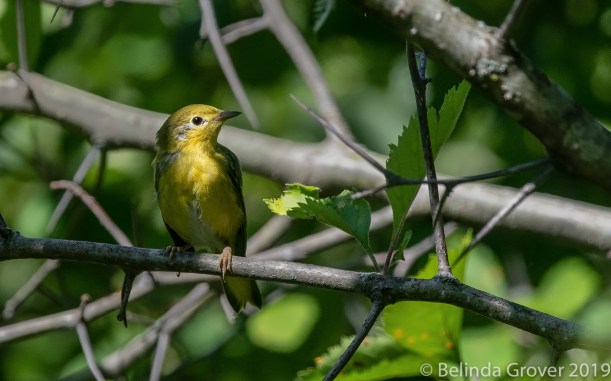 The bird was at a distance and in the shadows. Sometimes you get lucky, this was the only shot I took before it flew off. I see these warblers in the woods all summer but rarely get the chance to photograph them, they rarely touch down for long.
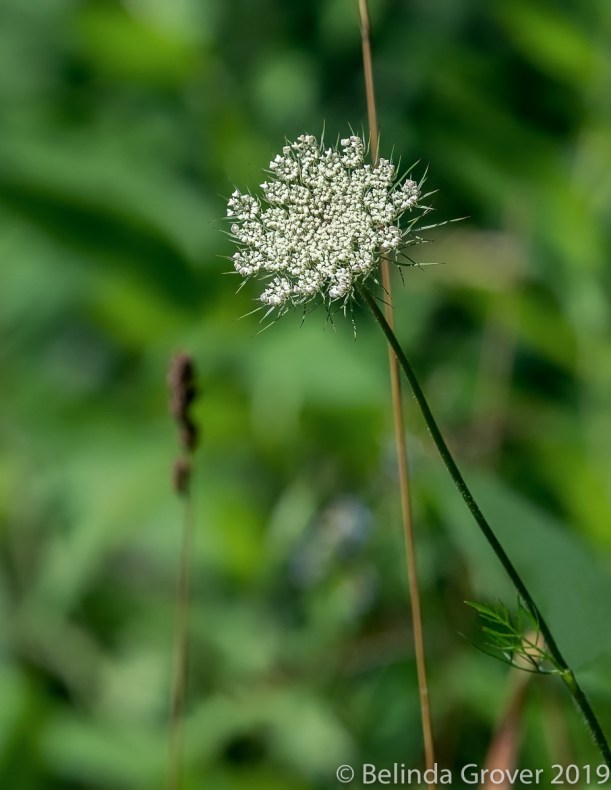
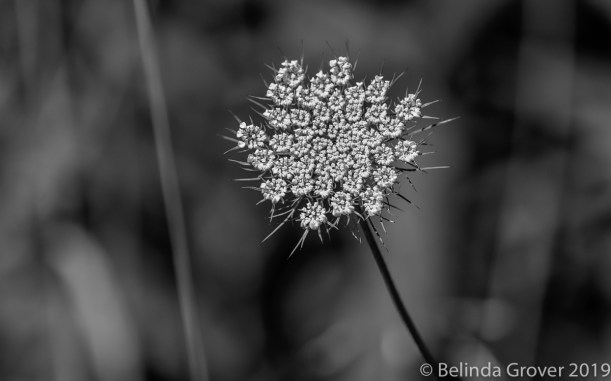
QUEEN ANNE’S LACE (THREE PHOTOGRAPHS)
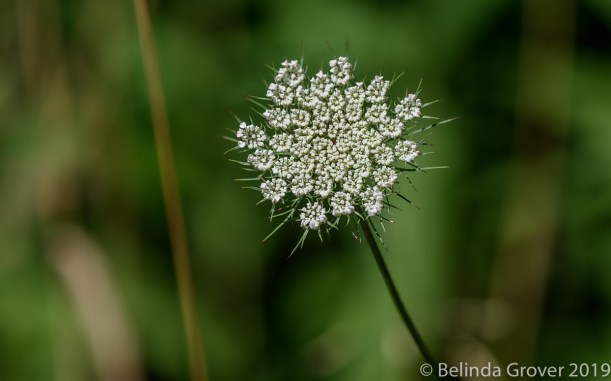 Queen Anne’s Lace is everywhere right now. In fields, vacant lots, on roadsides, wherever there’s sun and a bit of earth. It’s classified as an invasive weed but it also produces this lovely flower. In the fall the flower dries and takes on the appearance of a “bird’s-nest”, its colour complementing the landscape.
WIDOW SKIMMER
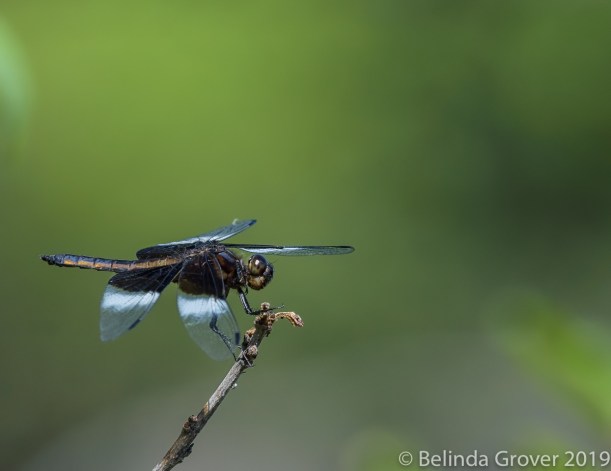 The Widow Skimmer is a big showy looking dragonfly that we’ve been seeing a lot lately. They are known to be territorial and aggressive but you’d never know it to look at this one.
FEMALE WOOD DUCK
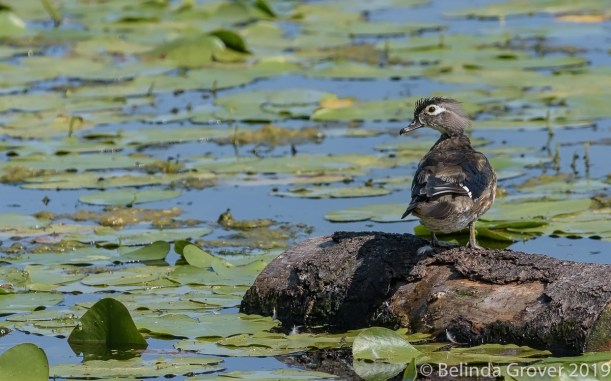 Standing on a platform looking out at the lake we saw this female wood duck doing the same. I rarely see a male wood duck on its own, the females seem to appreciate the quiet though. No chicks in sight, probably taking a break from it all.
MIDSUMMER
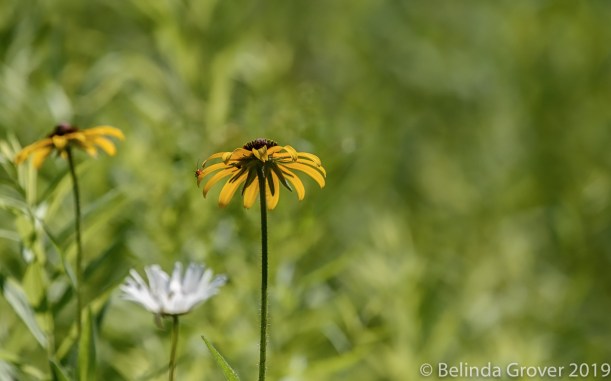 Black-eyed Susans appear midsummer like clockwork. The flower was on slightly higher ground than the path I was on and I liked the angle. I only noticed the soldier beetle on the flower (to the left) when I looked at the image on my computer screen. As I said in a recent post, if you see one of these beetles it’s likely there are more about.
BLACK-CROWNED NIGHT HERON
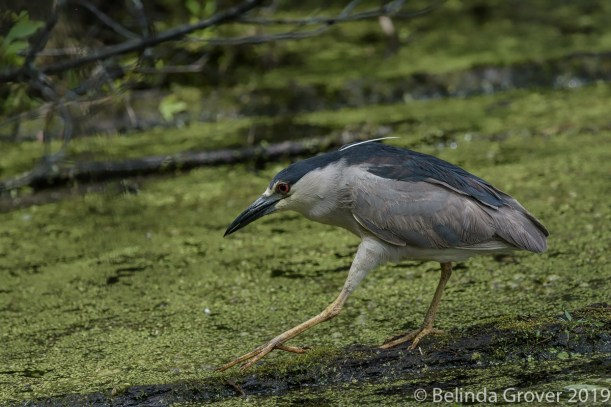 We’ve seen several Black-crowned night herons this summer. They can stand motionless in the water for long periods waiting for a fish to swim by or else stalk with the best of them. This heron is the first one I have taken this year with no reeds blocking my view.
RED SOLDIER BEETLE
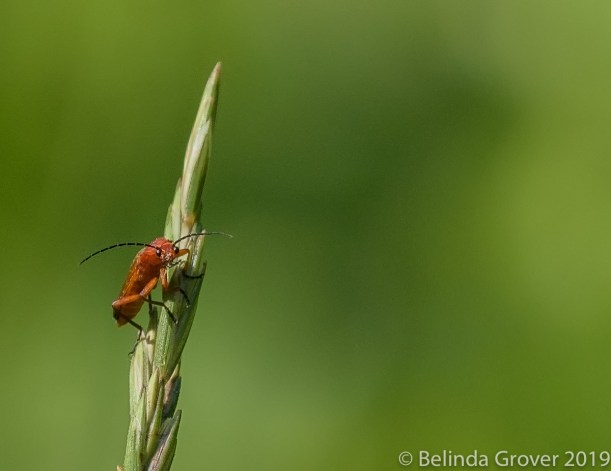 I believe this is a red soldier beetle. I saw one then a few more on surrounding plants. It’s been my experience that you never see just one. I took this with my 300mm so I was pleased that I got a decent shot with a bit of cropping.
WILD MORNING GLORY
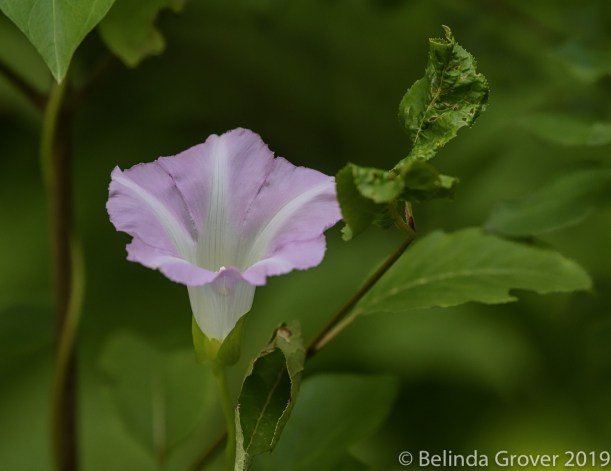 Bindweed or Wild Morning Glory is a beautiful looking flower but can take over a garden, wrapping itself around other plants and smothering them. I saw this flower in the wild; the early morning light providing a nice soft box effect.
HIGH-FLYER
 I’m not a great fan of flies but they can make engaging subjects, particularly the pollinating kind like this one. There’s a tiny garden maintained by a local business association that plants a variety of wildflowers every summer. I was walking by when I spotted the fly on some milkweed.
LINE UP
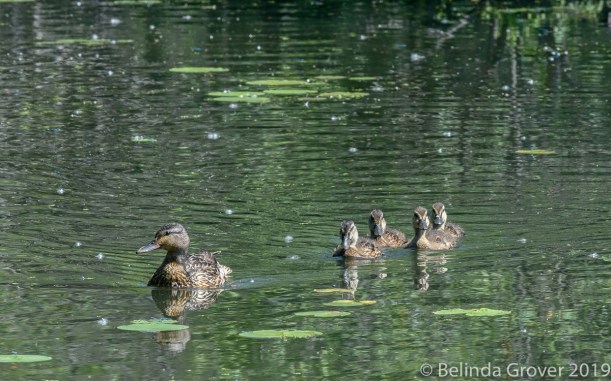 It won’t be long before these mallard chicks set out on their own. We saw some when they were newly hatched but only a few times since. They were enjoying the swim and I felt cooler just watching them in the water. It’s been a strange summer, fewer birds, fewer bugs but the vegetation is lush. I hope to have more opportunities to photograph the former, perhaps I will as the the summer moves along.
EYE TO EYE
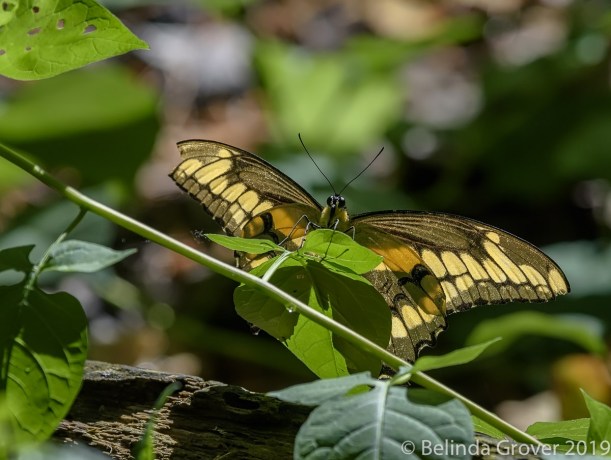 We got to the park in the early morning when it was still cool and watched as the swallowtail landed on the plant. If we had been an hour later it would have led us on a merry chase; as the temperature warms, butterflies speed up and don’t stay still for long. We see a few of these butterflies every year, always a pleasure.
SKIPPER 2
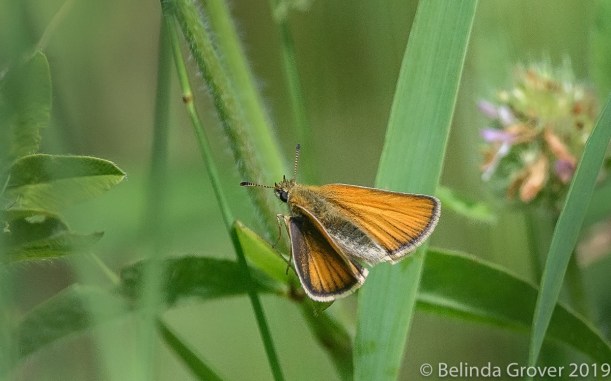 I always see skippers low to the ground in bright sunlight, tricky conditions for photography. If you can spot them before the day gets too warm, they are more slow moving and easier to photograph. This variety of skipper is tiny, the clover gives you an idea of scale.
FIELD OF WILDFLOWERS
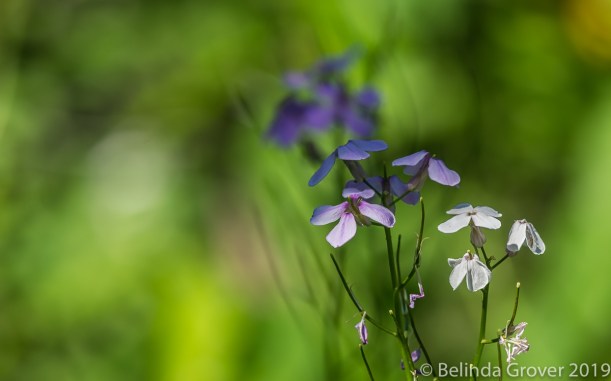 One of my favourite things to photograph in summer are wildflowers. They will grow just about anywhere that has plenty of sun, including roadsides and big open fields. Open fields are best as they carpet the ground for great distances.
DRAGONFLY 2
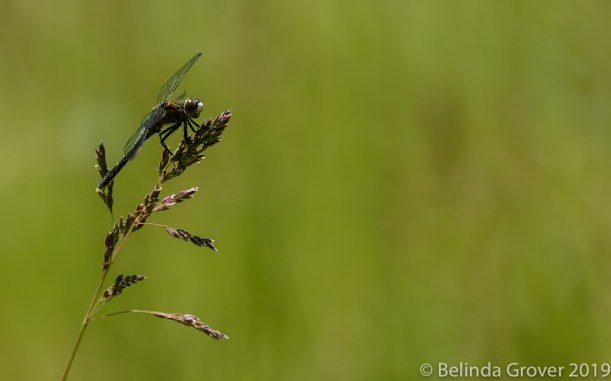 Another dragonfly from earlier in the week. I took this photo with my 300mm lens and although I could have cropped the image more, I thought the background was as integral to the image as the insect was.
BEETLE GALLERY
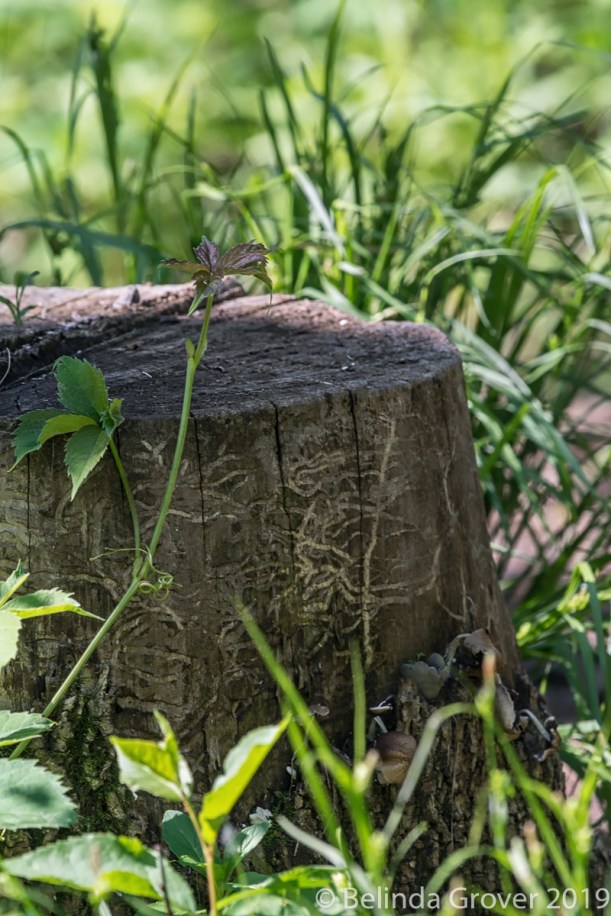
The intricate design in this tree stump was carved by beetles and their larvae. Although their designs or galleries are beautiful, these insects end up killing their host by destroying the tree’s ability to transport nutrients. The design is revealed when the bark falls away. There is not much left of the original tree but it still has a role in the forest. Fungi grow on its side, vines encircle it and seeds are left on its surface for a passing squirrel or bird.
DAY AT THE LAKE
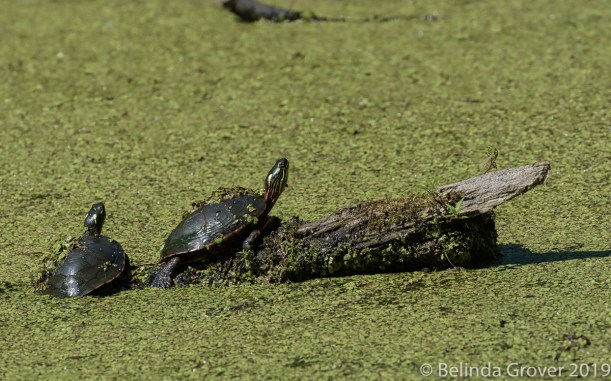
These painted turtles were soaking up the June sunshine. Most summer days the logs are very crowded but so far this year turtle activity is sparse. I hope as the warmer days roll on we’ll see more of these turtles and some snapping turtles too.
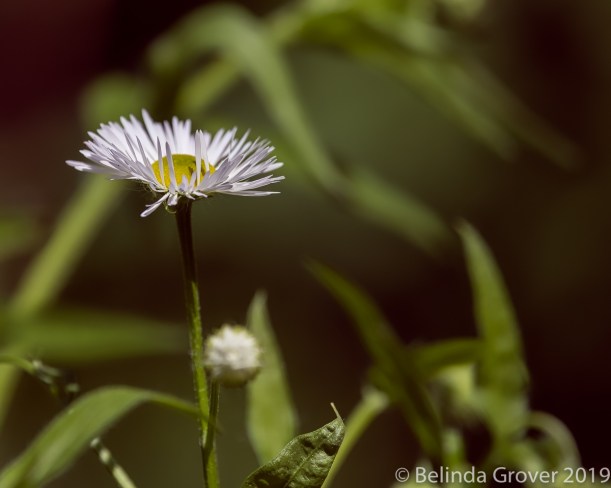
DAISY, DAISY (TWO PHOTOGRAPHS)
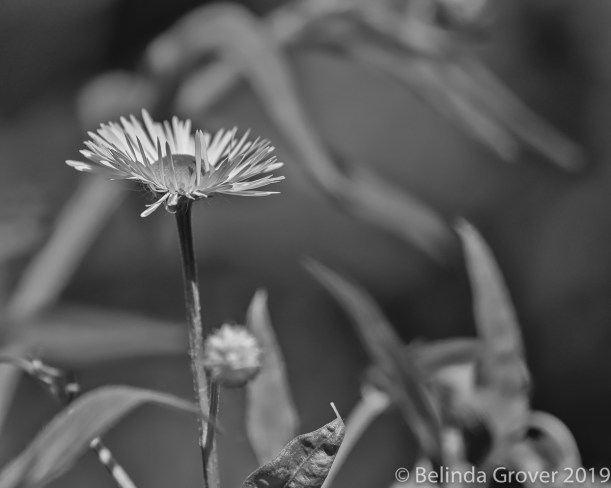 There’s something innocent about a daisy but the photo’s background suggested something a bit sinister. Although my eye was attracted by the flower I think what was behind it made the photo more interesting.
SKIPPER 1
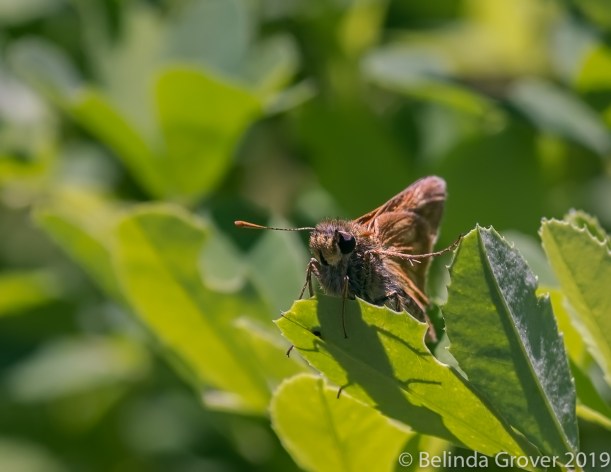 It’s a season of firsts. The other day I featured my first dragonfly photograph, today it’s a skipper. As I walked next to a field, I saw one, then several more of these butterflies. You rarely see a solitary skipper so you usually have several opportunities to take a photograph, always nice.
DRAGONFLY 1
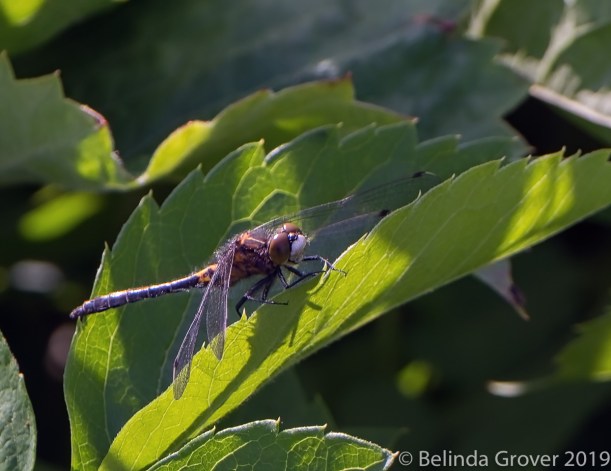
Although we’ve seen some dragonflies this summer, this is the first I’ve photographed. There seem to be fewer this year, perhaps the fault of our cold wet spring. When you do nature photography you tend to celebrate the first returning bird, sight of a flower, even the first insect! This dragonfly was particularly welcome as he posed so nicely for the photograph.
SUMMER BREEZE (TWO PHOTOGRAPHS)
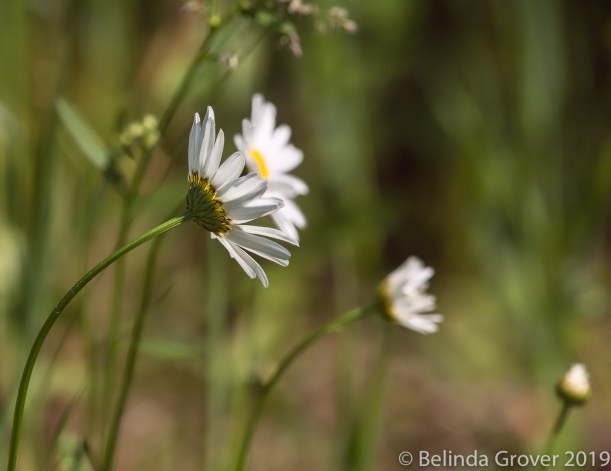
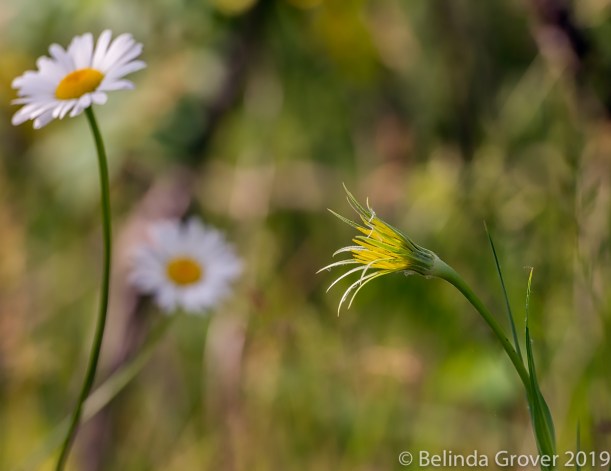
It’s a challenge to photograph flowers when the wind picks up a bit. Daisies can be seen in the fields and along roadsides everywhere right now. The goat’s beard is a less common wildflower and I’m always pleased to be able to photograph one.