
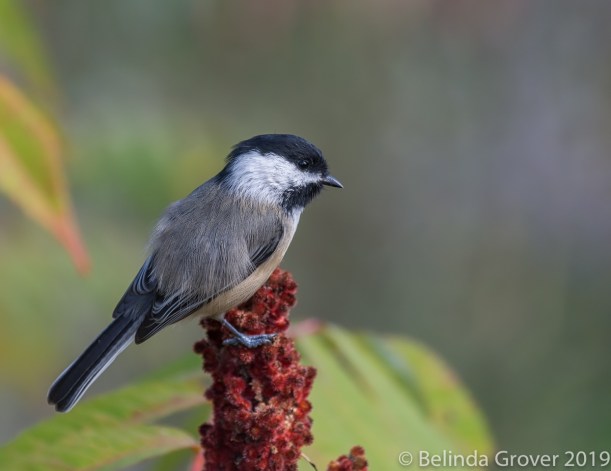
 The sumac provided a perfect landing spot for the chickadee. The bird was in the open and took its time to look around, making this animated subject easier than usual to take.
Tag Archives: Nature
FALL COLLECTION – 3 (THREE PHOTOGRAPHS)
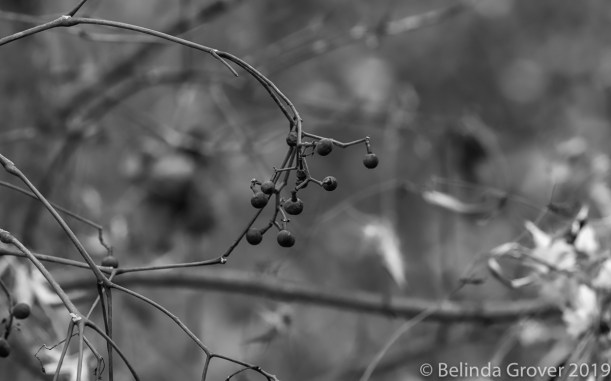
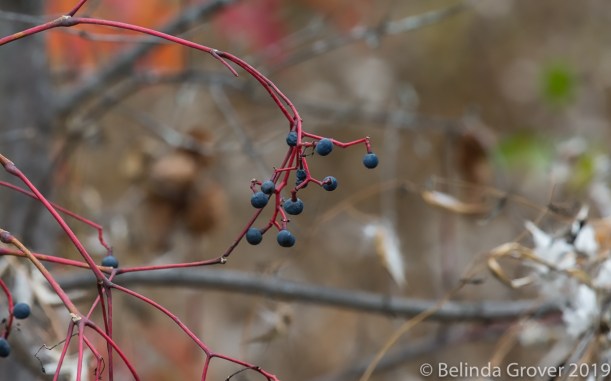
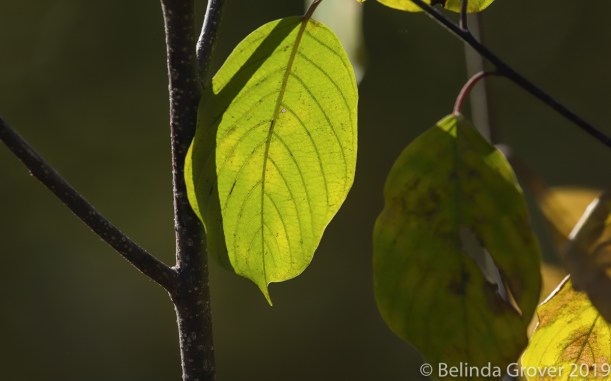 The way the sun hit the lime coloured leaf reminded me of holiday lights. As I continued my walk I came upon these rich purple berries (which the birds will enjoy in the cold months ahead). Both photos required little cropping, I just moved around a bit to get a pleasing composition.
NUTHATCH – 2
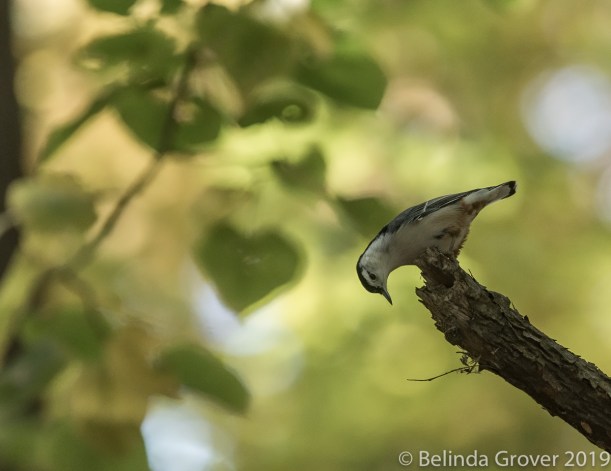 I featured this nuthatch, in a late October post, looking half asleep. In this photo the bird had reached the end of the branch and looked like it was weighing its options.
CANADA GOOSE
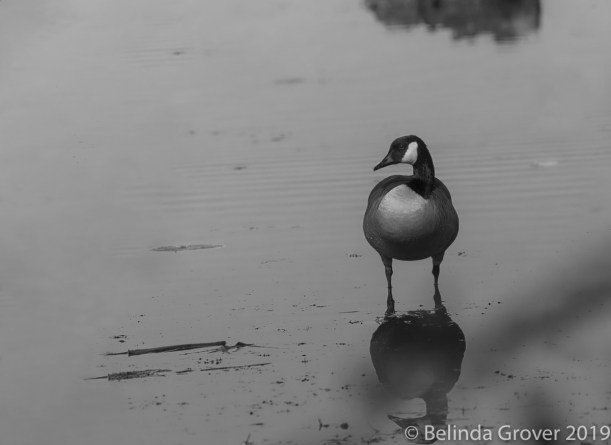 The goose was at quite a distance and I tried to position myself to get a clean view of it. I shot down a narrow tree lined pathway so there were a few unwanted shadows in the frame, most of which I removed. There were no colourful reflections at this spot but the vegetation added some interest to the water.
AROUND TOWN (TWO PHOTOGRAPHS)
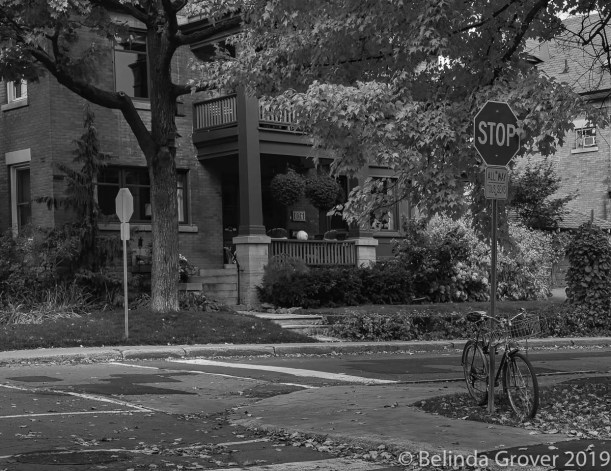
 These photos were taken on a recent walk through town. Both scenes were colourful given the fall colours but I thought the weathered fence and old house in the second photo were at their best in black and white.
LAST OF THE SUMMER FLOWERS – 3 (TWO PHOTOGRAPHS)
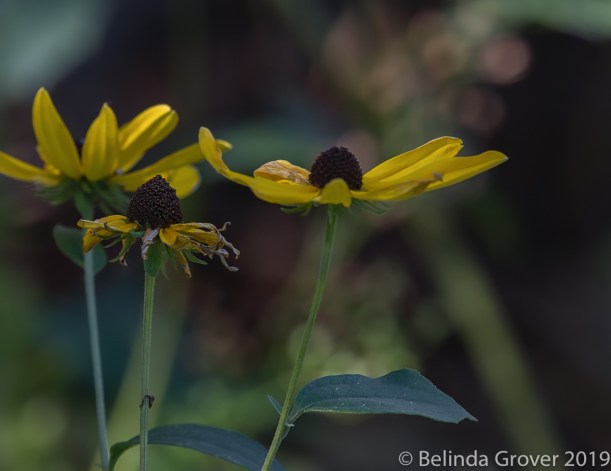
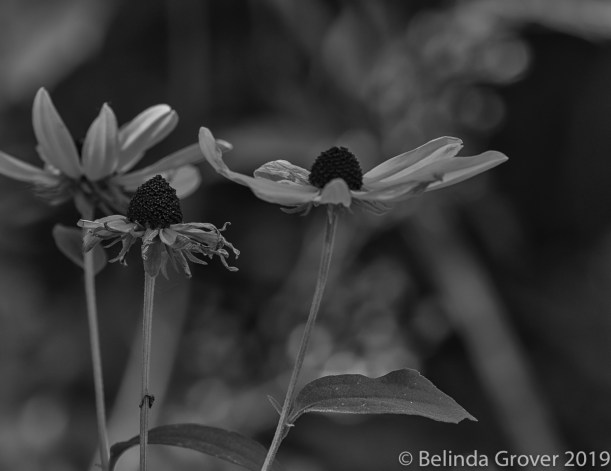 These were taken earlier in the month. Most of our wildflowers have gone to seed but a few still remain, including these hardy wild sunflowers. We’ve only had a few nights that have dipped below the freezing mark and the days have been mostly sunny so the flowers might last a bit longer.
WOOD DUCK, INCOMING
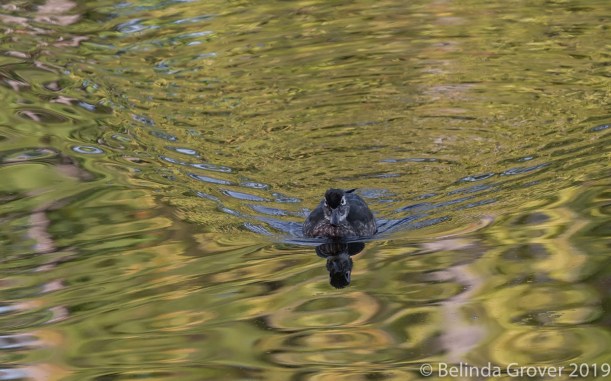 I like the wake created as the duck glided through the coloured water. I watched as she swam around, changed course and headed in my direction forming the trail behind her.
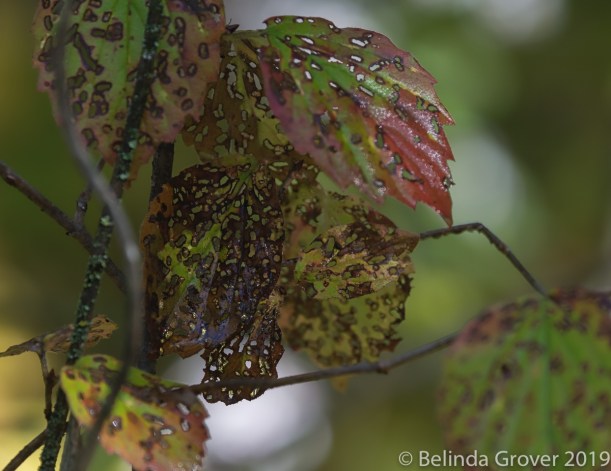
FALL COLLECTION – 2 (TWO PHOTOGRAPHS)
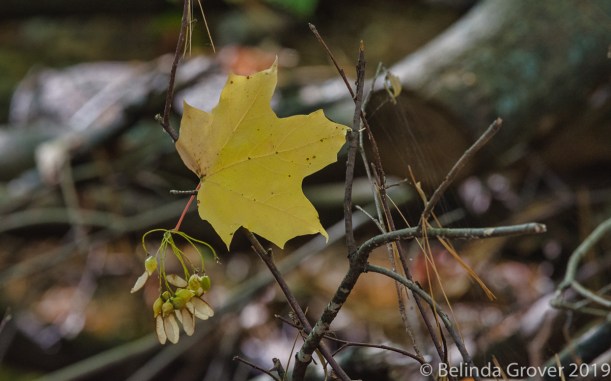 This is the second in a series of photographs I took on a recent walk. The colours are not quite as bold as they were in my earlier post, but there are still plenty of opportunities for photos like these.
RED SQUIRREL
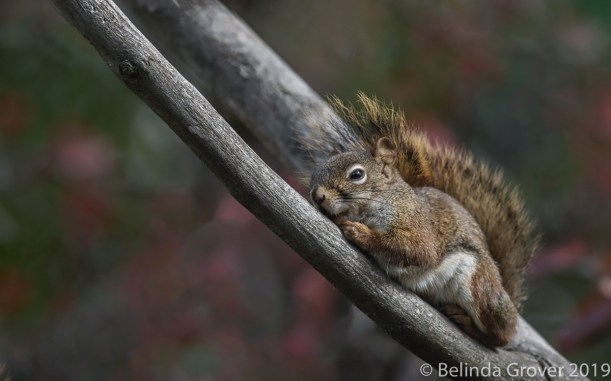 The way this squirrel is hugging the tree makes me think he’s a young one. Usually they are pretty spirited, chasing the larger grey squirrels or holding their ground as we pass them in the woods.
REFLECTIVE GOOSE
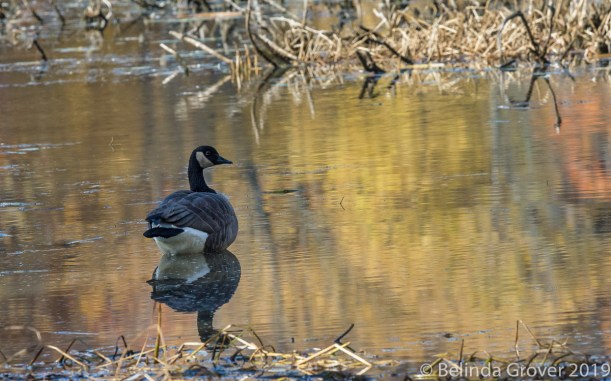 Fall in the Northern Hemisphere is a short one. The days get colder, and the leaves change colour and fall. But before they do, they dress the water in fabulous reflections which caught this passing Canada Goose.
NUTHATCH
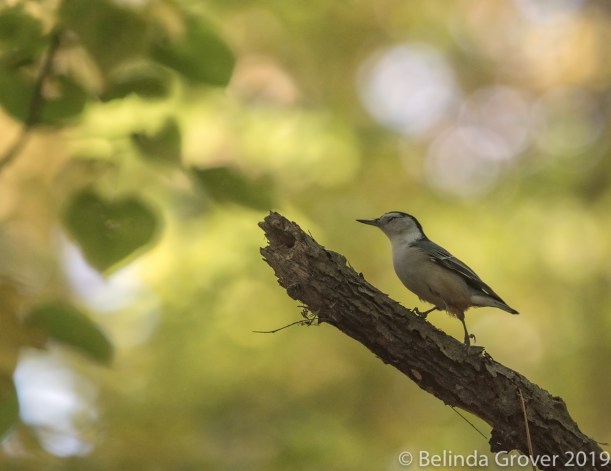 The forest was dark, so to compensate for this I shot at a high ISO which made for a noisy photo. I corrected this in Lightroom using noise reduction and the moire filter.
The nuthatch looks half asleep as he makes his way up the branch, almost sleepwalking.
MALLARD
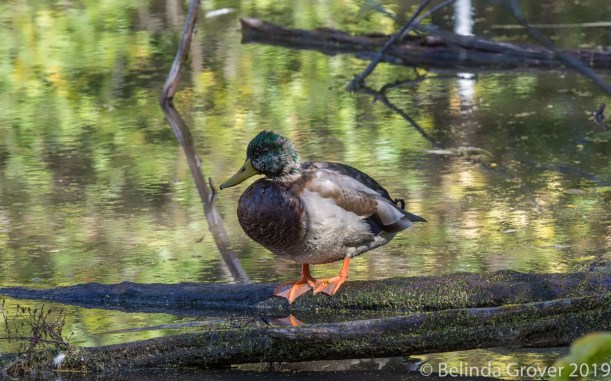 I feature mallards a lot on my blog. There are plenty of them year round always up for a photo shoot and are sociable, good looking subjects. This handsome male was competing for my attention with the wonderful fall background.
METALLIC BEE
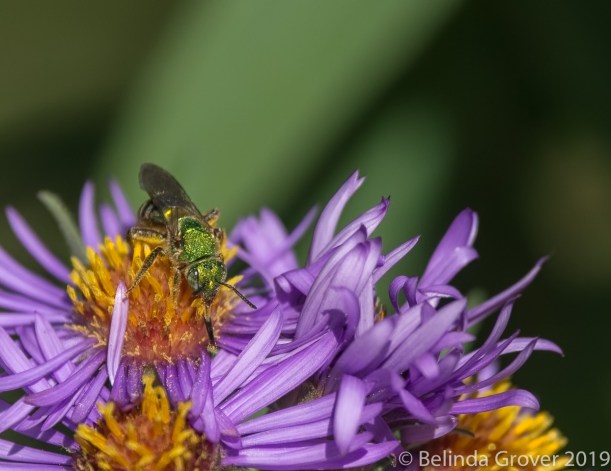
The bee was working on a deadline, busy collecting pollen in mid-September. Its colour is striking; among the most attractive of bees.
DOWNY WOODPECKER
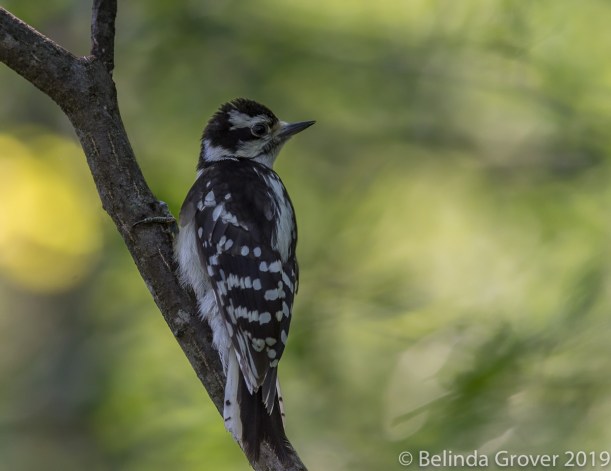 One of several woodpeckers we see year round, I took this photo in July. Using a narrow depth of field I got the background you see here.
FALL COLLECTION – 1 (THREE PHOTOGRAPHS)
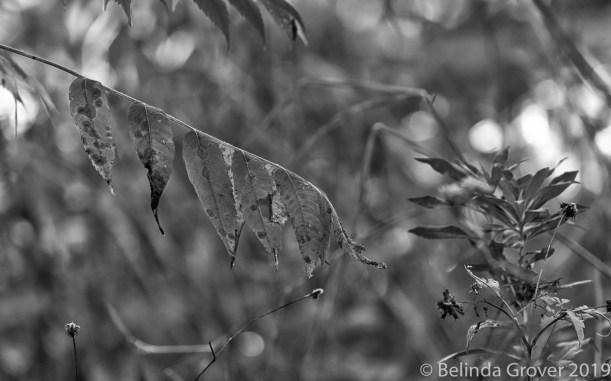
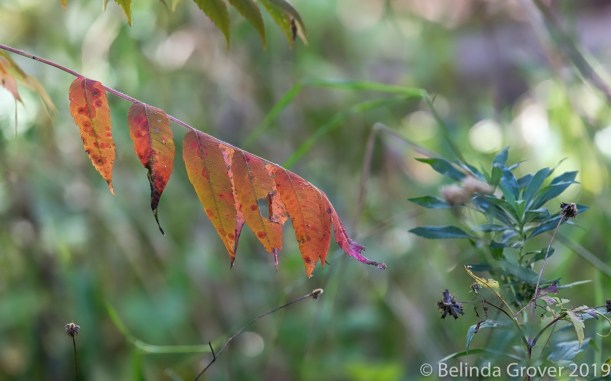
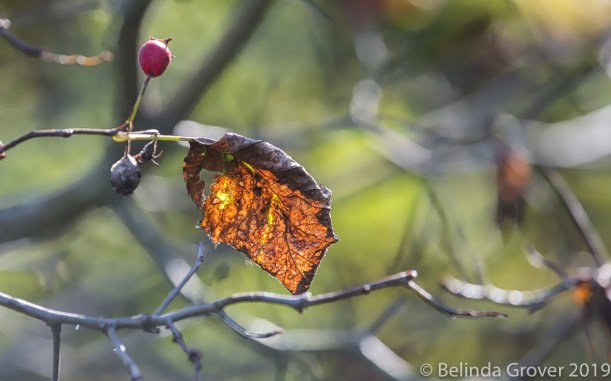 The leaves are almost at their peak now. Sun or cloud, the woods are ablaze with colour. Walking along the paths, I’ve been selecting small portions of the landscape that have stood out for me. Their shapes, patterns and colours make for nice compositions. Black and white works well too.
WHY SO SERIOUS, HERON
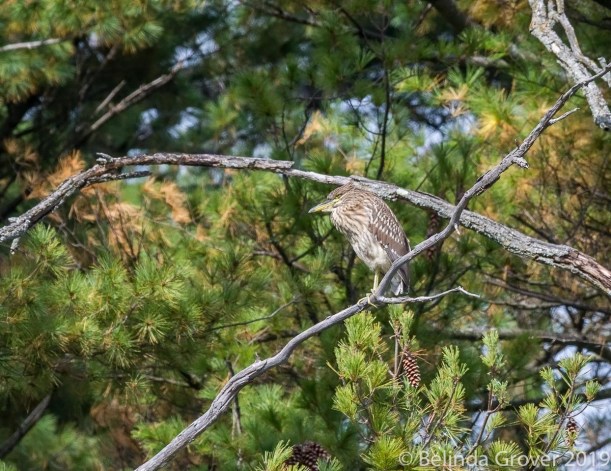
This juvenile Black-crowned night heron was a fair distance from me and very high up a tree. I had to crop the picture quite a bit and when I did I noticed its stern expression. It’s a common look for this stocky heron and one that never fails to make me laugh.
GREAT BLUE IN THE FALL
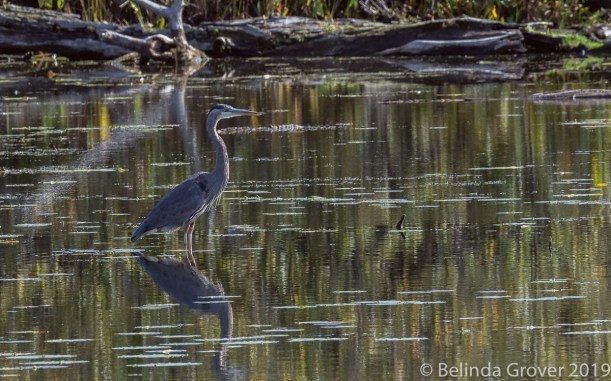 These herons usually remain until the lakes begins to freeze, so with a bit of luck we’ll have a few more sightings before then. I didn’t see the heron right away. I was focussed on a goose in the water and panned around to see if there were any other birds about when I spotted the heron standing absolutely motionless. At that distance I would have missed him if hadn’t been for the goose!
SOLITARY DAMSELFLY
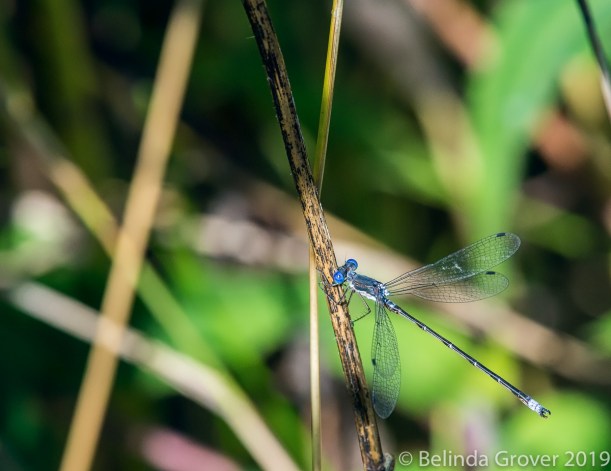 I thought the season for damselflies was over for the year when I saw one a week ago, perched on a stem. We’re still seeing the occasional Monarch but this is the only damselfly I’ve seen in over a month. A wonderful sight indeed.
TYPICALLY CANADIAN
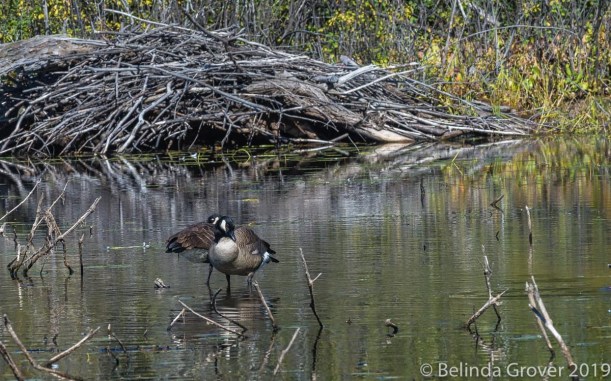 This photo was taken on the weekend at a nearby reserve. The lake has several beaver lodges, the one in the background is one of the largest and provides a nice backdrop for the Canada Geese.
NOT AT MY BEST
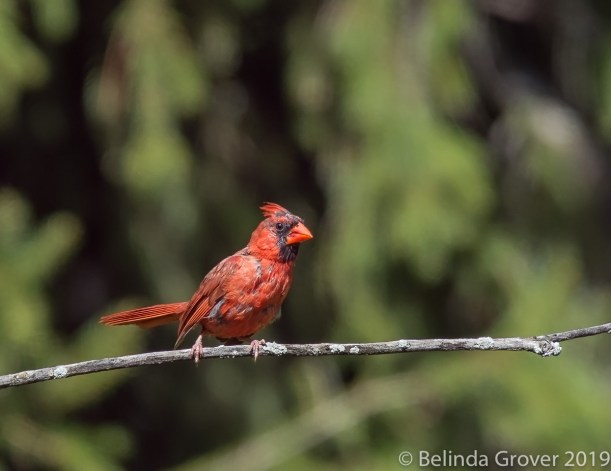 I featured the same cardinal a few weeks ago, in this photo he’s giving me a a sidelong glance. I guess he realizes he’s looking a bit rough. While out today I saw another cardinal that was in perfect form but it flew off before I could take a shot.
BLACK-CAPPED CHICKADEE
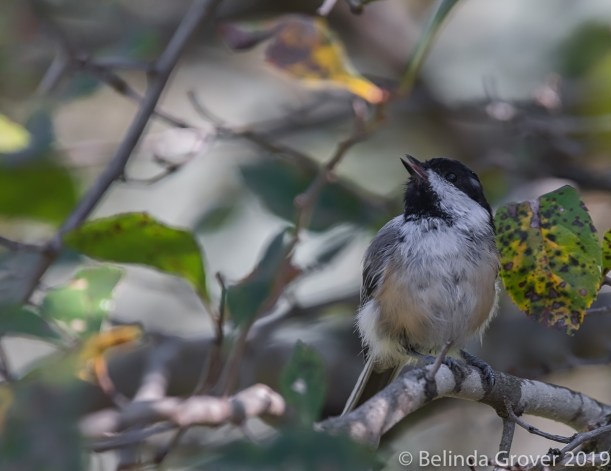 I heard the chickadee, aimed my camera and got him mid song. They are a common little bird but animated and attractive. The tree was very leafy wth little sunlight filtering through which contributed to the painterly background.
LAST OF THE SUMMER FLOWERS – 2 (TWO PHOTOGRAPHS)
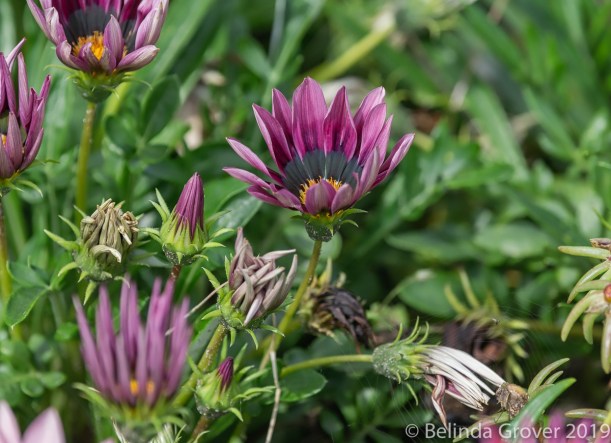
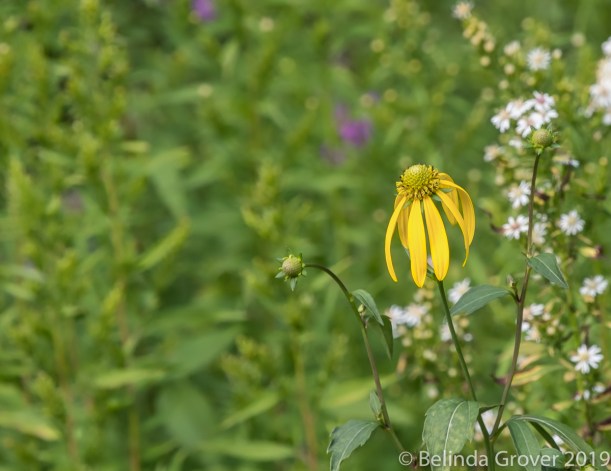 With a frost advisory on the way tonight I thought it was time for another look at some late summer flowers. These were taken mid-September; the first in a field, the second in a neighbourhood garden.
WOOD DUCK
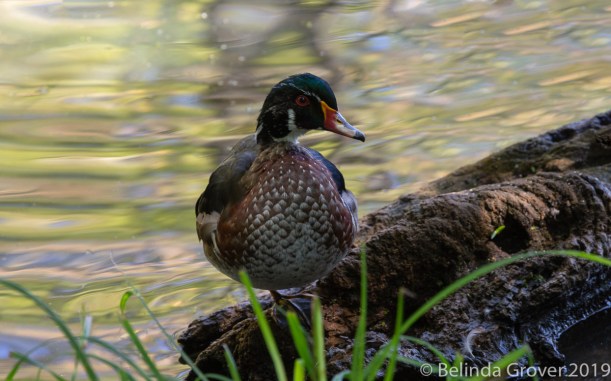 I often see a duck resting on this log by the water’s edge. It’s down a tree lined path so the birds are usually in the shade. The reflections in the water at this time of year make for an attractive background.
LAST OF THE SUMMER FLOWERS – 1
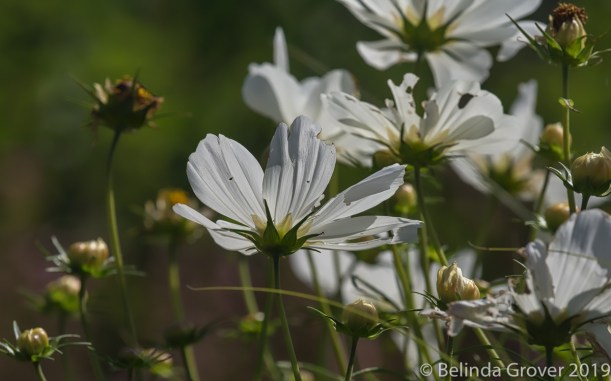 I came upon these faded beauties on a recent walk, a few more still to bloom. The flowers take on a special beauty as the season draws to an end and summer lingers just a little longer.
BLACK-CROWNED NIGHT HERON
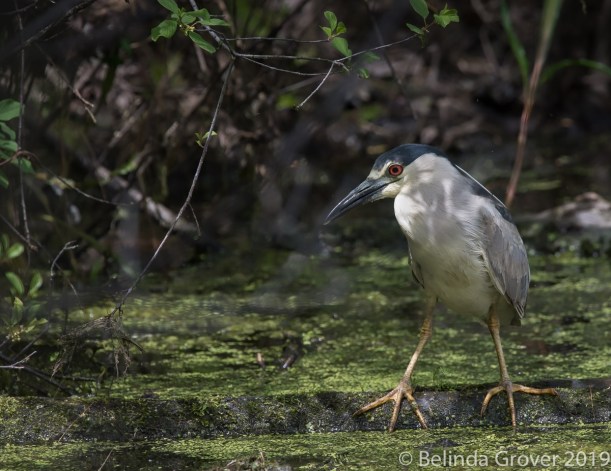 I didn’t see many night herons this summer but the few I saw were nice and close. So intent on fishing they ignored us, the only challenge being the leaves blocking our view and the narrow pathways.
FALL FROGS (TWO PHOTOGRAPHS)
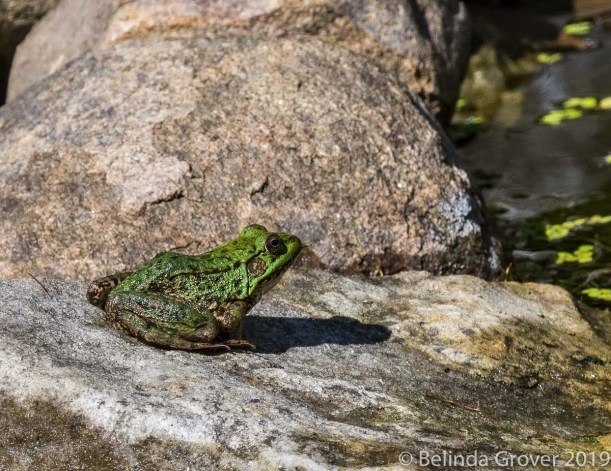
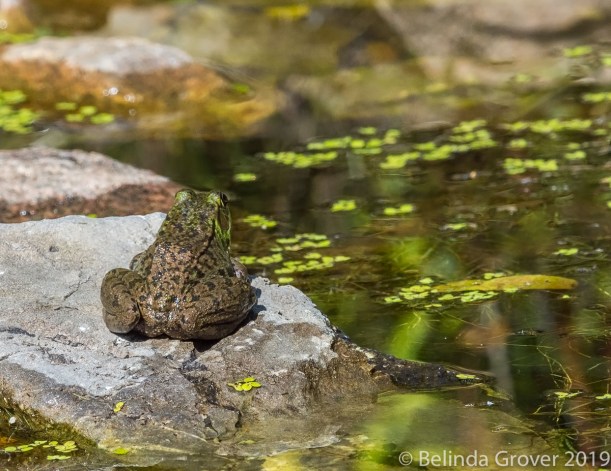 The leaves are beginning to change colour but the days are warm and the frogs are still about. With some luck it’ll be a while before they tuck in for the winter and I’ll have more opportunities for photos like these.
YOU’LL HAVE TO EXCUSE ME, I’M NOT AT MY BEST
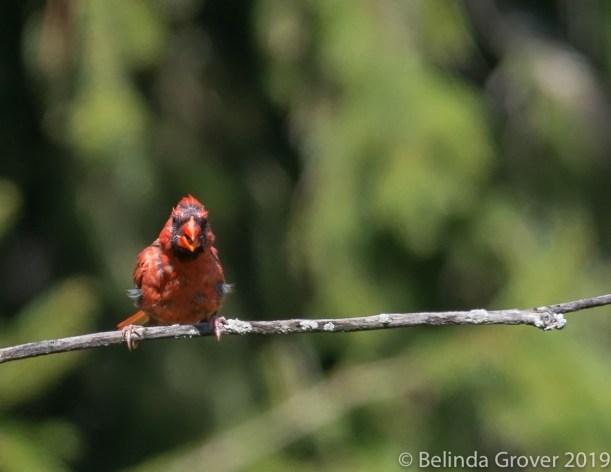 I have seen cardinals in this state for the last several weeks. For such a handsome bird, they can look pretty rough when moulting and this one wasn’t taking any nonsense! I’ll be featuring more from this rogues’ gallery in posts to come.
STATELY GIANT (TWO PHOTOGRAPHS)
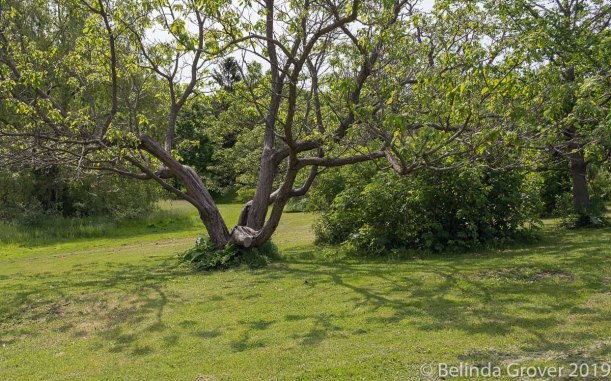
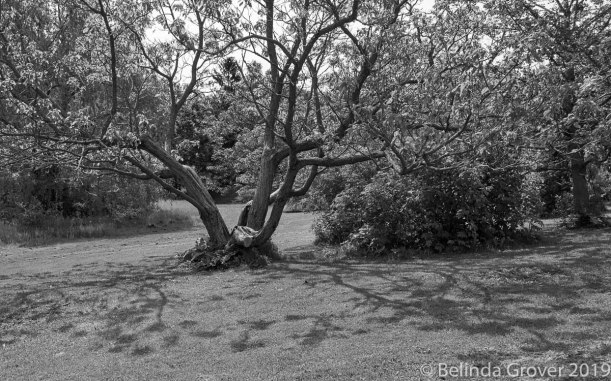 Another photo from the Dominion Arboretum in Ottawa that we visited earlier in the summer. This one tree stood out. Its outstretched branches were welcoming and I couldn’t help but be impressed by its size and age. The black and white emphasized the tree’s texture and detail and the shadow cast on the grass.
WHAT’S UP CHICKADEE – 2
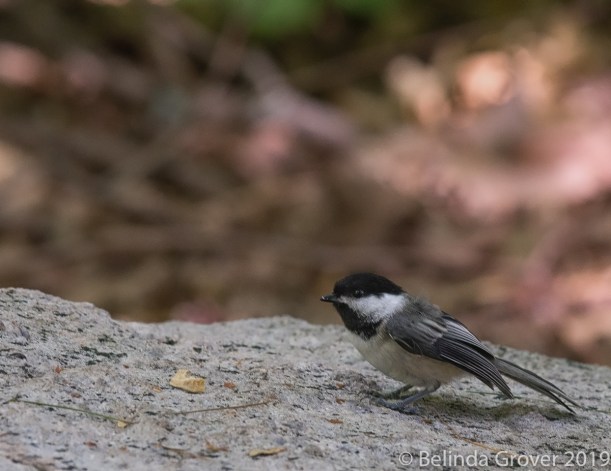 On September 8 I featured a chickadee that looked a little ruffled. Today’s bird was taken on the same day, in the same location and looked well groomed. Perhaps this bird was a bit older, not moulting or hadn’t had a recent bath. All might explain the difference in their appearance.
QUEEN ANNE IN THE FALL
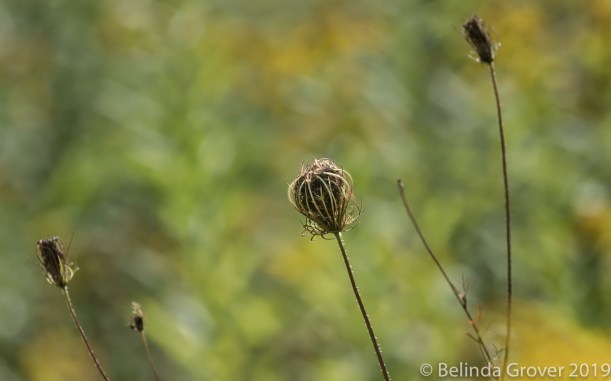
It’s not quite fall but a good number of flowers are wearing their turn of season appearance. Queen Anne’s Lace is no exception. It was framed by some goldenrod that created an attractive background glow.
BEEZZ (TWO PHOTOGRAPHS)
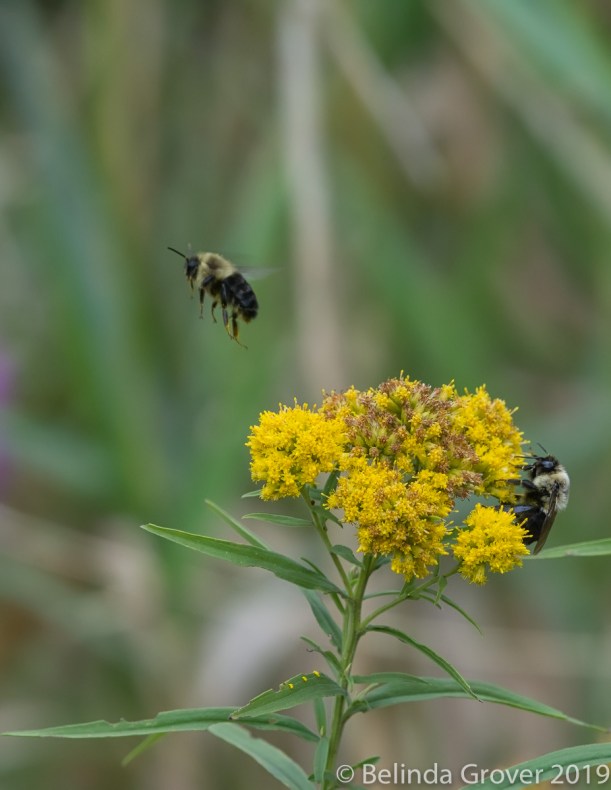
The bees are making the most of the late summer flowers. They were everywhere that morning. Some worked together, some worked alone and some like the bee in the first photo didn’t want any company.

RED SQUIRREL
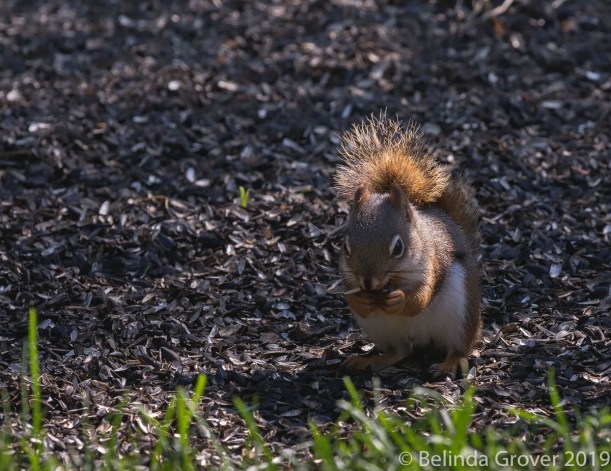 It’s nearly fall and time to get busy collecting food for the approaching winter. This squirrel was taking time out for a quick snack. Under the feeder the ground is littered with spent sunflower seeds. Occasionally though an intact seed falls to the ground for the lucky few.
SULPHUR BUTTERFLY (TWO PHOTOGRAPHS)
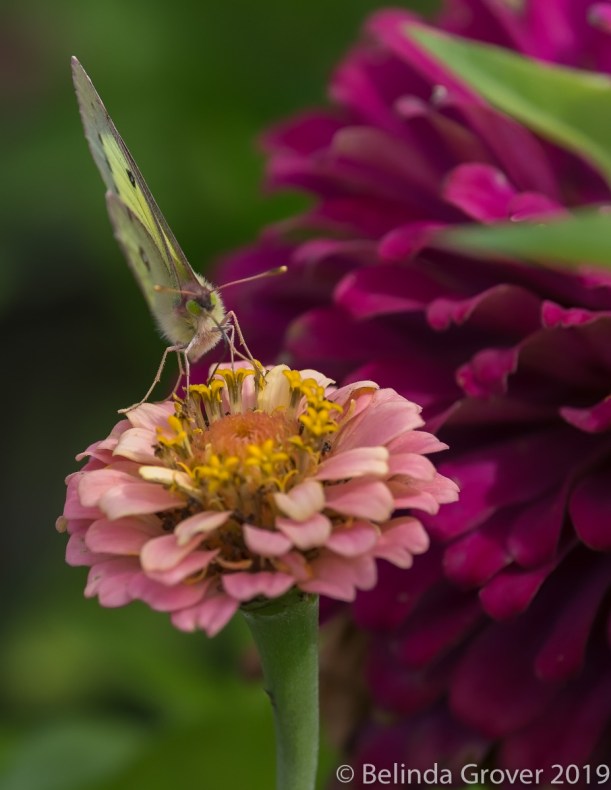 It’s been a terrific year for butterflies in my part of the country. When visiting a local botanical garden, in among the clouds of painted ladies was this solitary sulphur butterfly. I went back a day later and I saw it again. Unlike the painted ladies who were constantly on the move, the sulphur, Pink-edged or Clouded (I’m not sure which) savoured the nectar for a while.

HEADING HOME
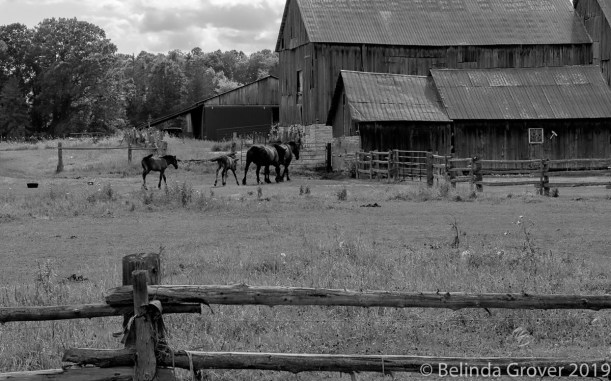 Another country scene taken on a recent road trip. It was mid afternoon and something was calling the horses back to the barn. We watched as they returned at a slow and relaxed gait.
HUMMINGBIRD MOTH
 A friend had some success photographing a hummingbird moth at a wildlife garden we frequent. Luck was on our side too on a recent visit. This moth beats its wings at great speeds so I was pleased to get this photo and several others in decent focus (of the hundreds I took). Not an easy subject but oh, when it works😊.
WHAT’S UP CHICKADEE
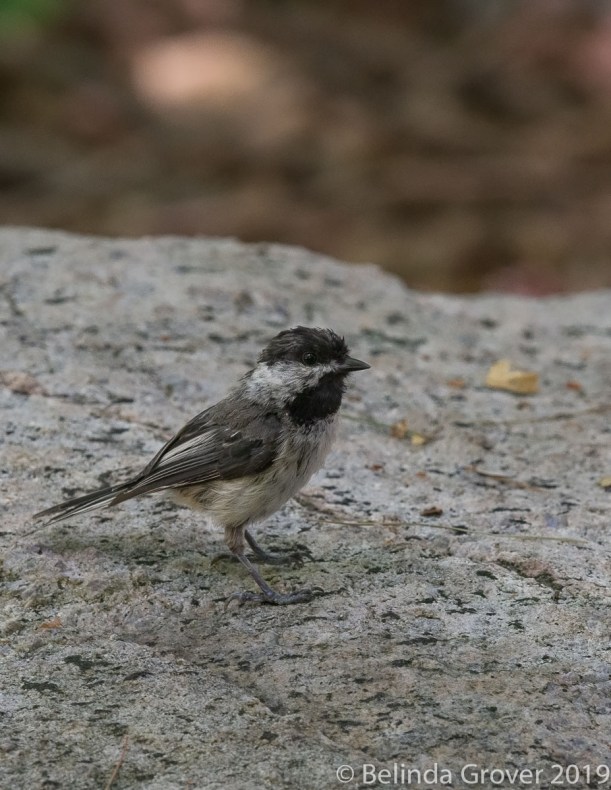 I wasn’t sure if the bird was moulting or just wet. Another chickadee close by didn’t appear out of the ordinary. If the bird was moulting, it still looked pretty sharp unlike other birds that can look downright ugly!
A NOD TO SUMMER
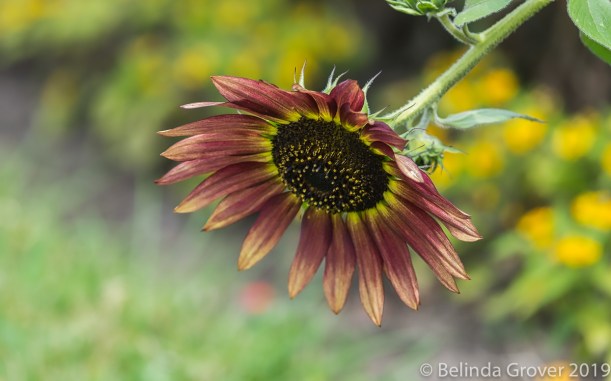 I’ve never seen a sunflower this colour before. It seemed rather fitting for this time of year. The sun isn’t as bright or warm as even a week ago and this flower seems to fit in perfectly with the changing season.
METALLIC BEE
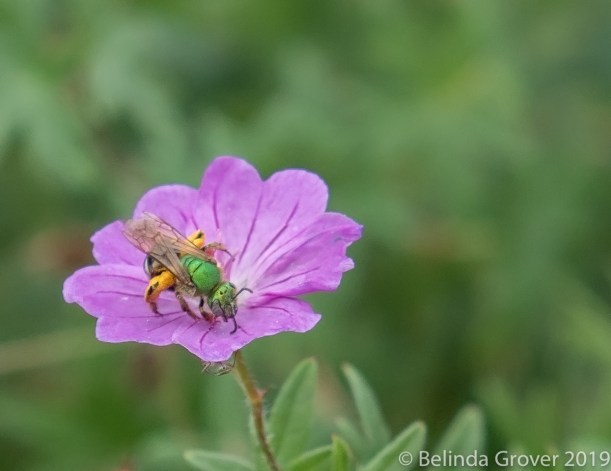 This is a metallic or sweat bee. Their attractive colouring make them one of my favourite bees. We don’t see many of them but when we do they often have a dusting of pollen that makes them stand out even more. You might notice another insect making its way up the underside of the flower. Had I seen it when I was taking the photo I would have remained to witness the encounter.
LEOPARD FROG
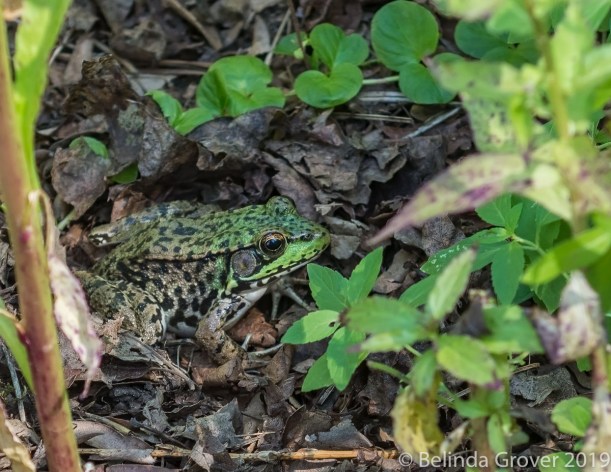 This is one of only a few frogs I’ve seen this summer, a handsome leopard frog. He stayed in the same position for the longest time, I hoped he would move forward a bit so I could get all of him in the shot. I waited for a while and finally gave up and continued my walk. As we were leaving the garden, I checked to see whether he had moved on. He hadn’t budged at all. I guess he was enjoying the day his way!
HOME ON THE RANGE
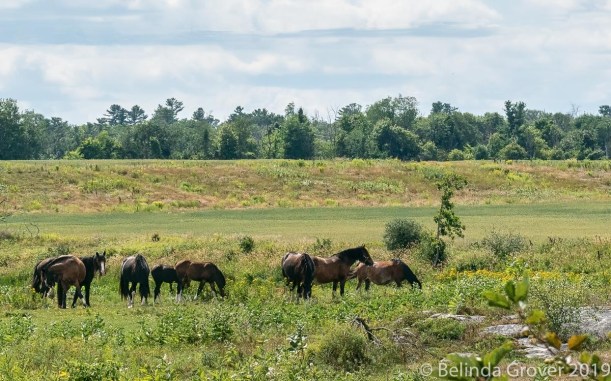 We stopped the car when we saw the horses in the field. They were at a considerable distance yet one curious horse stopped grazing to look our way. Not much detail in the horses given how far away they were, but they added a tranquil feeling to the scene.
 BELINDA GROVER PHOTOGRAPHY