
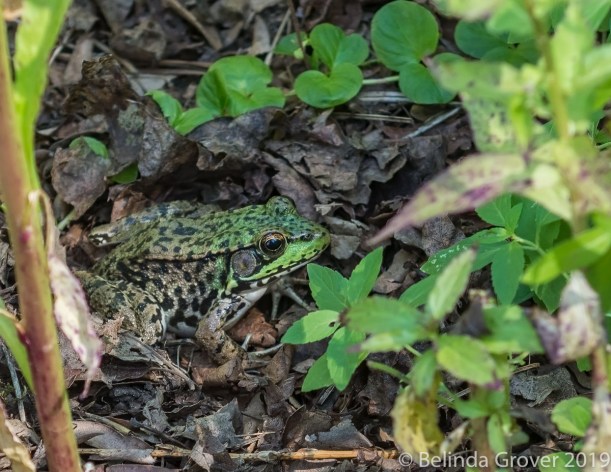
 This is one of only a few frogs I’ve seen this summer, a handsome leopard frog. He stayed in the same position for the longest time, I hoped he would move forward a bit so I could get all of him in the shot. I waited for a while and finally gave up and continued my walk. As we were leaving the garden, I checked to see whether he had moved on. He hadn’t budged at all. I guess he was enjoying the day his way!
Tag Archives: Landscape
HOME ON THE RANGE
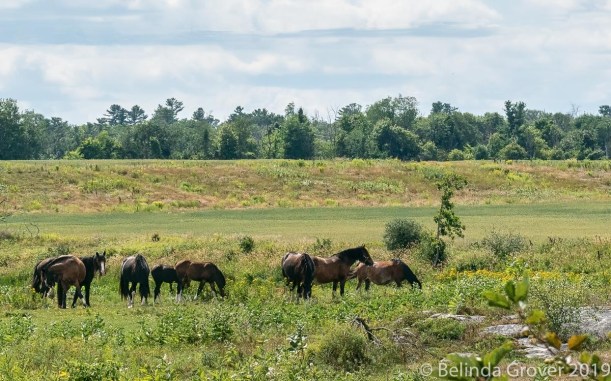 We stopped the car when we saw the horses in the field. They were at a considerable distance yet one curious horse stopped grazing to look our way. Not much detail in the horses given how far away they were, but they added a tranquil feeling to the scene.
AT THE PARK (TWO PHOTOGRAPHS)
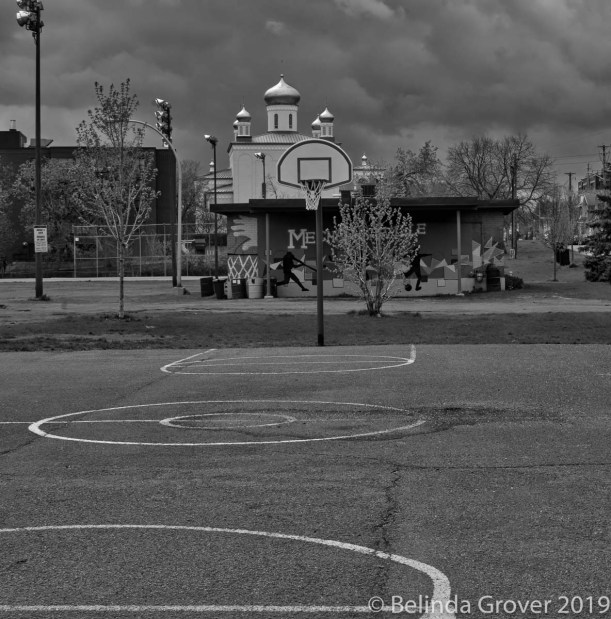
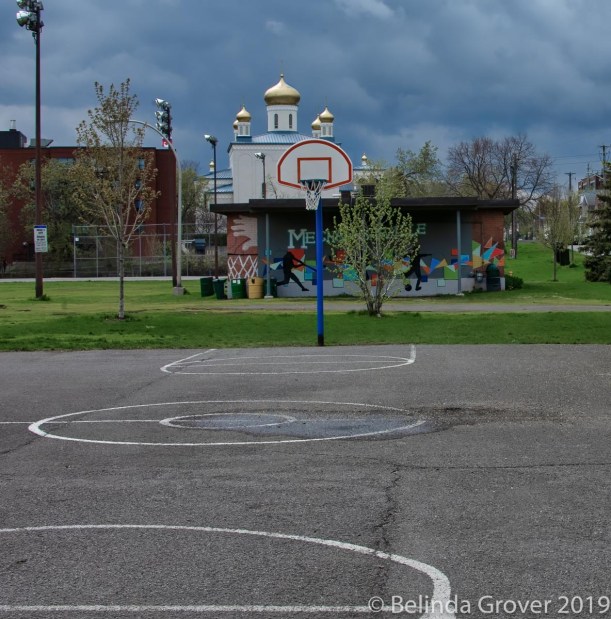 I’ve photographed this park before. I went back again, this time with a wider lens. I think the slightly off-balanced aspect, makes the photo a little unsettling and more interesting.
OVER THE FENCE (TWO PHOTOGRAPHS)
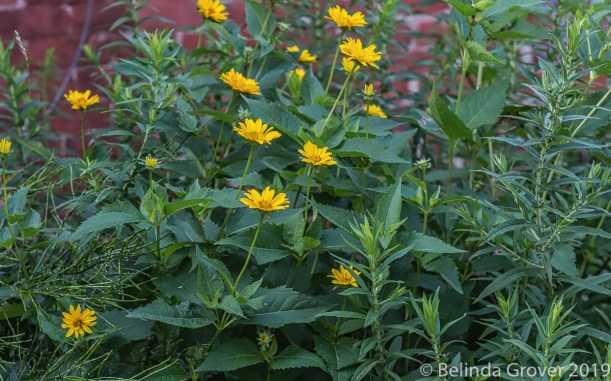
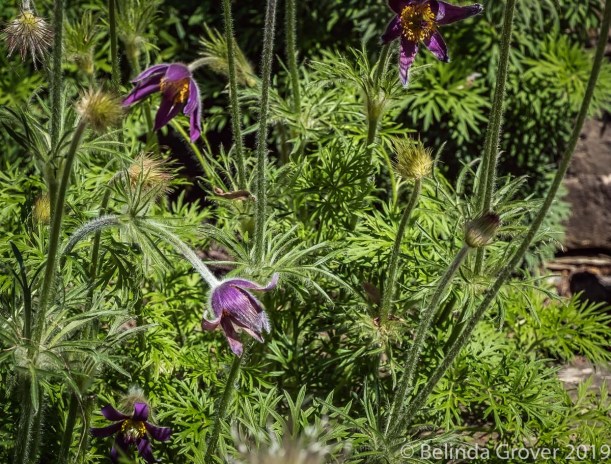 I wish I could remember where I took the photo above, as I would return to see how the garden looks now. I liked the untamed look to the place and exotic flowers growing there. The second photo was taken in my neighbourhood. I return every year to photograph these yellow flowers against the brick wall of the house.
SUMMERTIME
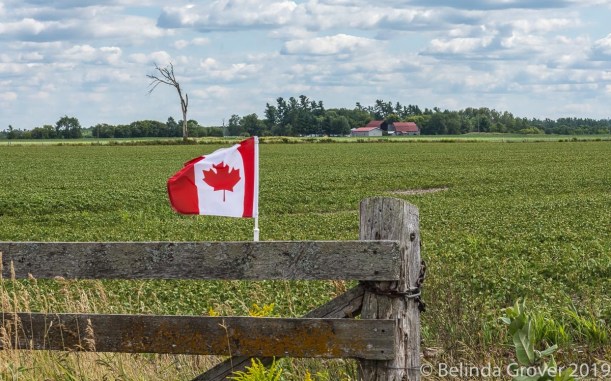 On a recent weekend afternoon, a drive through the countryside with friends provided many scenes like this one. The colours of late summer and the light are different now, not as brilliant but still beautiful.
BALANCING ACT
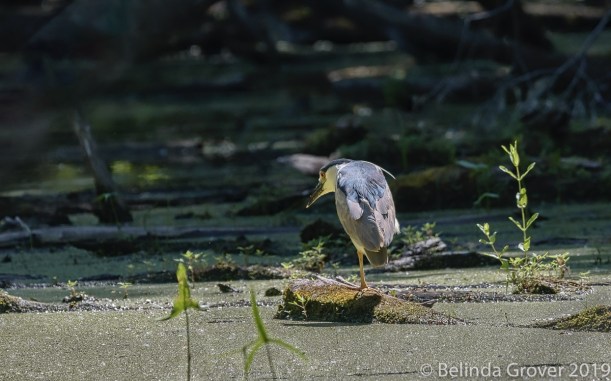 We often see Black-crowned night herons intent on the water, performing this balancing act. They can hold the pose much longer than I can keep my camera raised. I took the photo from further than I would have liked but it does allow a glimpse of the surroundings.
POPPY
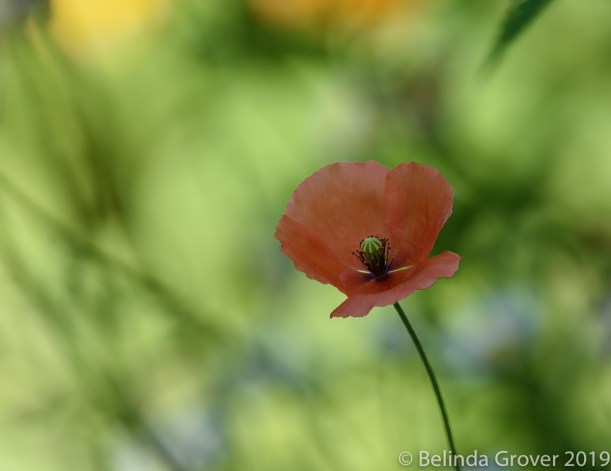 Poppies grow here for a very short period in summer. Their brilliant colour makes a mark on the landscape. Even against a brilliant backdrop they are standouts.
SPARROW
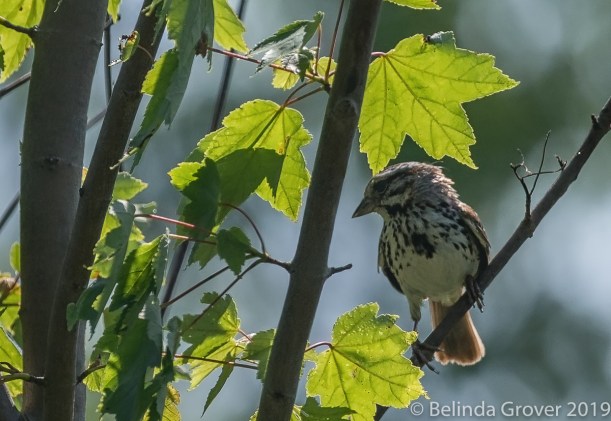 A morning when there were a lot of sparrows about and not much else. On days like these you appreciate the beauty in the ordinary. The sparrow was a nice poser and the surrounding vegetation framed it nicely.
A NICE MIX (TWO PHOTOGRAPHS)
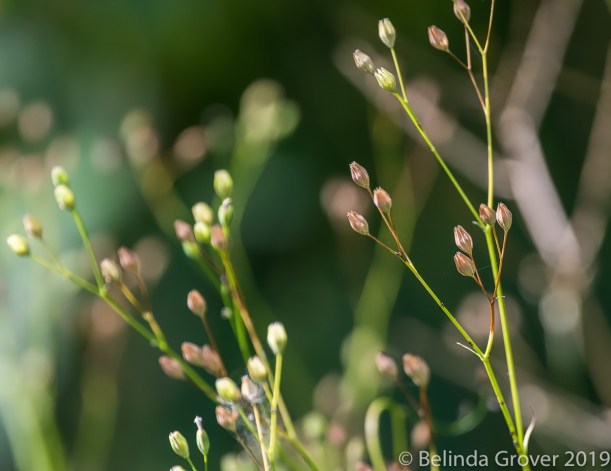
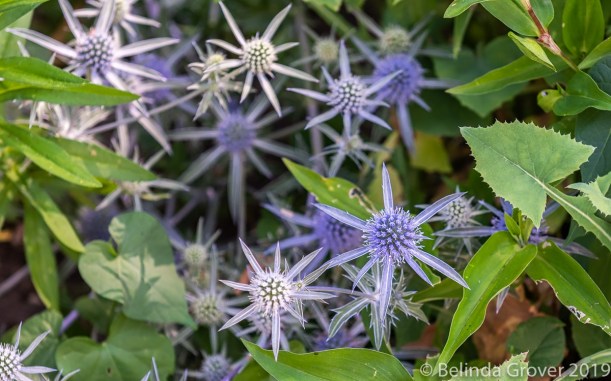 Different flowers, the first ones from a garden, the second growing in the wild. They both have an untamed quality to them. The violet flowers reminded me of underwater plants you’d see moving in a sea current. The others were found along a path and I took the shot just as the wind was lessening.
SIT A WHILE (TWO PHOTOGRAPHS)
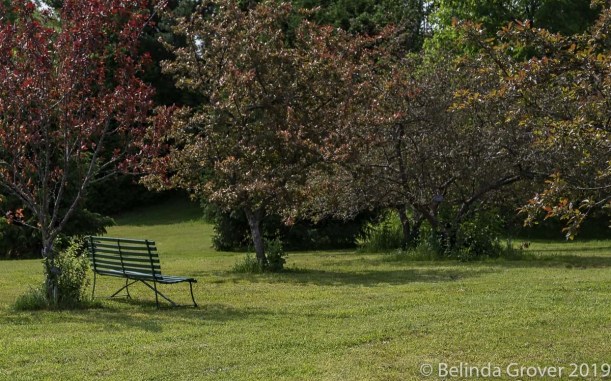
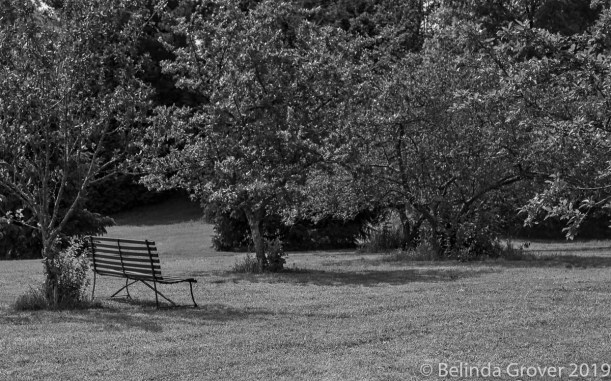 I took this photograph at the Dominion Arboretum in Ottawa, Canada. Established in 1889, it occupies 64 acres (25.89 hectares) of green space in the city core and contains over 4000 varieties of trees and woody plants. On a recent hot, sunny day the bench was inviting us to sit a while and enjoy the view.
DRAGON’S VIEW
 It’s a summer with more bugs and insects than birds. Happily, dragonflies are attractive subjects that I like to take. This one looks like he’s King of the Meadow.
DAYLILIES
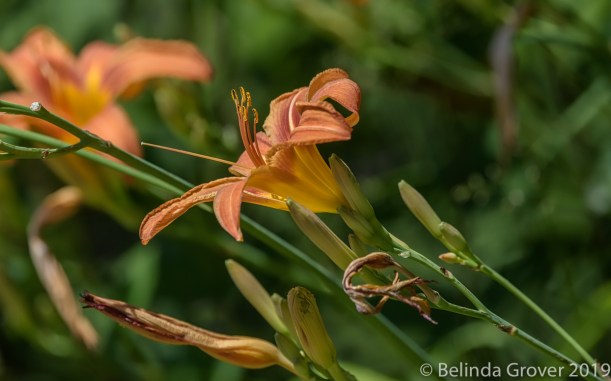 The daylily is showing up everywhere at this point in the summer; in gardens, fields and roadsides. Not native to North America, they do beautifully here and are another flower I look forward to. The wind picked up as I was taking the photograph. The focus is a bit soft but I think it adds realism to the shot.
QUEEN ANNE’S LACE (THREE PHOTOGRAPHS)
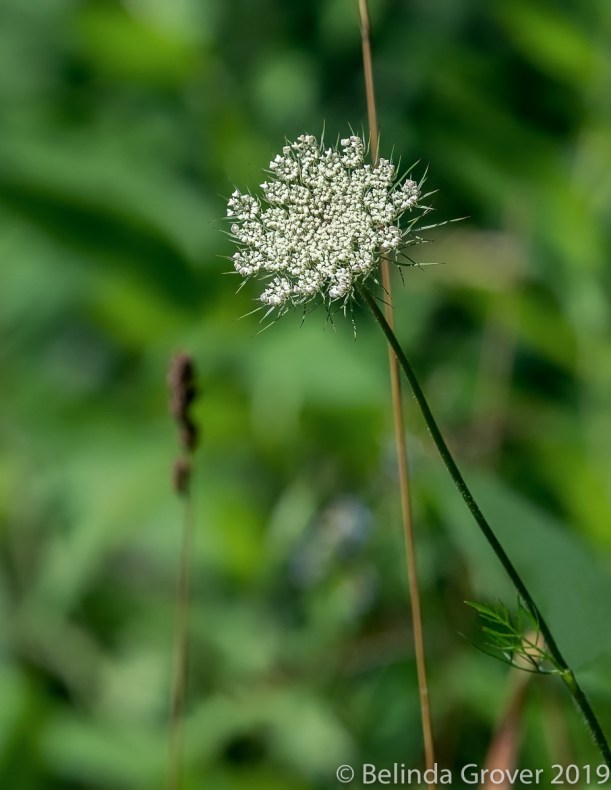
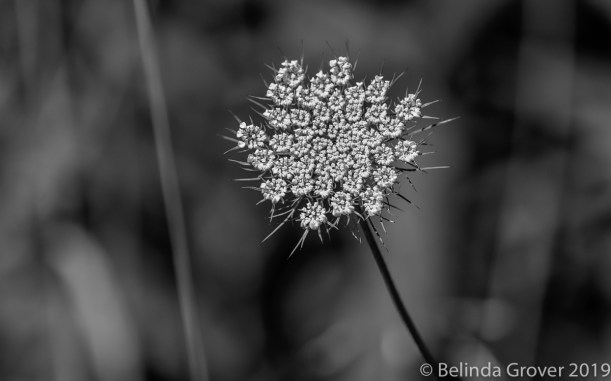
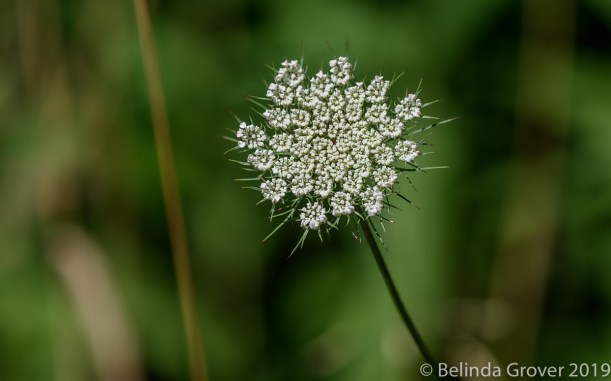 Queen Anne’s Lace is everywhere right now. In fields, vacant lots, on roadsides, wherever there’s sun and a bit of earth. It’s classified as an invasive weed but it also produces this lovely flower. In the fall the flower dries and takes on the appearance of a “bird’s-nest”, its colour complementing the landscape.
MIDSUMMER
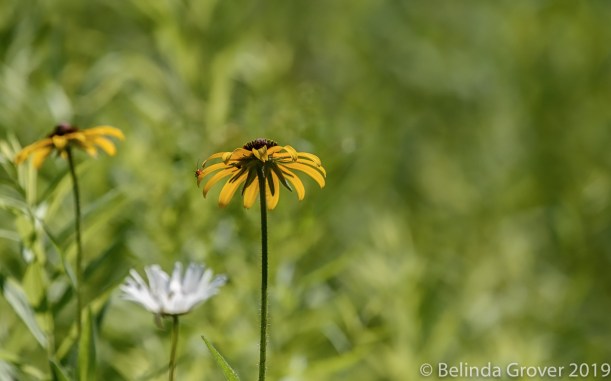 Black-eyed Susans appear midsummer like clockwork. The flower was on slightly higher ground than the path I was on and I liked the angle. I only noticed the soldier beetle on the flower (to the left) when I looked at the image on my computer screen. As I said in a recent post, if you see one of these beetles it’s likely there are more about.
RED SOLDIER BEETLE
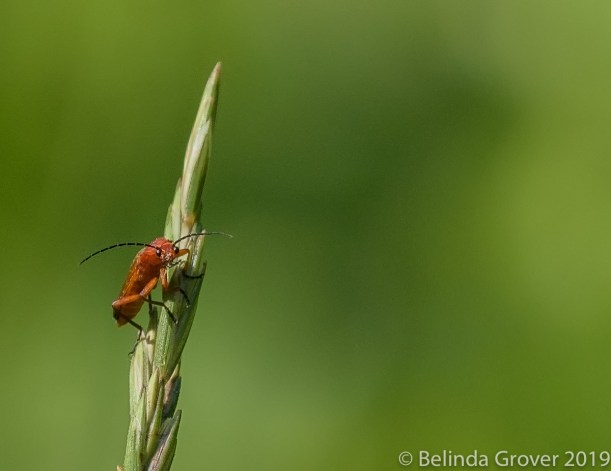 I believe this is a red soldier beetle. I saw one then a few more on surrounding plants. It’s been my experience that you never see just one. I took this with my 300mm so I was pleased that I got a decent shot with a bit of cropping.
WILD MORNING GLORY
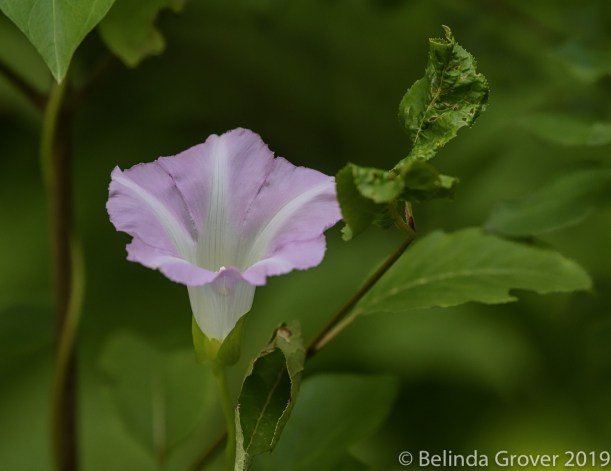 Bindweed or Wild Morning Glory is a beautiful looking flower but can take over a garden, wrapping itself around other plants and smothering them. I saw this flower in the wild; the early morning light providing a nice soft box effect.
LINE UP
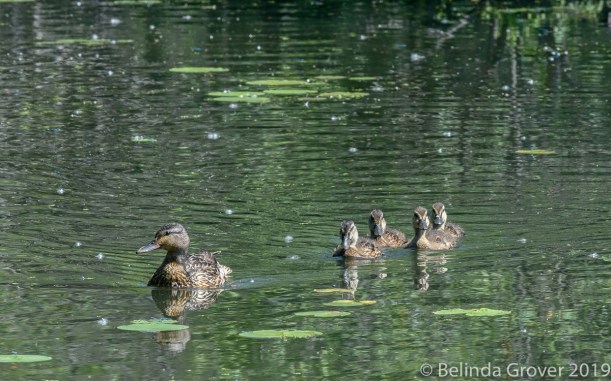 It won’t be long before these mallard chicks set out on their own. We saw some when they were newly hatched but only a few times since. They were enjoying the swim and I felt cooler just watching them in the water. It’s been a strange summer, fewer birds, fewer bugs but the vegetation is lush. I hope to have more opportunities to photograph the former, perhaps I will as the the summer moves along.
FIELD OF WILDFLOWERS
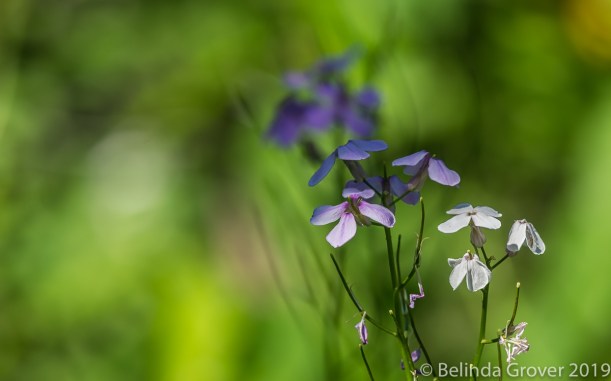 One of my favourite things to photograph in summer are wildflowers. They will grow just about anywhere that has plenty of sun, including roadsides and big open fields. Open fields are best as they carpet the ground for great distances.
BEETLE GALLERY
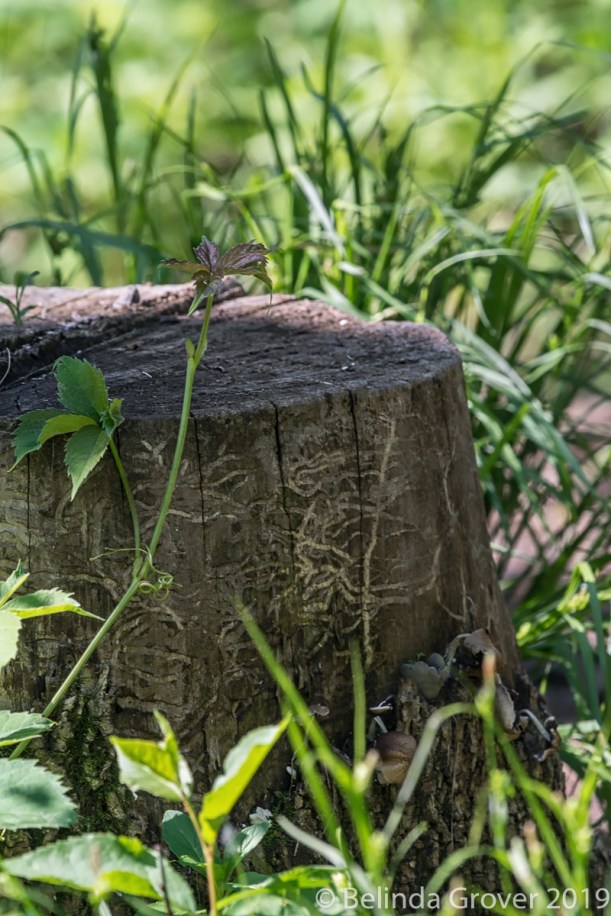
The intricate design in this tree stump was carved by beetles and their larvae. Although their designs or galleries are beautiful, these insects end up killing their host by destroying the tree’s ability to transport nutrients. The design is revealed when the bark falls away. There is not much left of the original tree but it still has a role in the forest. Fungi grow on its side, vines encircle it and seeds are left on its surface for a passing squirrel or bird.
DAY AT THE LAKE
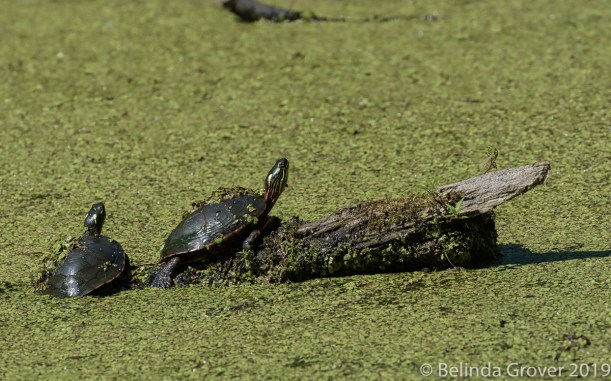
These painted turtles were soaking up the June sunshine. Most summer days the logs are very crowded but so far this year turtle activity is sparse. I hope as the warmer days roll on we’ll see more of these turtles and some snapping turtles too.
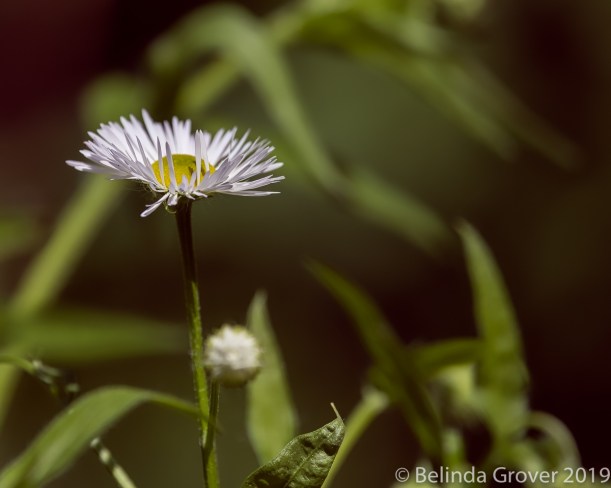
DAISY, DAISY (TWO PHOTOGRAPHS)
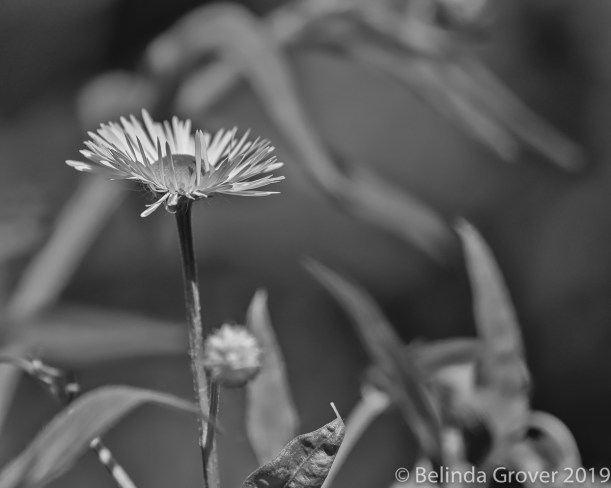 There’s something innocent about a daisy but the photo’s background suggested something a bit sinister. Although my eye was attracted by the flower I think what was behind it made the photo more interesting.
SUMMER BREEZE (TWO PHOTOGRAPHS)
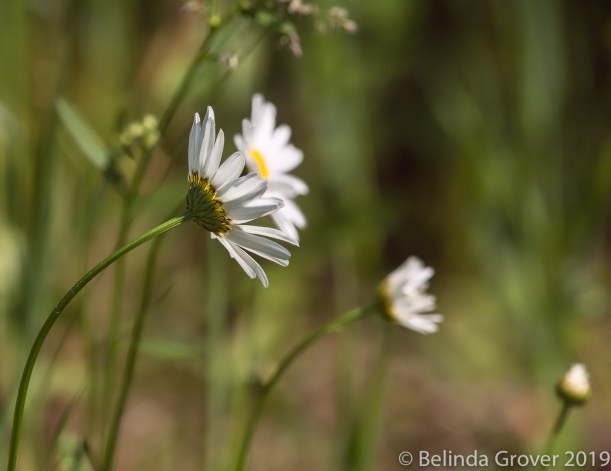
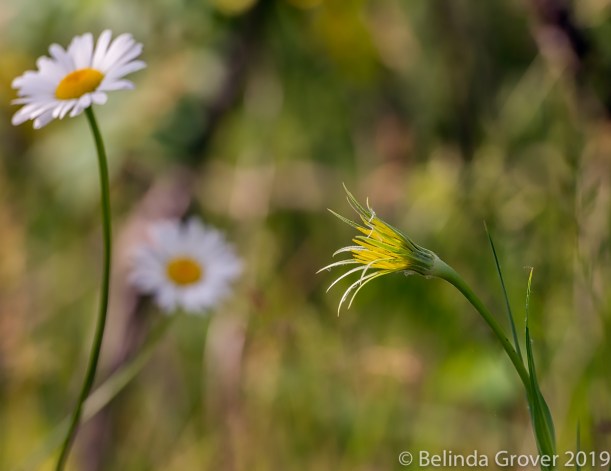
It’s a challenge to photograph flowers when the wind picks up a bit. Daisies can be seen in the fields and along roadsides everywhere right now. The goat’s beard is a less common wildflower and I’m always pleased to be able to photograph one.
WOOD DUCK CHICK
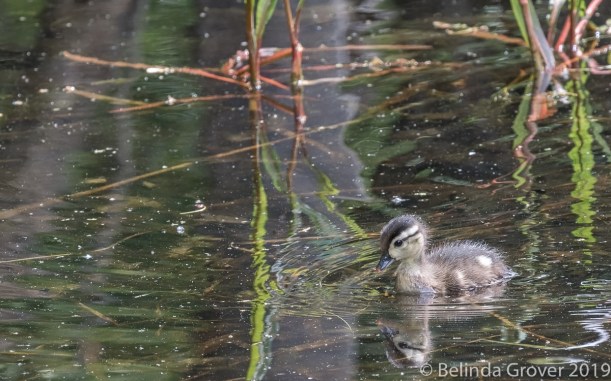
We’ve seen several paddlings of ducklings in the last few weeks. This duckling was swimming on its own for a while though never far from its mother. The waters are treacherous for these small birds; the lake has a fair number of snapping turtles and the reserve has its share of hawks (although I’ve seen neither this year). I always feel better when I see a duckling rejoin the group.
EASTERN PHOEBE
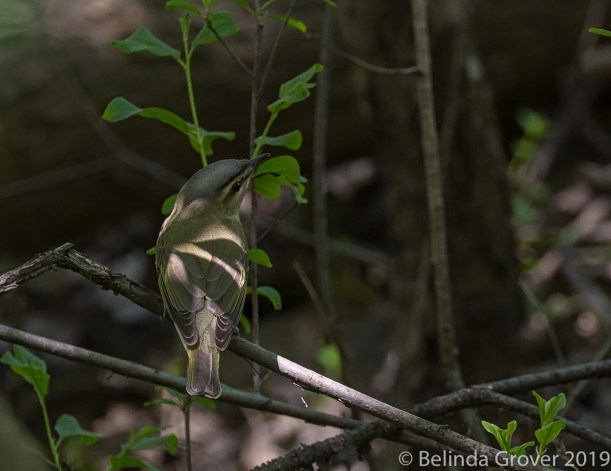 Thanks to BirdNation for correctly identifying the bird as a red-eyed vireo. I guess the text below isn’t too relevant now😏
The Eastern Phoebe is a member of the flycatcher family and returns to our woods in spring. Most of the birds on this particular day remained too far away to photograph. The Phoebe decided to fly in closer but remained in a shady spot. In this case, I think the shadow on his feathers added some interest.
ISN’T IT DELIGHTFUL (TWO PHOTOGRAPHS)
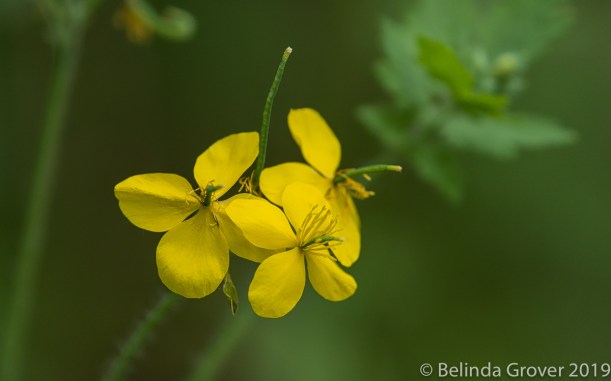
With the arrival of the warm weather in the last couple of days, I don’t know where to look or point my camera first. What a great feeling!
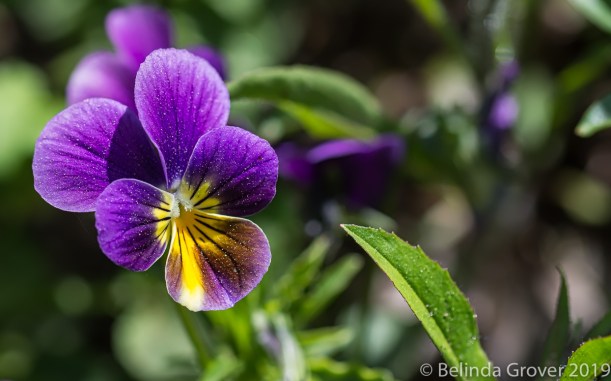
AMERICAN GOLDFINCH
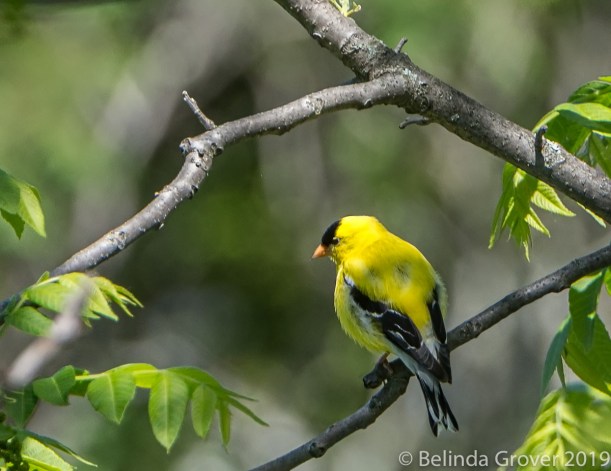 It was nice when this goldfinch positioned himself away from the leaves so I could get a clear shot. He was just within range of my lens and although happy to get the photo, I wish I had had my longer lens with me. Best news of all though, is that last week at this very spot we still wore wool against the cold, today it was 100% cotton!
MORE TULIPS (TWO PHOTOGRAPHS)
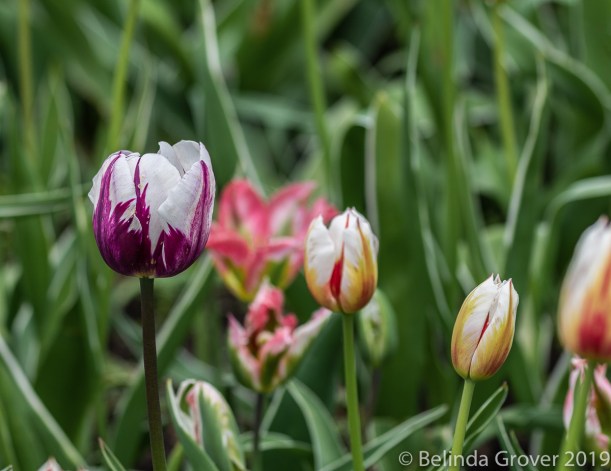 We returned to the site of our city’s annual Tulip Festival and caught these beauties on a sunny day. A late spring has its advantages; normally the tulips would have been well passed their prime. Not so this year.
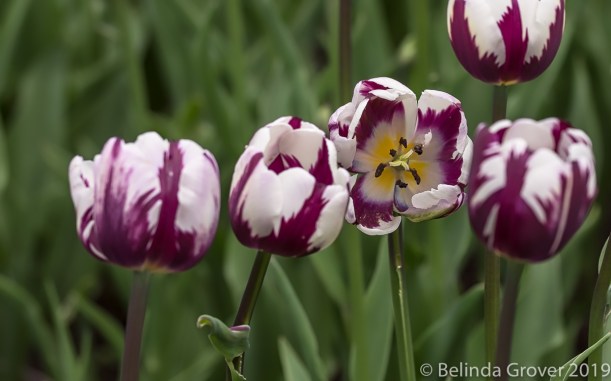
TARDY TULIPS (TWO PHOTOGRAPHS)
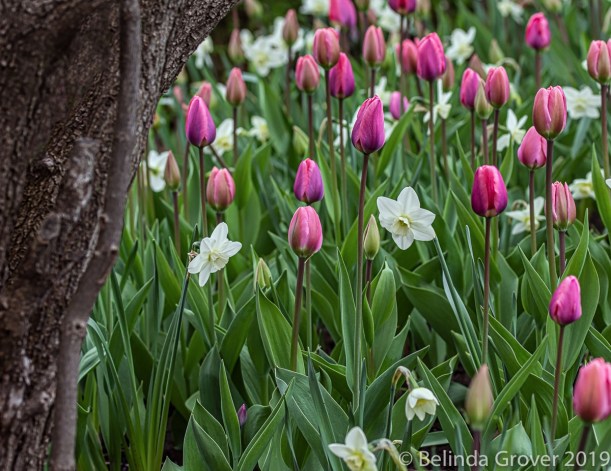
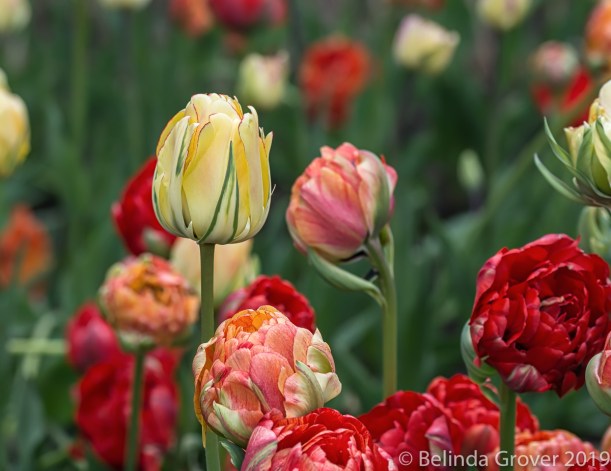 I took these photographs at this year’s Tulip Festival in Ottawa. Given our cold rainy spring the tulips are slow to bloom. The majority of them look like those pictured below. They’re in a holding pattern (like the rest of us) waiting for sunnier days. The upside is that when they do open up we’ll be able to enjoy them later into the month.
COMPANY OF TWO
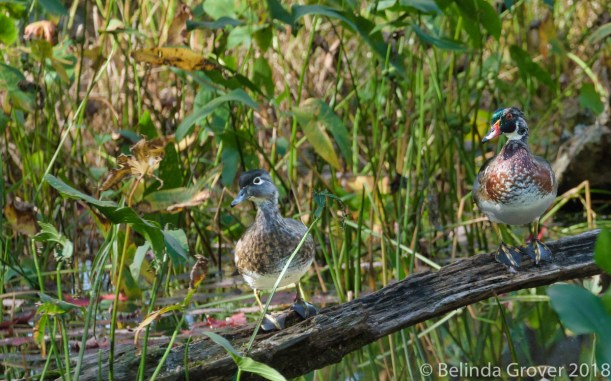 Not sure what caught the eye of these wood ducks but they certainly had my attention. They remained in this quiet cove for quite a while. This small lake in midsummer is a busy place full of noisy mallards. Perhaps the wood ducks were enjoying a momentary calm.
LOOKING UP
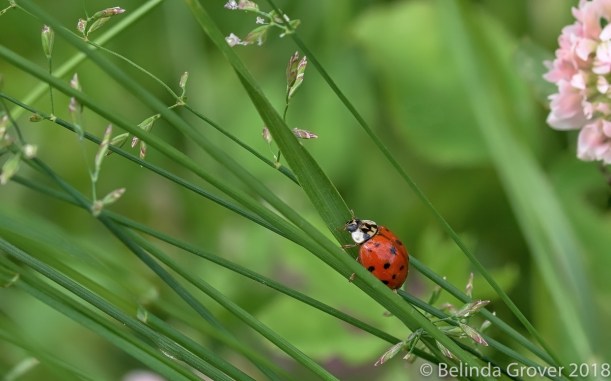
There are few things more pleasing than the colours of early summer. The ladybug was slowly making its way up the blade of grass. I watched it for a while before walking on. It’s a bit early yet for scenes like this but things are slowly coming into bloom; sunny days ahead.
PILEATED WOODPECKER
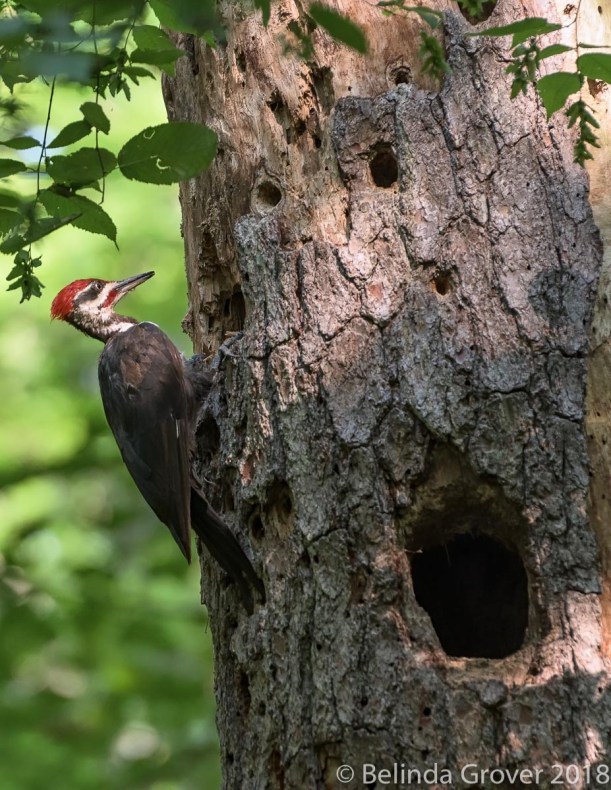 Even though the tree looked like it had been picked pretty clean, this pileated woodpecker still found it worth investigating. Our largest woodpecker, the pileated is always a pleasure to see and hear, with it’s rattling, slightly maniacal call that announces its presence.
COUPLE OF DUCKS (TWO PHOTOGRAPHS)
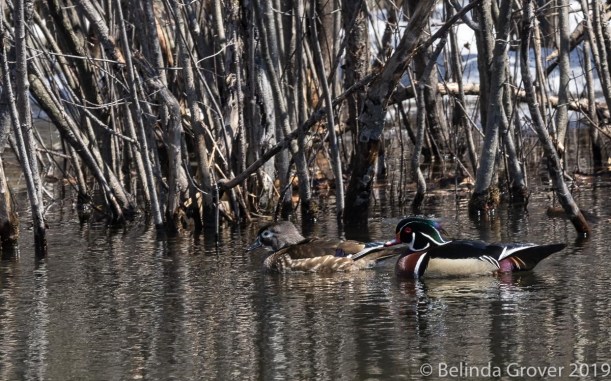
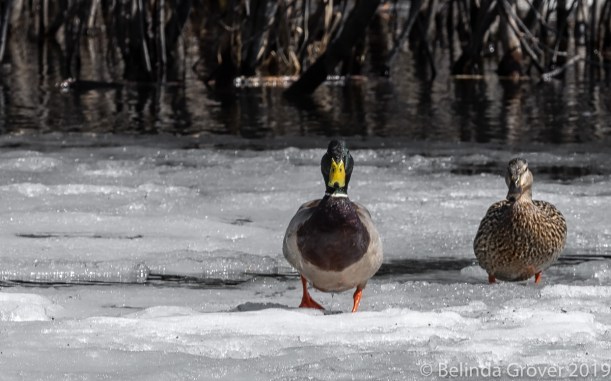 These mallards and wood ducks are my first duck photos of the spring. A good number of mallards over-winter here, the wood ducks migrate in fall and return when most traces of snow are gone. Due to severe flooding we have been unable to return to this reserve. We’ll have a lot of catching up to do when it reopens.
GRACEFUL GOOSE
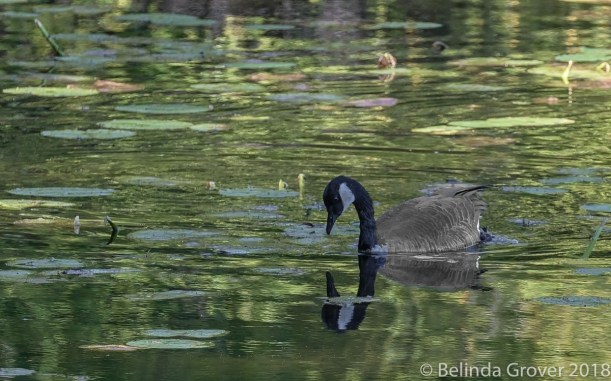 I saw a small flock of Canada Geese fly overhead the other day. No matter the temperature, they return here every spring. The grass has not begun to grow yet but with the rivers and lakes thawing I imagine geese are finding vegetation in the water to eat. I thought the bird in this photo struck a very swan-like pose.
FIELD IN FALL
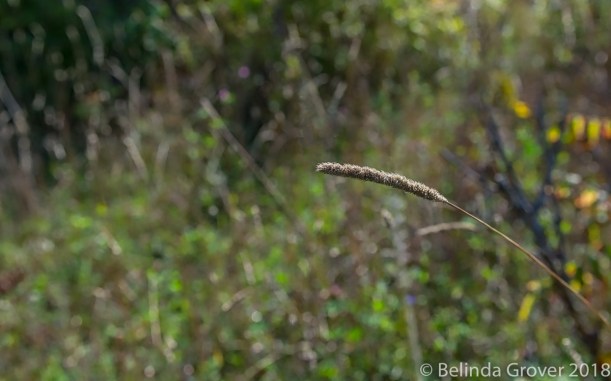
Although my eye was drawn to the tall grass it was the field behind it, with its light and colour that completed the scene. All elements equally important. This photo was taken on a perfect fall day last year.
SPLISH, SPLASH
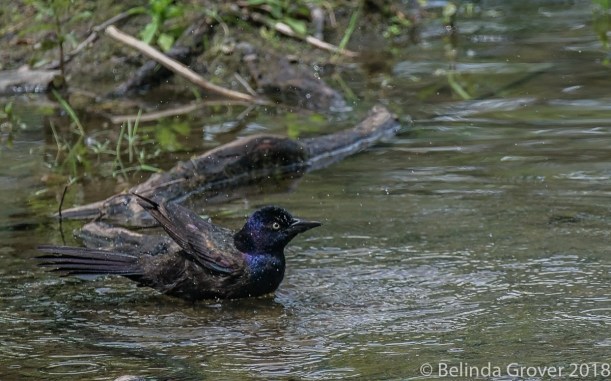 This grackle was enjoying the fine weather and a solitary bath in the lake. Although a common bird, I think their good looks and intelligence raise them above the ordinary.
SPRING BLUES
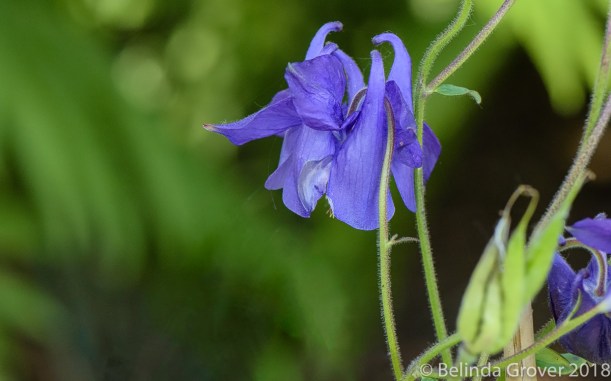
This wonderful wildflower was taken last spring. It’ll be a while before they pop through the soil this year. The ground is still pretty frozen but there are a few signs of spring – the sparrows chirping and rumours of the first crocus…
GREAT EGRET RETURNS
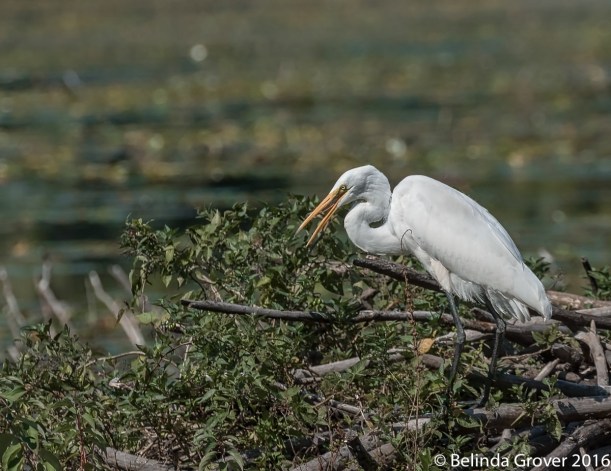 This is the second in a series of photos I took of an egret taking some turns on a beaver lodge. Perhaps he was digesting his lunch. There are some big catfish in this lake although the high water level might have made fishing difficult. I was at a sufficient distance not to disturb him and happily he was in no hurry to leave.
IRIS
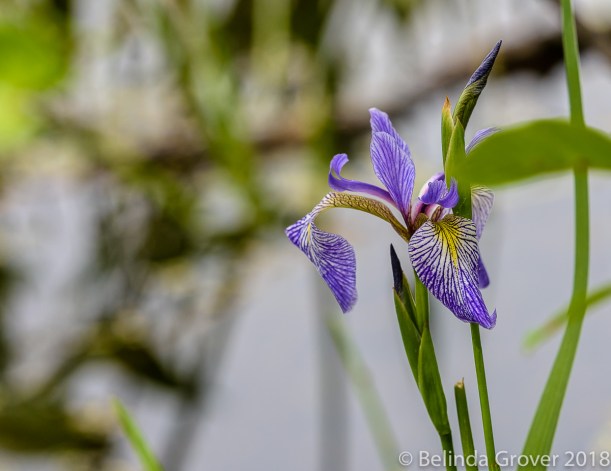 Following a trail down to the lake one year, I spotted an Iris growing right off the water. I was standing close to the water’s edge, looking for ducks and almost missed the flower tucked to the side. Every June, I follow the same trail down to the lake and continue to see the Iris return each year.
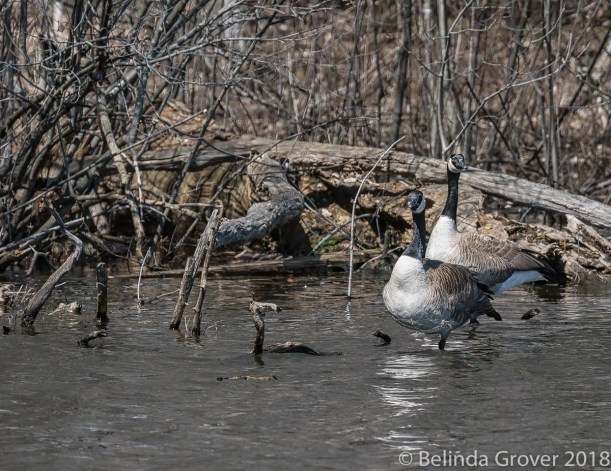
LATE IN THE SEASON (TWO PHOTOGRAPHS)
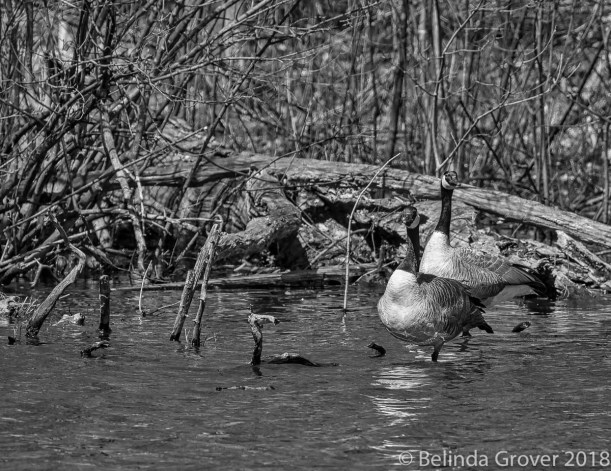
It was late fall and the geese would be flying south soon. When the trees are bare I get a different feel for the landscape. I can appreciate its starkness and see the detail that is normally overlooked in summer. The geese add additional interest to the scene.
NUTHATCH
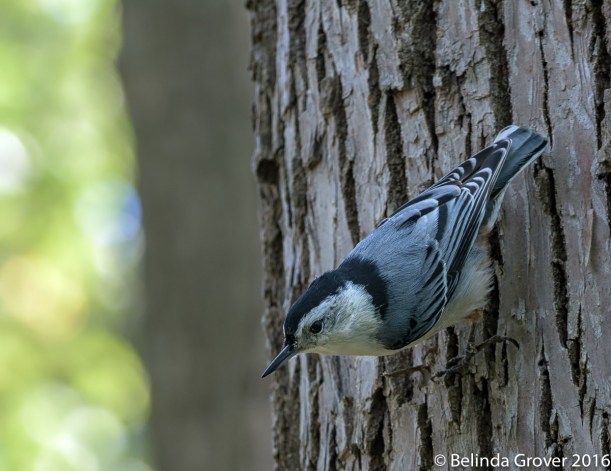 I like to hear the nuthatch’s nasal call, often alerting me to its presence in the woods. As they move along the tree trunks and branches so quickly, it’s often hit or miss to capture one in focus. Oh, but when you do😊.

