
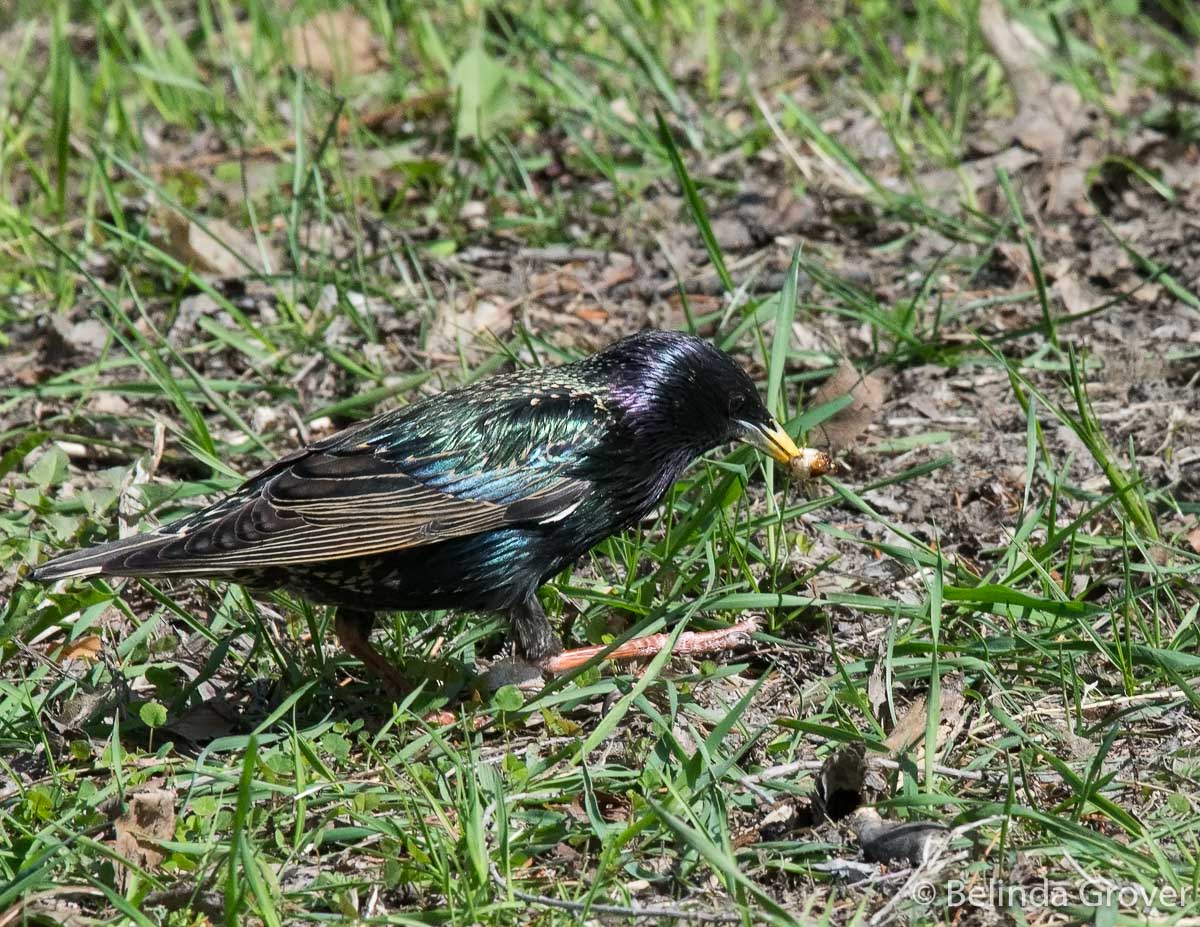
European Starlings were introduced to North America in the late 19th century and are considerd invasive. They compete for nesting sites and can cause extensive agricultural damage. This individual though was content to search the grass for something to eat and only snagged a dandelion.
 BELINDA GROVER PHOTOGRAPHY
June 1, 2026 at 4:09 pm
I’d like to think that people have learned not to release non-native species into novel ecosystems but I’m not so sure. Starlings are native to the UK and we can just enjoy their antics, but we have many invasives of our own: rose ringed parakeets, cherry laurel, harlequin ladybirds, sika deer – and grey squirrels of course. Not to mention some serious tree diseases that were imported by woeful biosecurity control.
LikeLike
June 2, 2026 at 9:32 am
Plants and animals have been introduced everywhere it seems. Some plants have become naturalized, others are very invasive. The same with animals through no fault of their own.
LikeLiked by 1 person
May 28, 2026 at 2:52 pm
Your image shows off their beautiful colors and iridescence.
I like the feather markings in the winter too.
LikeLike
May 29, 2026 at 9:57 am
Thanks very much, Deborah!
They don’t overwinter here.
LikeLiked by 1 person
May 29, 2026 at 10:30 am
Oh, so you don’t get to see them in their white spots and streaks. You’ve seen photos of them in that phase though?
LikeLike
May 29, 2026 at 2:08 pm
Nice polka dots on their winter coats!
LikeLiked by 1 person
May 29, 2026 at 2:22 pm
They are pretty in all their plumage changes.
LikeLiked by 1 person
May 27, 2026 at 4:22 pm
You picked up such detail and iridescence on the feathers…Good Job!💙💚🖤💜
LikeLike
May 27, 2026 at 9:17 pm
Thank you, Julie 😊.
LikeLiked by 1 person
May 26, 2026 at 10:53 am
We have starlings where we live. They took over our birdfeeder one year. They’re pretty cool to look at though…
LikeLike
May 26, 2026 at 2:53 pm
I like their iridescent feathers, too bad about their poor behaviour.
LikeLike
May 25, 2026 at 2:15 am
They are considered invasive in Italy too and they do agricultural damage.
LikeLike
May 24, 2026 at 5:07 pm
The iridescent feathers are beautiful, Belinda.
LikeLike
May 24, 2026 at 5:49 pm
Their best feature it seems 😏. Thank you.
LikeLike
May 24, 2026 at 4:59 pm
Starlings and crows all go into the same slot for me. Nuisance birds, detrimental to the good of the bird population in general. But, as Lynette says, they are just doing what starlings do. They are pretty though.
LikeLiked by 1 person
May 24, 2026 at 5:47 pm
Crows are native birds and clever, they can act as predators and protectors. They do prey on nests but also harass owls and hawks which protects smaller birds. Starlings are just starlings.
LikeLiked by 1 person
May 24, 2026 at 4:16 pm
Here, starlings are culled. They pose a massive threat to the vineyards and fruit orchards so they’re “schedule C” which means they can be captured and euthanised without a permit. I used to see them occasionally when I lived on the prairies but I don’t think I’ve ever seen one here in B.C. We can always count on people to cause issues; It’s not the birds’ fault – the starlings are just doing what starlings do.
LikeLiked by 2 people
May 24, 2026 at 5:20 pm
After reading your comment, I looked it up and learned that starlings can be legally culled in Ontario as well. I wasn’t aware of how very destructive they were. I hope that more knowledge is now applied to introduced species. As you said, the starlings are just doing what starlings do.
LikeLiked by 1 person
May 24, 2026 at 3:59 pm
They are attractive birds, but that’s about it. It’s sad that those who released them into North America had no idea the issues they and the birds would cause.
LikeLiked by 1 person
May 24, 2026 at 5:08 pm
That’s the trouble with so many introduced species of birds and plants.
LikeLiked by 2 people
May 24, 2026 at 5:12 pm
I agree, Belinda. 😭
LikeLiked by 1 person